
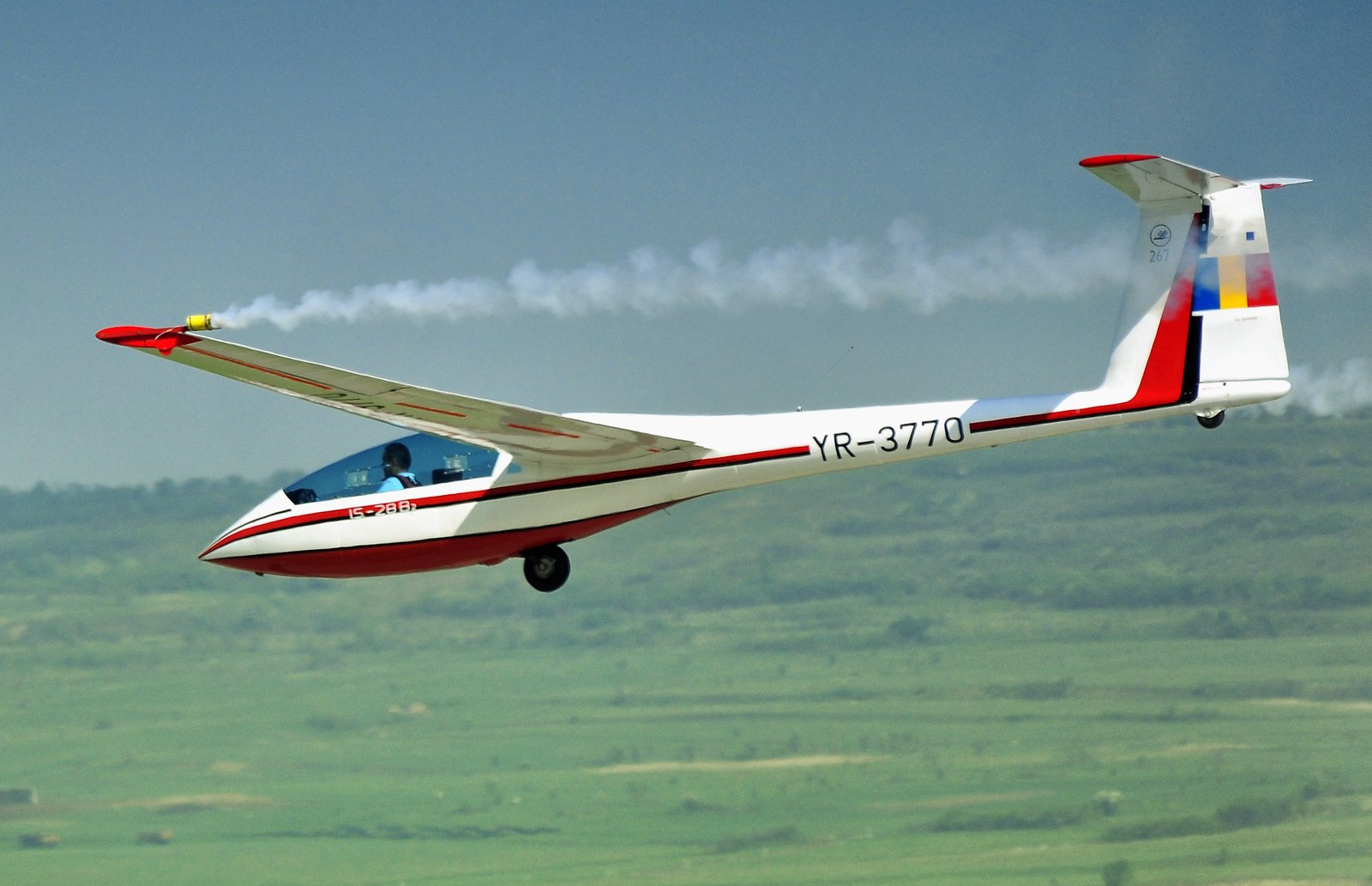
Development and Design Philosophy
The IS-28M 2/G emerged from ICA-Brasov's systematic approach to expanding their successful sailplane designs into the powered aircraft market. Romanian engineers recognized that traditional sailplanes, while excellent for soaring flight, required ground support and favorable weather conditions to operate effectively. The motor glider concept promised to eliminate these limitations while preserving the exceptional aerodynamic efficiency that made sailplanes attractive to pilots seeking economical flight operations.
ICA-Brasov developed two distinct motor glider variants from their IS-28B2 sailplane foundation. The IS-28M1 featured tandem seating with a monowheel undercarriage, while the M2 variant adopted side-by-side seating with conventional retractable landing gear. This configuration choice reflected the manufacturer's recognition that training and recreational flying benefited from the instructor-student communication possible with side-by-side positioning.
Technical Innovation
Engineering the transition from sailplane to motor glider required substantial structural modifications. ICA-Brasov relocated the wings from their original position to a low-set configuration, accommodating the powerplant installation while maintaining the wing's aerodynamic properties. The forward fuselage underwent complete redesign to house the 51-kilowatt Limbach SL1700 E1 engine and its associated systems, while the cockpit canopy was reshaped to provide adequate visibility for both occupants.
The folding wing mechanism represented one of the aircraft's most practical features. Wings could be folded at a point just inboard of the ailerons, enabling storage in standard hangar facilities designed for conventional aircraft rather than the specialized wide hangars typically required for sailplanes. This capability significantly reduced operating costs for private owners and flying clubs.
Powerplant and Performance
The Limbach SL1700 E1 engine, producing 68 horsepower, drove a Hoffman HO-V-62/R160T propeller specifically selected for motor glider applications. This combination provided sufficient power for sustained flight while maintaining the quiet operation essential for soaring activities. The engine's automotive heritage, derived from Volkswagen technology, promised reliable operation with readily available maintenance support.
With the engine operating, the IS-28M 2/G functioned as a conventional light aircraft, capable of cross-country flights and airport-to-airport operations. However, the aircraft's true distinction emerged when pilots shut down the engine for soaring flight. The 1:29 glide ratio exceeded the performance of many pure sailplanes, enabling pilots to exploit thermal activity and ridge lift with remarkable efficiency.
Manufacturing and Distribution
ICA-Brasov initiated production in 1976, maintaining quality standards while working within the constraints of Romania's centrally planned economy. The company operated facilities in both Brasov and Bucharest, drawing upon Romania's established aerospace manufacturing capabilities developed during the Cold War period.
International distribution reflected the aircraft's appeal beyond Romania's borders. British Aerospace assumed agency responsibilities for Romanian aircraft in the United Kingdom as part of broader technology transfer agreements involving BAC 1-11 airliner production. The first ten M2 aircraft reached Britain through Morisonics Ltd, serving as demonstrators and early customer deliveries.
International Service Record
Australia became a significant export market when Riley Aeronautics Pty Ltd ferried three aircraft (construction numbers 29, 31, and 32) to Tocumwal, New South Wales, in 1980. These aircraft, registered as VH-SSQ, VH-SSR, and VH-SSU, operated in Australia's demanding climate conditions, validating the design's reliability. Canadian and American customers also acquired examples, though specific delivery numbers remain undocumented.
The aircraft proved particularly suitable for flying clubs seeking to combine powered flight training with soaring instruction. Pilots could conduct conventional flight training exercises under power, then demonstrate soaring techniques with the engine shut down, maximizing training efficiency while reducing operating costs.
Preservation and Legacy
By 2014, changing economics and aging aircraft led to retirement of some examples. VH-SSU was donated to the Queensland Air Museum at Caloundra, ensuring preservation of this significant motor glider design. The museum's acquisition recognized the IS-28M 2/G's role in advancing motor glider technology during the critical development period of the 1970s and 1980s.
The aircraft's legacy extends beyond its immediate operational success. ICA-Brasov's integration of sailplane efficiency with powered flight capability influenced subsequent motor glider designs worldwide. The folding wing concept became standard practice for aircraft requiring hangar compatibility, while the side-by-side seating configuration proved its value for training applications.
Today, surviving examples continue operating in private hands, testament to the fundamental soundness of the Romanian design approach and the enduring appeal of motor glider flight.