
Development and Design Philosophy
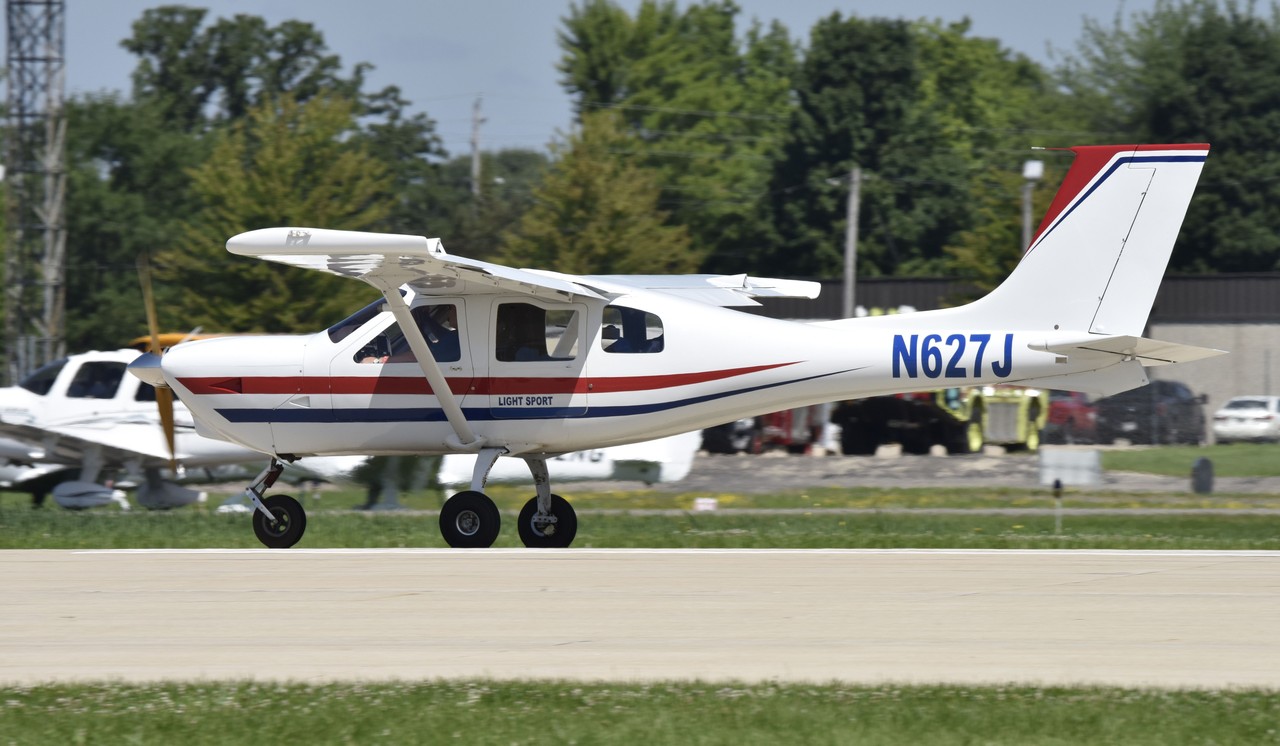
The J400 emerged from Jabiru Aircraft's ambitious goal to challenge Cessna's dominance in the four-seat general aviation market. Developed internally by the Jabiru engineering team as a "clean sheet design," the aircraft combined proven elements from the company's LSA, SP, and UL models while extending the fuselage and tail boom for improved stability and control authority. The design team prioritized a remarkably low stall speed of just 45 knots, making the aircraft accessible to pilots with varying skill levels.
Unlike many kit aircraft that rely on automotive conversions or foreign engines, the J400 was designed around Jabiru's own powerplant from the outset. This integration allowed engineers to optimize the airframe-engine combination for maximum efficiency and reliability, resulting in a fuel consumption rate of just 20 liters per hour during cruise flight.
The Manufacturer's Journey
Jabiru Aircraft Pty Ltd was founded in 1988 by Rodney Stiff and Phil Ainsworth, who leveraged their background in sugarcane harvesting equipment to enter aviation manufacturing. The company achieved its first type certification on 1 October 1991 with the LSA 55/2K, but faced an immediate crisis when their Italian KFM 112M engine supplier ceased production just one month later. This setback proved fortuitous, forcing Jabiru to develop their own engines and ultimately creating their competitive advantage.
By 2006, success in both aircraft and engine sales enabled the company to double their Bundaberg facility size. Production peaked at 20 airframes per month during 2007-2008, with over 1,000 aircraft delivered by 2006. The company weathered significant challenges in 2014 when the Australian Civil Aviation Safety Authority imposed restrictions on Jabiru engines, but responded with continuous improvements culminating in their current GEN4 engines.
Leadership transitioned on 4 May 2023 when Mick Halloran succeeded retiring founder Rodney Stiff, ensuring continuity for the company's international operations spanning 16 countries for aircraft kits and 31 countries for engines.
Engine Innovation and Production
The J400's Jabiru 3300 engine represents over three decades of continuous development since engine production began in 1991. This horizontally opposed six-cylinder air-cooled powerplant produces 120 horsepower through direct drive, eliminating the complexity and weight of reduction gearboxes common in converted automotive engines. The 3300 features dual ignition for redundancy, an integrated alternator, and standard muffler installation.
Significant improvements arrived in 2006 with flat-faced hydraulic lifters that eliminated routine tappet adjustments, reducing maintenance requirements for owner-operators. Engine Management Systems were subsequently added to enhance reliability and provide real-time monitoring capabilities. Jabiru has produced over 7,250 engines across all series, with the 3300 series accounting for a substantial portion since its 1998 introduction.
Production statistics demonstrate the engine's acceptance: 3,027 GEN1 units (combining 2200 and 3300 models), 3,107 GEN2 units, 445 GEN3 units, and 650 GEN4 units through current production. These engines power aircraft in more than 50 countries worldwide.
Operational Characteristics
Pilots appreciate the J400's docile handling characteristics and practical performance envelope. The aircraft's 115-knot cruise speed provides reasonable cross-country capability while maintaining the fuel efficiency essential for private ownership economics. The generous 700 kg maximum takeoff weight allows full fuel and four occupants for many missions, addressing a common limitation in smaller aircraft.
The kit construction approach, eligible under FAA FAR 21.191(g) since 8 February 1996, enables owners to build their aircraft over time while gaining intimate knowledge of every system. This familiarity proves invaluable for ongoing maintenance and troubleshooting, particularly important for aircraft operating from remote airstrips.
Current Status and Legacy
While exact J400 production numbers remain unspecified, global aircraft databases list 129 registered examples under the JAB4 designation, indicating steady acceptance within the kit aircraft community. Active examples include FAA-registered N776JA, demonstrating the type's international appeal.
The J400's significance extends beyond its own production numbers to represent Australia's emergence as a credible light aircraft manufacturer. Jabiru's success in developing both airframes and engines domestically provided a template for other manufacturers seeking independence from traditional suppliers. The 2023 FAA MOSAIC proposal potentially opens new markets by enabling factory-built delivery rather than kit-only sales, suggesting continued relevance for the J400 design philosophy.
Recent projects, including a 2023 Defence Innovation Hub drone contract, demonstrate Jabiru's evolution while maintaining their core competency in efficient, reliable light aircraft powerplants that made the J400 possible.