
Service History
The Jabiru UL carved out a significant niche in the ultralight and Light Sport Aircraft market, with over 1,000 total aircraft including variants flying by 2006. The aircraft found widespread acceptance among private owners, flight schools, and training organizations, particularly after receiving US FAR Part 21.191(g) certification on February 8, 1996. Sun Centre Ultralights delivered the 1,000th Jabiru aircraft in 2006, demonstrating the type's commercial success in the recreational aviation market.
The UL variant specifically addressed international certification requirements, featuring an extended wingspan and fuselage to achieve the 36-knot stall speed required for European markets. This adaptability allowed Jabiru to export aircraft worldwide, with early approvals secured in Australia, New Zealand, South Korea, the United Kingdom, and the United States by early 1997.
The Manufacturer
Jabiru Aircraft Pty Ltd originated as Avtech Pty Ltd, founded in early 1988 by Rodney Stiff and Phil Ainsworth with the ambitious goal of producing affordable kit and certified light aircraft. The company transformed into Jabiru Aircraft in 1989, with Stiff acquiring full ownership in July 2005. Based in Bundaberg, Queensland, the company doubled its facility size in 2006 and achieved peak production rates of 20 airframes and 90 engines per month during 2007-2008.
A brief international expansion attempt included a joint venture factory announced in 1998 at Koggala, Sri Lanka, planned to produce up to 40 aircraft annually, though this venture failed to materialize by 2003. More successful was the establishment of Jabiru USA Sport Aircraft in 2001, which began manufacturing S-LSA variants by 2005, though an earlier US marketing office in Aiken, South Carolina, was later closed in favor of a dealership network.
Engine & Technical Innovation
The Jabiru UL's engine history reflects both adaptability and innovation in the face of supply challenges. Early prototypes flew with Rotax 582 engines producing 64 horsepower, while the first 21 production aircraft used the IAME KFM 112M developing 60 horsepower. When KFM discontinued production shortly after the 1991 CAA approval, Jabiru made the bold decision to develop its own powerplant.
The company's rapid engine development program produced the Jabiru 1600cc flat-four engine in just 18 months, powering 54 aircraft from March 1993 to March 1996. This was followed by the more powerful Jabiru 2200, first displayed at Sun 'n Fun 1995, and the 110-horsepower Jabiru 3300 released in 1998. The in-house engine production became a cornerstone of Jabiru's success, with over 3,000 engines delivered across three generations by the mid-2000s.
Design Philosophy
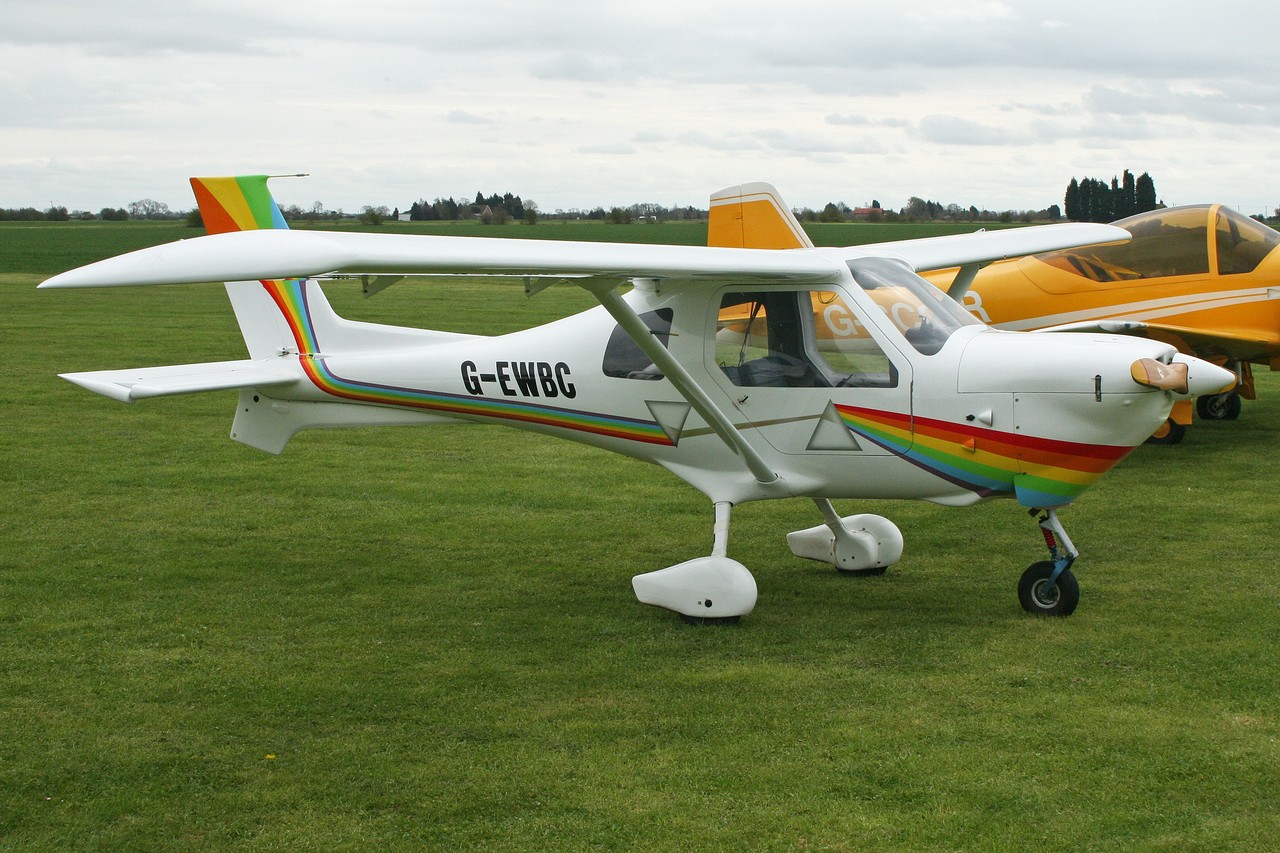
Rodney Stiff and Phil Ainsworth began the Jabiru design in 1987 with clear objectives: create a side-by-side ultralight that met Australian CAO 101.55 regulations while incorporating fiber-reinforced plastic construction for light weight, structural integrity, clean aerodynamics, and low maintenance requirements. The first prototype, registered VH-JCX, achieved first flight in August 1989, followed by two additional prototypes including VH-LIP (construction number 0003), registered on September 20, 1989.
The high-wing configuration and side-by-side seating arrangement proved popular with recreational pilots, while the fiberglass construction techniques pioneered by Jabiru influenced the broader homebuilt aircraft industry. Kit builders could expect approximately 600 hours to complete construction, making the aircraft accessible to dedicated amateur builders.
Production Legacy
Jabiru achieved CAO 101.55 certification on October 1, 1991, launching production of what would become a successful aircraft family. The ST certified version entered production in mid-1994, with the first ST becoming the 50th production aircraft in mid-1998. The SK kit version followed in 1995, first appearing as the 66th production aircraft.
Variant development continued through the production run, with the UL-D model appearing in 2006 and other derivatives like the J120, J160, J170, J230, and J432 serving certified aircraft markets. The company's integrated approach to aircraft and engine manufacturing created a unique position in the Light Sport Aircraft market, with Jabiru remaining one of the few manufacturers producing both airframes and powerplants in-house.
Today, Jabiru Aircraft continues operations from Bundaberg, maintaining support for the hundreds of UL variants and other models flying worldwide, cementing the type's legacy as a pioneering affordable aircraft that brought recreational flying within reach of ordinary enthusiasts.