
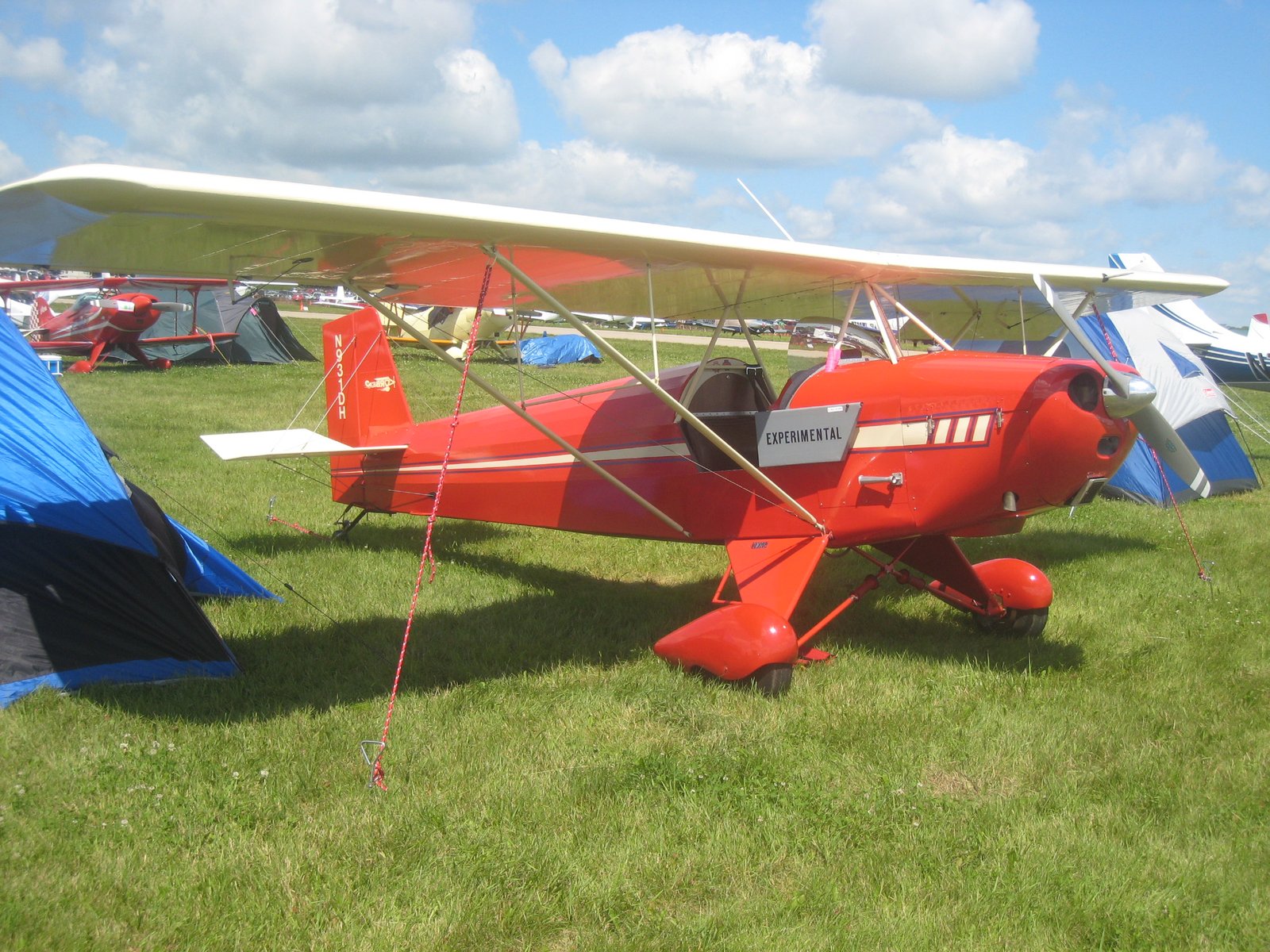
The Ace Junior Ace is a notable example of the early amateur-built aircraft movement in the United States. Designed by Orland G. Corben, the aircraft was developed in the early 1930s as a two-seat evolution of the earlier Baby Ace. The Junior Ace was intended to provide a practical sport aviation option for homebuilders, featuring a configuration that allowed a pilot and a passenger to fly side-by-side.
Production and distribution of the Junior Ace have been handled by the Ace Aircraft Manufacturing Company, which has offered the design in plans and kit form since the early 1930s. Because the aircraft is primarily constructed by individuals using these plans, there is no authoritative total for the number of units produced. While the original design lineage began with Corben in the 1920s, the Ace Aircraft entity continues to maintain an online presence today, providing information and plans for these aircraft.
Technically, the Junior Ace is a piston-powered landplane. It is commonly associated with the Continental C85 air-cooled flat-four engine, which produces 85 hp (63 kW). However, the airframe is versatile and has been configured to accept various powerplants ranging from 65 to 100 hp. Performance specifications vary across different examples; for instance, maximum speed is listed between 113 knots (130 mph) and 130 mph, while cruise speeds are cited between 91 knots (105 mph) and 109 mph. The aircraft typically features a service ceiling of 10,500 ft and a rate of climb of 600 ft/min.
Historically, the Junior Ace is significant for its role in establishing the amateur-built aircraft culture. By extending the Baby Ace concept to accommodate a passenger, it provided an accessible entry point for civil sport aviation. There is no documented record of the aircraft being used for military or wartime service.