
The Basement-Born Delta
The Dyke JD-2 Delta emerged from an unlikely birthplace—John Dyke's basement garage in Fairborn, Ohio, near Dayton. Unlike conventional aircraft manufacturers, Dyke operated as a one-man design house, personally knowing every builder by name and their individual stories. His inspiration came from studying Alexander Lippisch's delta designs, the Convair F-102 Delta Dagger, and the Saab 35 Draken's double-delta configuration, but he aimed to create something entirely different: a practical family aircraft that challenged every convention of general aviation design.
The path to the JD-2 began with tragedy and determination. Dyke's predecessor design, the JD-1, first flew in July 1962 and accumulated 145 hours of successful flight time before being destroyed by fire in June 1964. Rather than abandon his unconventional approach, Dyke incorporated lessons learned into an improved design that would prove even more capable.
Revolutionary Design Philosophy
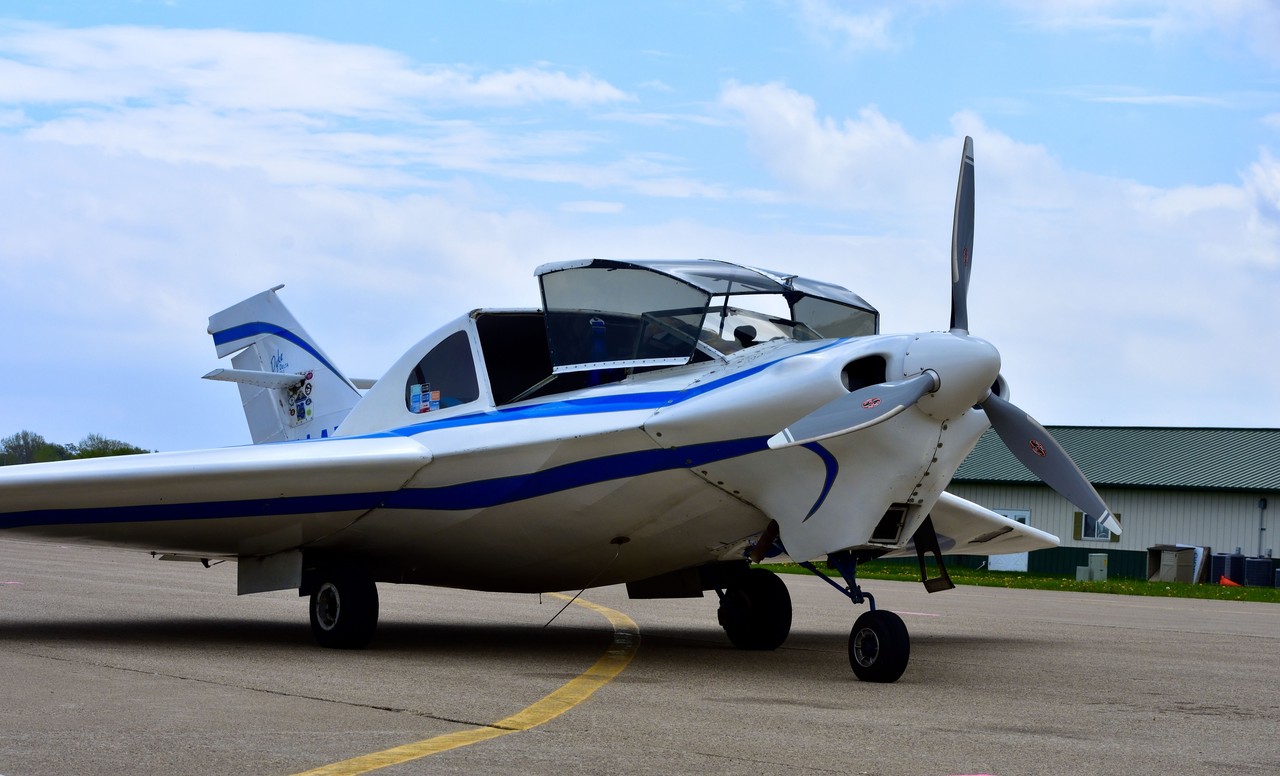
The JD-2 represented a radical departure from traditional aircraft design. Its true double-delta planform eliminated the need for a horizontal stabilizer, though Dyke offered an optional T-tail configuration for builders installing higher-power engines. The most striking innovation was the wing-folding mechanism—the wings folded upward to stack flat atop the fuselage, allowing the aircraft to be towed behind a car or stored in a standard garage.
Construction utilized a welded SAE 4130 steel tube frame with stainless steel ribs, combining strength with relatively simple fabrication techniques suitable for amateur builders. The upper surfaces featured fiberglass skins while fabric covered the lower surfaces, creating an efficient balance between performance and buildability.
Engineering Validation
Dyke's meticulous approach to design validation set the JD-2 apart from many homebuilt projects. He conducted extensive testing with scale models, radio-controlled prototypes, and car-towed glider tests. The thoroughness of this development program paid dividends—flight test data matched his theoretical predictions within five percent, an extraordinary achievement for a basement-designed aircraft.
NASA took notice of the design's potential, funding towing and glider tests conducted by Kelly Aerospace. The University of Utah performed structural analysis, while Wright-Patterson Air Force Base in Ohio conducted additional evaluations, lending scientific credibility to Dyke's innovative approach.
Performance and Handling
Powered by the proven Lycoming O-360 flat-four engine producing 180 horsepower, the JD-2 delivered impressive performance figures. Cruise speeds ranged from 155 to 180 mph, with climb rates reaching 1,500 feet per minute. The aircraft's 19-foot length and 22-foot, 3-inch wingspan created an efficient platform that handled predictably despite its unconventional configuration.
The seating arrangement proved as innovative as the aerodynamics. The pilot occupied a forward position with excellent visibility, while three passengers shared a bench seat behind. This layout maximized cabin volume while maintaining the aircraft's streamlined profile.
A Unique Production Model
Unlike traditional aircraft manufacturers, Dyke never established a factory or offered kits. Instead, he sold complete construction plans and drawings directly to homebuilders, a business model he maintained from the mid-1960s through today. This approach fostered an unusually close relationship between designer and builders, creating a tight-knit community of delta enthusiasts.
Over 50 examples have been completed worldwide, built in locations ranging from Ohio garages to Wisconsin workshops. Each aircraft represented months or years of individual craftsmanship, with some builders like Al White of Superior, Wisconsin, taking nearly four decades to complete their projects—White started his JD-2 in 1971 and finally flew it in 2010.
EAA Debut and Recognition
The JD-2 made its public debut at the 1966 Experimental Aircraft Association Fly-In in Rockford, Illinois, where its unconventional appearance drew crowds and skeptics in equal measure. The aircraft's successful demonstration flights quickly converted doubters, proving that Dyke's basement-born design could deliver on its ambitious promises.
Aviation media embraced the JD-2's story, featuring it in publications like KITplanes magazine and EAA articles. The design captured imaginations during the 1960s fascination with supersonic delta configurations, offering amateur builders their own taste of cutting-edge aerodynamics.
Legacy and Current Status
As of 2021, fewer than a dozen JD-2s remain in flying condition, including Dyke's original prototype, which accumulated over 2,000 flight hours in its first 40 years of operation. Nearly as many aircraft remain under construction, testament to the design's enduring appeal and the methodical approach of its builders.
The JD-2 Delta's significance extends beyond its modest production numbers. It demonstrated that innovative aerodynamic concepts could be successfully implemented by amateur builders working with basic tools and materials. In an era when most homebuilt aircraft followed conventional configurations, Dyke's delta proved that bold thinking and careful engineering could create something entirely unique—a true family airplane that happened to look like it belonged in a science fiction movie.