
Development and Design Innovation
The JK-05 Junior emerged from Ekolot's ambitious ultralight development program that began with the JK-03 Junior prototype in March 1997. The original prototype, completed in mid-1998 and first flown on September 9, 1999, initially used an unconventional Suzuki automobile engine. Learning from this experience, Ekolot's engineers refined the design over two years before achieving the successful JK-05 configuration that took to the skies on August 30, 2001.
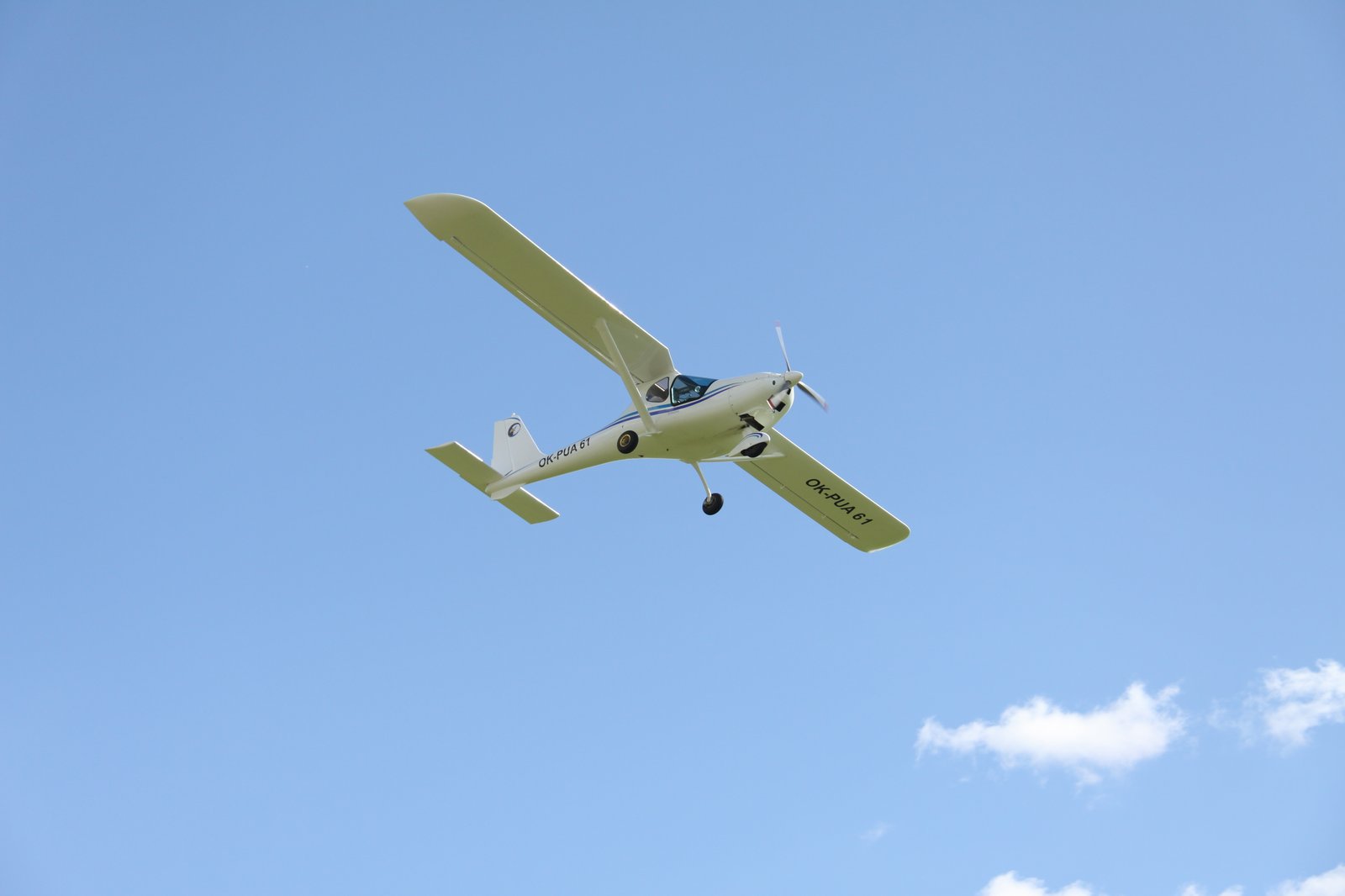
The aircraft incorporated several groundbreaking features for its class. The airframe utilized advanced composite materials including GFRP and CFRP-reinforced resin construction with foam and carbon fiber spars. Most notably, the wing featured a modified laminar flow NN-1817 airfoil section with a root cutout specifically designed to improve cockpit visibility. Full-span electrically actuated flaperons provided precise control, while the sweptback vertical stabilizer with underfin gave the aircraft its distinctive appearance.
Technical Specifications and Performance
The JK-05 Junior measures 5.7 meters in length with a wingspan of 10.58 to 10.68 meters, depending on variant. Wing area totals 10.2 square meters, supporting a maximum takeoff weight of 450 kilograms for the standard JK-05L version. The aircraft achieves impressive performance figures with a maximum speed of 200 km/h, cruise speed of 180 km/h at 75 percent power, and stall speed as low as 55 km/h with flaps deployed.
Powered by the reliable 80-horsepower Rotax 912UL four-stroke engine, the JK-05L variant consumes approximately 10 liters per hour from its 70-liter fuel capacity split between twin 35-liter tanks mounted behind the seats. The engine drives a 1.72-meter Aero-Sail three-blade ground-adjustable propeller and features automatic coolant thermostat control. This powerplant combination provides a climb rate of 6 meters per second and operational range of 1,000 kilometers.
Manufacturing and Production Success
Ekolot's factory in Krosno, Poland, achieved early production milestones with 24 aircraft in the Junior series completed by April 2003. The company's innovative approach included designing the aircraft for rapid assembly and disassembly by just two people in approximately 10 minutes, making it ideal for storage and transport. This capability proved crucial for export markets and kit aircraft sales.
The manufacturer offered multiple engine options to suit different markets and regulations. Early JK-05 models could be equipped with the two-stroke Rotax 582 UL, while later variants included the Verner 133 M (introduced May 2002) and the four-stroke Rotax 912 UL (October 2002). The JK-05L variant achieved Polish certification in February 2010 and remains in current production.
International Market Penetration
The Junior series gained international recognition following its public debut at the Blois, France air show in mid-2000, where it secured four immediate orders from French customers. Export success followed rapidly, with aircraft delivered to Canada and France among the early international sales.
Canadian distributor Skypaths Inc. marketed a specialized "Pathmaker" variant featuring the Rotax 912 ULS engine and increased maximum takeoff weight of 560 kilograms. In South Africa, Sabre Aircraft, operated by Richard Stubbs and Denis Southby, handled regional distribution. German operators embraced the type, with aircraft like D-MJKA, built in 2008, remaining active at facilities such as Flugplatz Leer-Papenburg as recently as November 2019.
Operational Characteristics and Safety
The JK-05 Junior features conventional flight controls using pushrods and cables connected to a central control stick with electric trim. The 1.2-meter-wide cockpit accommodates two occupants side-by-side, while tricycle landing gear with composite legs and braked main wheels provides stable ground handling. An optional ballistic recovery parachute system enhances safety margins.
Aviation safety databases record several incidents involving the type, including accidents to aircraft C-IDPG on March 17, 2005, registration 988-GC on December 23, 2011, and C-IBIC on June 5, 2017. Despite these isolated incidents, the aircraft maintains an active presence in ultralight aviation communities worldwide.
Current Status and Legacy
Ekolot continues JK-05L Junior production today, offering both kit aircraft and ready-to-fly configurations. The 2003 price of €27,500 plus tax positioned it competitively in the ultralight market. The Junior series later evolved into the Ekolot KR-030 Topaz, demonstrating the design's fundamental soundness and adaptability.
Registered aircraft remain active across multiple countries, with examples like 45VR in France, OK-QUS46, and OM-M050 representing the type's continued operational service. The JK-05 Junior's combination of composite construction, rapid assembly capability, and compliance with international microlight regulations established important precedents for modern ultralight aircraft development.