
Production and Development
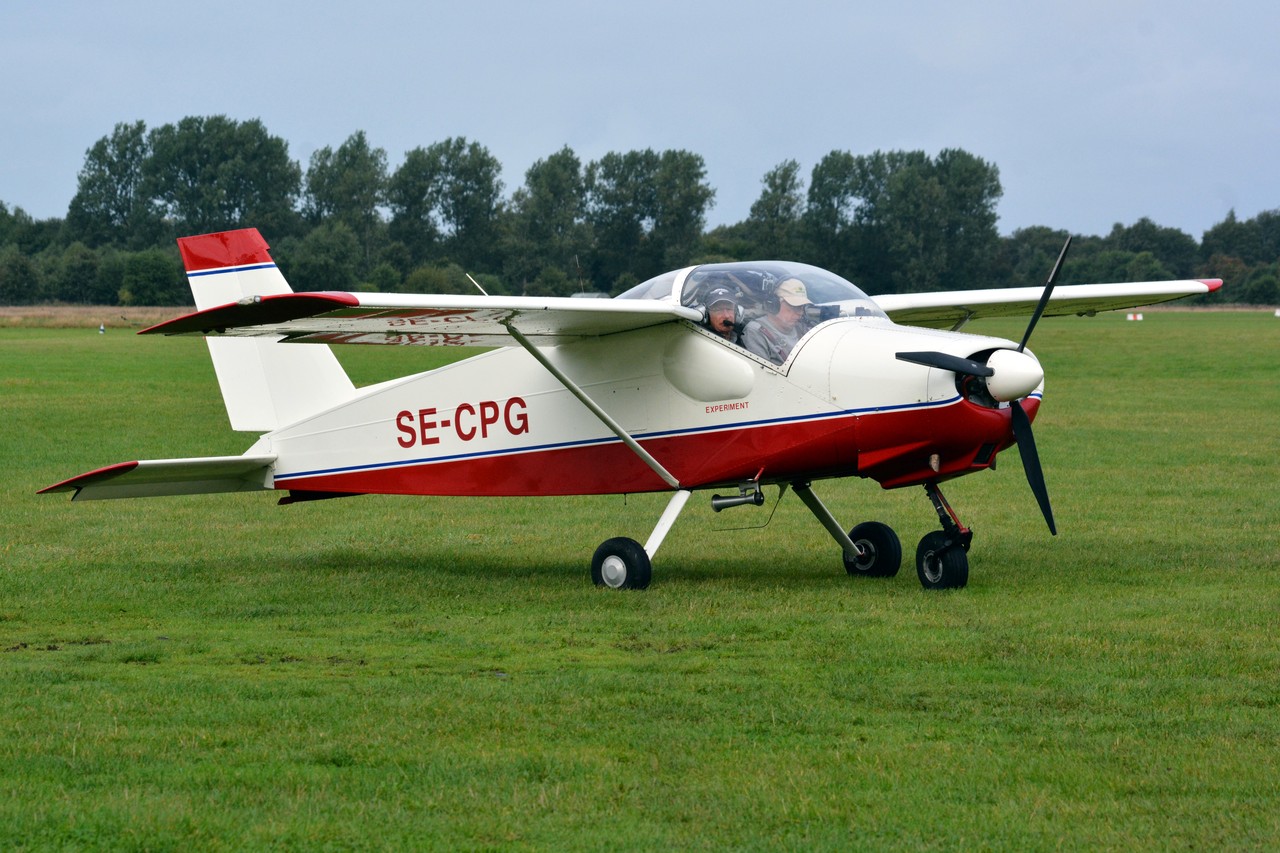
The Junior's story began with Swedish designer Eric Andreasson, who developed the original single-seat BA 7 that first flew in 1958. Andreasson evolved his design into a two-seat configuration by 1960 and brought it to Europe for the 1961 Paris Airshow as chief designer at AB Malmö Flygindustri (MFI). The production MFI-9 Junior first took flight on August 9, 1962, with MFI building 28 units in Sweden starting that year.
The Manufacturer
Bölkow Entwicklungen KG acquired the German manufacturing license in 1963, initially planning to build 200 aircraft. Founded by Ludwig Bölkow in 1948, the company had established itself in helicopter development with Emil Weiland from 1955, while also producing gliders and missiles including the Cobra, HOT, MILAN, and Roland systems. The company operated primarily from Stuttgart and later Ottobrunn, manufacturing the Bo.208C at facilities in Laupheim and Nabern/Teck through 1971.
Bölkow's independence ended through a series of mergers that reshaped German aerospace. In June 1968, the company merged with Messerschmitt to form Messerschmitt-Bölkow, creating West Germany's largest aircraft manufacturer with sales of approximately $150 million. The following year brought another merger with Hamburger Flugzeugbau to create Messerschmitt-Bölkow-Blohm (MBB). Daimler-Benz acquired the company in the early 1990s as part of DASA, which later became EADS in 2000 and ultimately Airbus.
Design Philosophy and Technical Innovation
Andreasson's design objectives centered on creating an extremely simple, rugged aircraft suitable for both training and touring roles. The Junior featured a basic slab-sided fuselage paired with thin wings based on a modified NACA 23009 airfoil, swept forward three degrees. The wing structure utilized seven pressed ribs mounted on I-beam and U-channel spars, supported by external struts for maximum simplicity and strength.
The aircraft's frame number 3 carried the primary structural loads and key components, while the 22 imperial gallon fuel tank provided positive head pressure to ensure reliable fuel flow. Notable innovations included corrosion-resistant chromate primer, an accurate fuel gauge with low-level warning light, and twin silencers that provided exceptional cockpit quietness during cruise flight.
Engine and Performance
Power came from the reliable Rolls-Royce Continental O-200-A, a horizontally-opposed four-cylinder engine producing 100 horsepower at 2,750 rpm. This powerplant, coupled with a McCauley 1A100MCM6955 two-blade fixed-pitch metal propeller, provided a 2,000-hour time between overhaul and could operate on ordinary automotive fuel.
The Junior achieved a maximum speed of 143 mph and cruised at 127 mph, with a gentle stall speed of just 40 knots with full flaps deployed. Maximum range reached 540 nautical miles, while practical range with reserves extended to 450 nautical miles with a five-hour endurance. The aircraft could climb at 785 feet per minute to a service ceiling of 14,100 feet, with wing loading of 13.2 pounds per square foot and power loading of 13.9 pounds per horsepower.
Pilot Experience and Handling
Pilots praised the Junior for its forgiving handling characteristics and superb visibility, making it ideal for sightseeing and training roles. The side-by-side seating arrangement in the extended 'C' model cockpit provided four inches more room than earlier variants, accommodating two occupants with a useful load of 500 pounds and maximum baggage capacity of 45 pounds. At cruise power settings of 2,450 rpm, the aircraft achieved 98 knots while consuming 4.75 gallons per hour, while more economical settings of 2,350 rpm yielded 90 knots at 4.25 gallons per hour.
Evolution and Variants
The design evolved through several iterations during its production run. The 'B' model, introduced in May 1964, featured electric flaps, a strengthened nose wheel, and optional wingtip extensions for improved performance. The 'C' Series III, launched in 1966, incorporated the extended cockpit, increased fuel capacity, and higher maximum weight limits.
A military variant called the MFI MiliTrainer emerged in the 1970s, designed for training and potential counter-insurgency roles including ground attack missions. However, this tougher variant sold only a few examples and received no official factory support, effectively ending the Junior's military aspirations.
Legacy and Current Status
Despite initial plans for larger production runs, only a few hundred Junior aircraft were built across all variants and manufacturers. The aircraft's simple, rugged design philosophy suited it well for private ownership and home maintenance, requiring no special parts or complex procedures. However, few examples remain airworthy today, and the type failed to achieve significant commercial success.
The Junior represents an interesting chapter in post-war European general aviation, demonstrating how Scandinavian design philosophy influenced German manufacturing. While it never achieved the commercial success of contemporary designs, it remains valued by enthusiasts for its honest simplicity and reliable touring capabilities.