
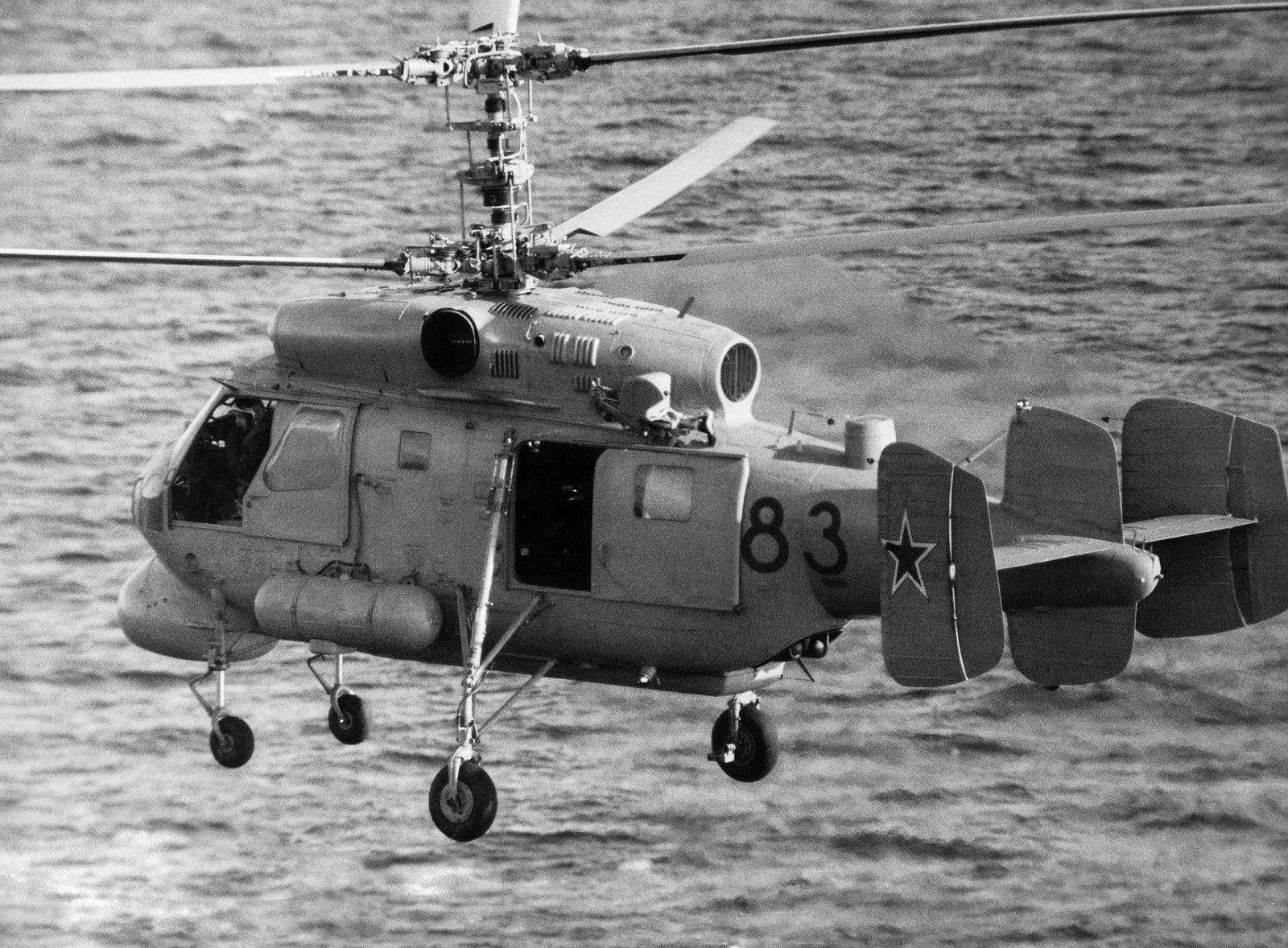
Naval Aviation Pioneer
The Ka-25 represented a quantum leap in Soviet naval capabilities, serving as the backbone of anti-submarine warfare operations for over three decades. Entering service with the Soviet Navy in 1968, the helicopter could deploy from cruisers, destroyers, and specialized aviation ships, extending the fleet's detection range against Western nuclear submarines by hundreds of miles. During the height of the Cold War, Ka-25s maintained constant patrols over critical maritime zones, their sophisticated sonar systems and radar equipment capable of tracking submerged targets that posed existential threats to Soviet naval operations.
The Kamov Legacy
Nikolai Kamov's design bureau, established in 1948 after wartime disruptions, specialized in coaxial rotor configurations that proved ideal for shipboard operations. The Ka-25 evolved from the experimental Ka-20, incorporating lessons learned from earlier models like the Ka-10 and Ka-15. Kamov's innovative approach eliminated the vulnerability of tail rotors in the confined spaces of ship decks, while providing superior stability in harsh maritime conditions. The design bureau, now operating as part of Russian Helicopters under the Rostec Corporation, continues producing advanced coaxial helicopters including the Ka-52 and Ka-27 successors.
Engineering Excellence
The Ka-25's twin GTD-3F turboshaft engines, manufactured by the Omsk Engine Design Bureau, initially delivered 900 horsepower each but were upgraded to more powerful GTD-3M variants producing 1,000 horsepower by 1972. This power increase addressed early performance limitations that restricted the helicopter's operational envelope. The engines featured specialized hot-air inlet de-icing systems essential for reliable operation in the frigid conditions of northern seas, while corrosion-resistant materials throughout the airframe withstood the corrosive salt spray environment.
The coaxial rotor system, spinning in opposite directions to cancel torque effects, provided exceptional maneuverability and eliminated the space requirements of conventional tail rotors. This configuration proved crucial for operations on cramped ship decks where every foot of clearance mattered. The helicopter's compact 18-foot height allowed storage in standard naval hangars, while its robust landing gear absorbed the stresses of deck landings in heavy seas.
Operational Variants
The primary Ka-25PL anti-submarine variant carried sophisticated sonar equipment, magnetic anomaly detectors, and sonar buoys for submarine detection. Armed with lightweight torpedoes and depth charges, these helicopters could prosecute contacts immediately upon detection. The specialized Ka-25BShZ minesweeping variant, with only eight examples built, used powerful electromagnetic generators to detonate naval mines. Search and rescue duties fell to the Ka-25PS variant, equipped with rescue hoists and medical equipment for maritime emergencies.
Performance Characteristics
Pilots appreciated the Ka-25's stability and predictable handling characteristics, crucial qualities when operating from moving ship decks in challenging weather conditions. The helicopter achieved maximum speeds of 130-150 mph with a service ceiling exceeding 10,000 feet and operational range of 300-500 kilometers. The three-person crew typically included a pilot, copilot, and systems operator who managed the complex array of detection and weapons systems. Unlike Western naval helicopters, the Ka-25 required no deck handling equipment beyond standard tie-down points, simplifying shipboard operations.
Global Operations
Beyond Soviet service, the Ka-25 equipped naval forces in Ukraine, India, Syria, Bulgaria, and Vietnam, extending Soviet influence through military helicopter exports. Indian Ka-25s operated from aircraft carriers and major surface combatants, providing anti-submarine coverage in the Indian Ocean. The helicopter's reliability in tropical conditions proved its adaptability beyond the Arctic waters for which it was originally designed.
Production and Legacy
Production at Ulan-Ude Aviation Plant concluded in 1973 after approximately 460 units across 25 variants had been completed. The Ka-25 pioneered shipborne helicopter operations that became standard practice for modern navies worldwide. While retired from frontline Russian service by the 2000s, the fundamental design principles developed for the Ka-25 continue in the larger, more capable Ka-27 and Ka-32 helicopters.
Today, preserved examples reside in Russian aviation museums, representing a crucial chapter in Cold War naval aviation. The Ka-25's influence extends beyond its service life, establishing coaxial rotors as a viable alternative to conventional helicopter configurations and proving that innovative engineering could overcome the unique challenges of maritime aviation.