
Service History
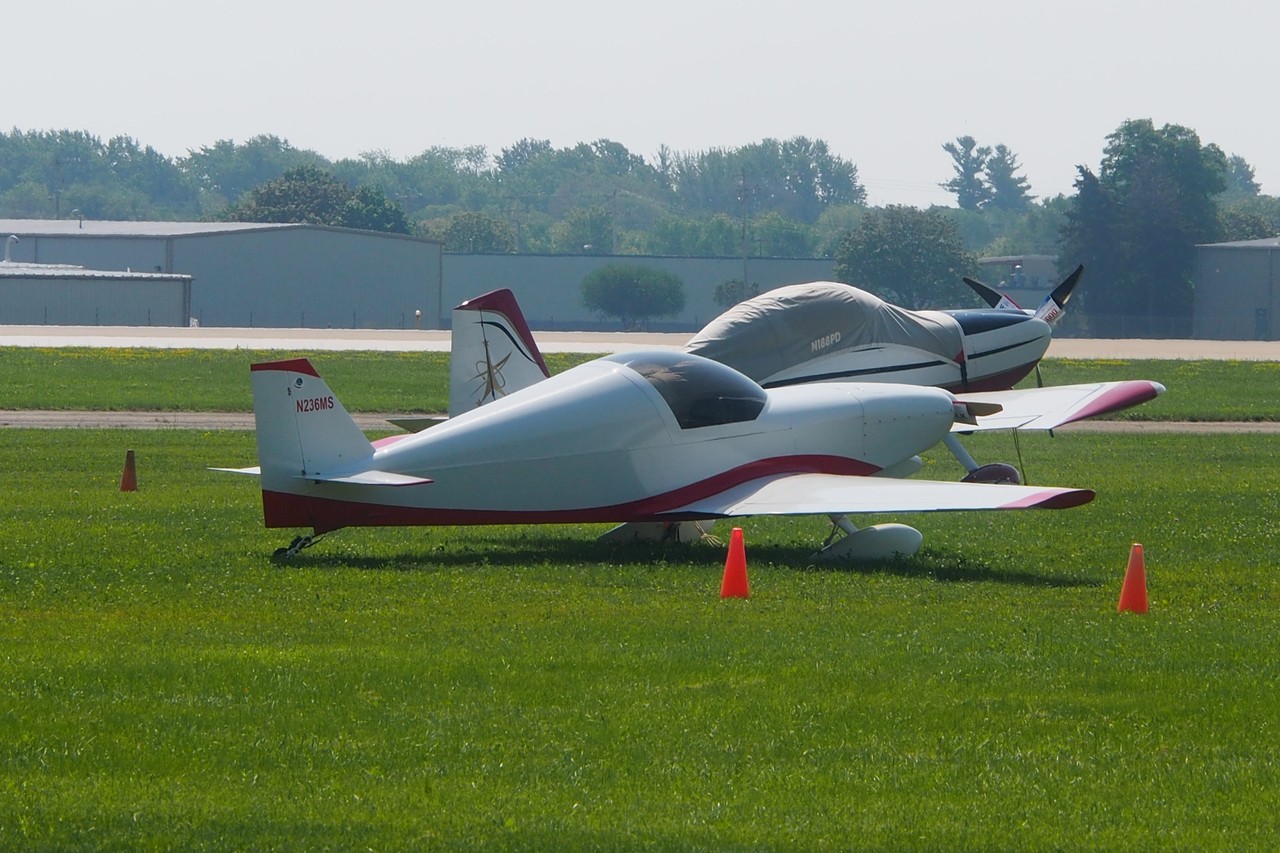
The KR-2 achieved remarkable commercial success in the homebuilt aircraft market, with approximately 9,200 plan sets sold by 1996. By that same year, an estimated 1,200 completed aircraft were flying worldwide, placing the KR series among the all-time sales leaders alongside the Bensen Gyrocopter and BD-5 in the build-it-yourself aviation segment. The aircraft found operators across multiple continents, with registered examples in the United States, Canada, United Kingdom, Australia, and numerous other countries.
Notable operational achievements include Colin Hales' British-registered KR-2 (G-BYLP), which completed a round-the-world flight after being flown to Oshkosh in 2014. Hales made approximately 66 flights to reach Australia before continuing his global circumnavigation, demonstrating the aircraft's capability for long-distance adventure flying.
The Manufacturer
Rand Robinson Engineering Inc. was established in 1974 in Huntington Beach, California, specifically to market plans for Ken Rand's aircraft designs. Unlike traditional manufacturers, RRE operated exclusively as a plans and materials kit supplier, allowing individual builders to construct their own aircraft. The company emerged from the success of Rand's earlier KR-1 single-seater, which had sold nearly 5,000 plan sets by March 1975.
Ken Rand himself was a professional flight-test engineer with Douglas Aircraft Company, bringing significant aerospace expertise to the homebuilt market. His partner Stuart Robinson assisted with design and stress analyses, completing the KR-2 development shortly before the 1973 Oshkosh airshow. The Wicks Organ Company of Highland, Illinois, constructed a demonstration KR-2 in 1974 as a commercial venture to promote RRE's materials kits, completing the project in just 74 days between May 16 and July 27, 1974.
Engine & Technical Details
The KR-2 was powered exclusively by Volkswagen-based conversion engines, with the prototype equipped with a Revmaster 1834cc four-cylinder horizontally-opposed air-cooled powerplant producing 60 horsepower at 3200 rpm. Revmaster, a specialist in VW engine conversions for aircraft use, provided the primary powerplant option, though builders could also utilize smaller 1600cc and 1700cc VW conversions. The aircraft's structure was designed to be "more than adequately stressed" for these smaller engines, providing builders with flexibility in powerplant selection.
The fuel system incorporated a 10-gallon fuselage tank plus an additional 2-gallon tank located in the right wing root, providing sufficient range for cross-country flights. The prototype utilized a Bernard Warnke ground-adjustable propeller, optimized for the VW engine's operating characteristics.
Pilot Perspective
The KR-2's flight characteristics reflected lessons learned from KR-1 operations, where builders had progressively upgraded from the original 1200cc engines to larger powerplants seeking improved performance. With the 1834cc Revmaster engine, the aircraft achieved an indicated airspeed of 180 mph, providing sport aircraft performance that rivaled factory-built designs.
The prototype's first flight occurred on June 1, 1974, piloted by Frank Baylor, demonstrating satisfactory handling characteristics from initial testing. The aircraft required a crew of one, with the second seat available for passenger or training operations. Performance specifications included a cruising speed approaching 180 mph and operational capabilities suitable for recreational and cross-country flying.
Design Evolution
The KR-2 emerged from popular demand for a two-seat variant of Ken Rand's successful KR-1 single-seater. Design modifications included a wider cockpit to accommodate two occupants, approximately two additional feet of fuselage length, and about four more feet of wingspan compared to the KR-1 to handle the increased structural loads and weight.
Construction of the prototype began immediately following Rand's return from the 1973 Oshkosh event, with the rapid development timeline reflecting the designer's extensive aerospace experience and the pressure of market demand for a two-place homebuilt aircraft.
Production & Legacy
By 1996, the combined KR-1 and KR-2 series had sold nearly 15,000 plan sets, establishing it as one of the most successful homebuilt designs in aviation history. The KR-2's success demonstrated that practical, high-performance two-seat aircraft could be constructed by amateur builders using affordable plans and readily available materials.
The aircraft continues to attract builders decades after its introduction, with new examples regularly completed and flown. The design's enduring popularity stems from its combination of relatively simple construction techniques, proven performance, and the availability of reliable, affordable powerplants through VW engine conversions. Modern examples often incorporate updated avionics and engine improvements while maintaining the basic airframe design that made the KR-2 a homebuilt aviation icon.