
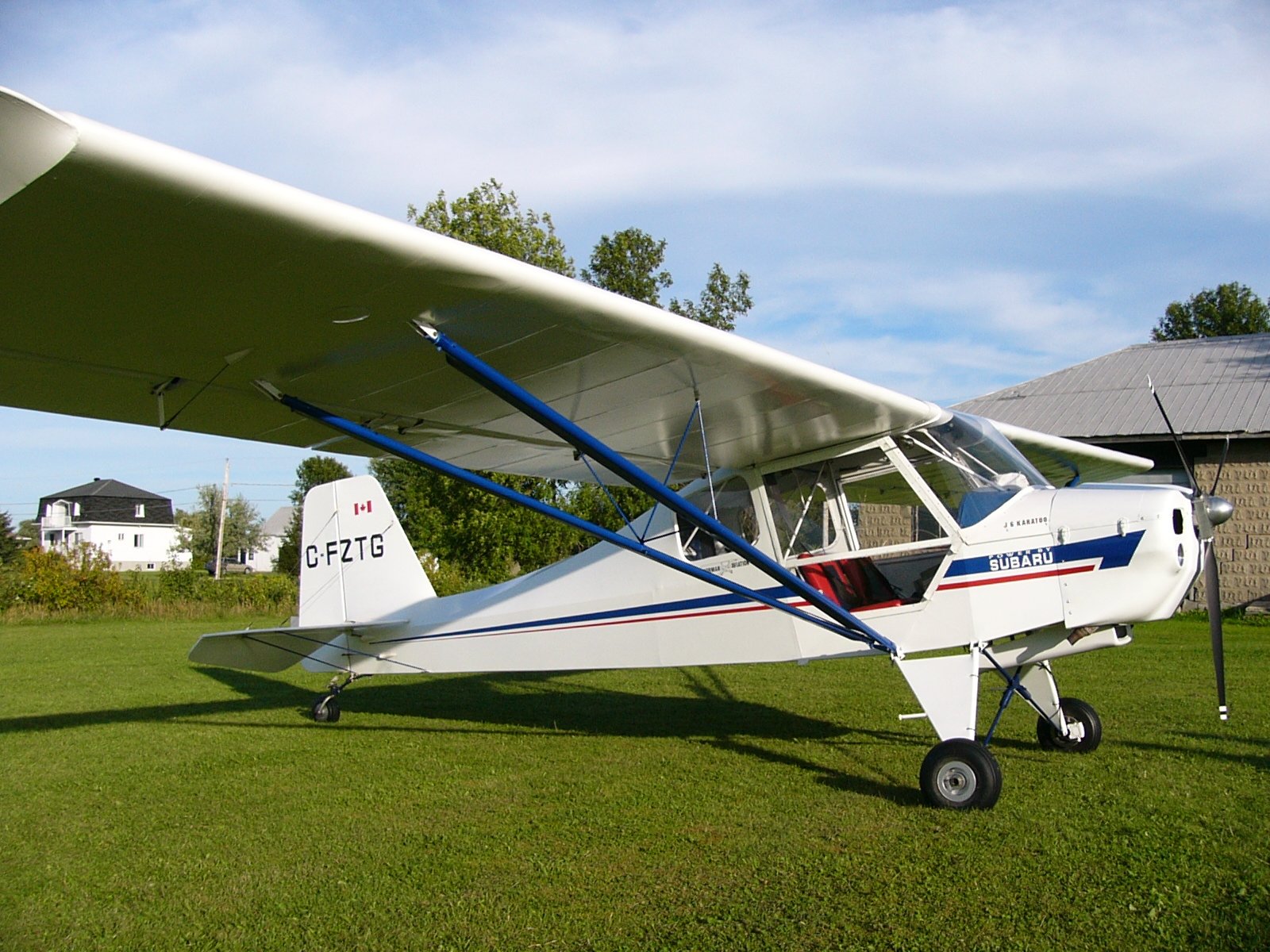
Design Origins and Development
The Norman Aviation J6 Karatoo emerged from Jesse Anglin's original Australian design, adapted specifically for Canadian ultralight regulations. Anglin, an aircraft designer from Hendersonville, North Carolina, had created the original J6 Karatoo design in 1982 as part of his series of homebuilt aircraft that also included the J3 Kitten, J4 Sportster, and the retro-styled Spacewalker. Norman Aviation acquired the rights to produce a modified version that would meet Transport Canada's ultralight aircraft requirements.
The Manufacturer
Norman Aviation operated from Saint-Anselme, Quebec, specializing in steel tube and wood ultralight aircraft construction. The company focused on providing both kit aircraft for amateur builders and complete ready-to-fly aircraft to the Canadian market. Unlike many ultralight manufacturers that continued production for decades, Norman Aviation maintained a focused ten-year production run before ceasing operations in 1998.
Construction and Technical Innovation
The J6 Karatoo featured a robust construction methodology using welded 4130 steel tubing for the fuselage frame, combined with wooden wing structures. This hybrid approach provided durability while maintaining the lighter weight essential for ultralight classification. The high-wing configuration incorporated V-struts and jury struts for structural support, with the wing mounting functional flaps to improve low-speed handling characteristics.
The enclosed cockpit represented a significant comfort advantage over many open-cockpit ultralights of the era. Side-by-side seating with doors provided weather protection and allowed for effective flight instruction, making the aircraft suitable for training applications within the ultralight community.
Engine Options and Performance
Norman Aviation offered three distinct powerplant options to meet varying performance and budget requirements. The base configuration used the 64-horsepower Rotax 582 two-stroke engine, providing adequate performance for basic recreational flying. The premium option featured the 80-horsepower Rotax 912UL four-stroke engine, delivering improved reliability and fuel efficiency for extended cross-country flights.
The most distinctive powerplant choice was the Subaru EA automotive conversion, available in variants producing between 71 and 100 horsepower. The standard 90-horsepower Subaru EA installation used a four-cylinder, air-cooled automotive engine modified for aircraft applications. This conversion provided significant power advantages over traditional ultralight engines, enabling the J6 Karatoo to achieve a maximum speed of 100 mph and a service ceiling of 10,000 feet.
Pilot Perspective and Flying Characteristics
The J6 Karatoo earned recognition for its forgiving flight characteristics and practical cross-country capabilities. With a stall speed of just 38 mph, the aircraft remained manageable for pilots transitioning from training to recreational flying. The 650-feet-per-minute climb rate provided adequate performance for avoiding obstacles and reaching cruise altitude efficiently.
Cruise performance of 90 mph, combined with a 350-mile range from its 12-gallon fuel capacity, positioned the aircraft as a genuine cross-country tourer rather than merely a local area recreational machine. The 10,000-foot service ceiling allowed pilots to clear most terrain obstacles and take advantage of favorable winds at altitude.
Production Record and Market Impact
Norman Aviation maintained steady production throughout its operational decade, completing exactly 75 aircraft by December 1998. The company offered both kit and complete aircraft options, with the kit requiring an estimated 300 hours of construction time. This relatively modest build time made the aircraft accessible to amateur constructors while maintaining professional construction standards.
By February 2018, twelve Norman J6 Karatoos remained active on the Transport Canada Civil Aviation Register, demonstrating the type's durability and continued operational utility two decades after production ended. This retention rate reflects both the aircraft's robust construction and its ongoing value to recreational pilots.
International Legacy
While Norman Aviation's production ended in 1998, the underlying Anglin J6 design continued evolving internationally. The original design spawned variants produced by multiple manufacturers including Amax Engineering in Australia, Skyway Aircraft, and currently Serenity Aviation, which produces the J6C variant. This international production demonstrates the fundamental soundness of Anglin's original design concept.
In the United States, fourteen J6 Karatoos were registered with the Federal Aviation Administration as of August 2012, operating in both Experimental Amateur Built and Light Sport Aircraft categories. This cross-border registration success highlighted the design's adaptability to different national aviation regulatory frameworks.
Current Status
The Norman Aviation J6 Karatoo represents a completed chapter in Canadian ultralight aviation history. With production definitively ended and Norman Aviation no longer in operation, existing aircraft have become increasingly valuable to collectors and recreational pilots seeking proven ultralight performance. The type's steel tube and fabric construction methodology continues influencing modern ultralight designs, while the original examples serve as testaments to 1990s Canadian aviation manufacturing capabilities.