
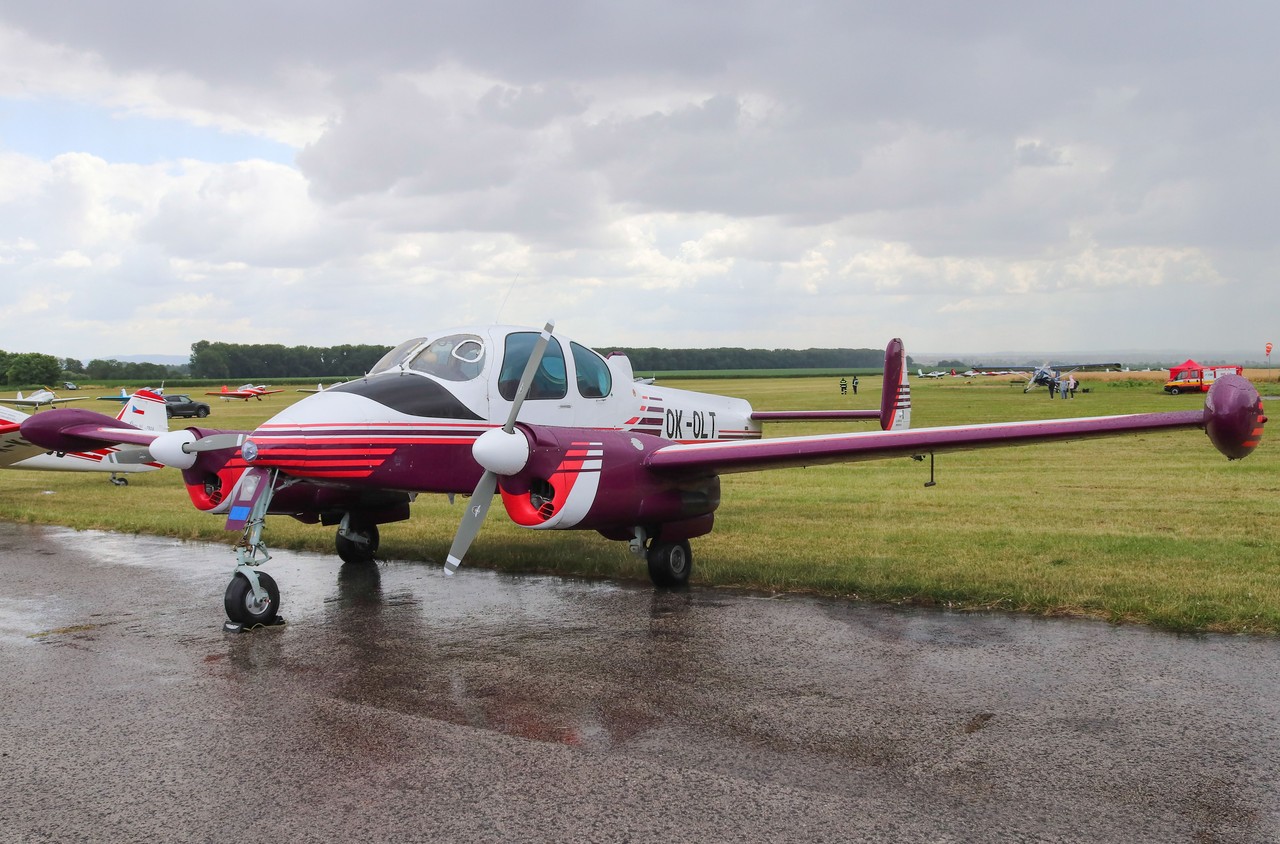
Service History
The L-200 Morava achieved remarkable commercial success for a Czechoslovak aircraft, with Aeroflot becoming its largest operator by acquiring 181 units (68 L-200A and 113 L-200D variants). The Soviet airline deployed these aircraft as air taxis throughout the USSR until the 1970s, when they were systematically withdrawn in favor of domestically produced designs. Czechoslovak Airlines operated 45 Moravas on domestic routes, while the aircraft also found specialized roles including air ambulance service in Poland.
The aircraft's export success extended beyond the Soviet bloc when Yugoslavia's Libis facility in Ljubljana assembled five additional units from Czechoslovak-supplied kits beginning in mid-1964. Pan Adria operated at least one of these Yugoslav-assembled aircraft, registered YU-BBE, demonstrating the type's appeal across different aviation markets.
The Manufacturer
Let Kunovice emerged from Czechoslovakia's postwar state-controlled aviation industry as Factory No. 17, inheriting expertise from the prewar Aero company. The facility had previously manufactured the Aero Ae 45, but the L-200 represented its first entirely new design developed under communist rule. Located in Kunovice, Moravia, the factory focused on light aircraft production as part of Czechoslovakia's broader industrial modernization program.
The company evolved through various organizational changes in the decades following L-200 production, eventually becoming part of the modern Czech aerospace industry. Today's Czech aviation sector traces its lineage back to these state factories, though the direct operational connection to the original Let Kunovice facility remains unclear.
Design and Development
Czechoslovak designer Ladislav Smrček led the engineering team that created the L-200 as a successor to the aging Aero Ae 45 series. The design objectives called for a modern five-seat aircraft with clean aerodynamic lines and superior performance compared to existing Czechoslovak types. Test pilot Ladislav Šváb took the first prototype, registered OK-LNA and designated XL-200, into the air on April 9, 1957.
The aircraft incorporated several advanced features for its era, including a low-wing configuration that provided both aerodynamic efficiency and structural advantages. The smooth, elegant fuselage design reflected 1950s aerospace aesthetics while serving practical purposes in reducing drag and improving passenger comfort.
Engine and Technical Specifications
The L-200's powerplant evolved through its production history, beginning with Walter Minor 6-III inline engines producing 160 horsepower each in the prototypes. Production aircraft received the more powerful Walter M-337 (initially branded as Avia M 337) fuel-injected engines, each generating 210 horsepower. The L-200D variant paired these engines with three-blade V-506 propellers for improved performance.
A single L-210 prototype, registered OK-PHB, flew in 1966 with 245-horsepower Walter M-338 engines and six-seat capacity, but this variant never entered production. The standard L-200 accommodated four to five passengers plus one or two crew members, depending on the specific mission requirements.
Production and Variants
Let Kunovice manufactured 367 L-200s between 1958 and 1964, including three prototypes and ten pre-production aircraft. The production breakdown included eight early L-200A aircraft plus the prototype converted to L-200D standard, bringing total L-200D production to 197 units. This represented one of the most successful export programs for Czechoslovak aviation.
The Czechoslovak Air Force evaluated the type with 20 aircraft, including two pre-series machines, though these served in utility rather than combat roles. The military's limited adoption reflected the aircraft's primary design as a civilian transport rather than a military platform.
Operational Experience
Pilots appreciated the L-200's modern handling characteristics and reliable twin-engine safety margins compared to single-engine alternatives. The fuel-injected Walter engines provided consistent performance across varying atmospheric conditions, while the low-wing configuration offered stable flight characteristics suitable for both experienced pilots and commercial operators.
The aircraft's performance specifications, while not detailed in available records, proved adequate for the light transport and air taxi roles it typically filled. Its operational ceiling and range capabilities satisfied the requirements of both domestic operators and international customers throughout its service life.
Legacy
The L-200 Morava represented the pinnacle of Czechoslovak light aircraft design during the Cold War era, demonstrating that Eastern European manufacturers could produce competitive civilian aircraft for international markets. Its success with Aeroflot and other operators validated the design philosophy behind modern light twins, even as most examples were retired by the 1970s.
Today, surviving Moravas represent important artifacts of Czechoslovak aviation achievement. While exact numbers of airworthy aircraft remain unclear, the type's historical significance lies in its demonstration that smaller nations could develop successful aviation products during the challenging political and economic environment of the 1960s.