
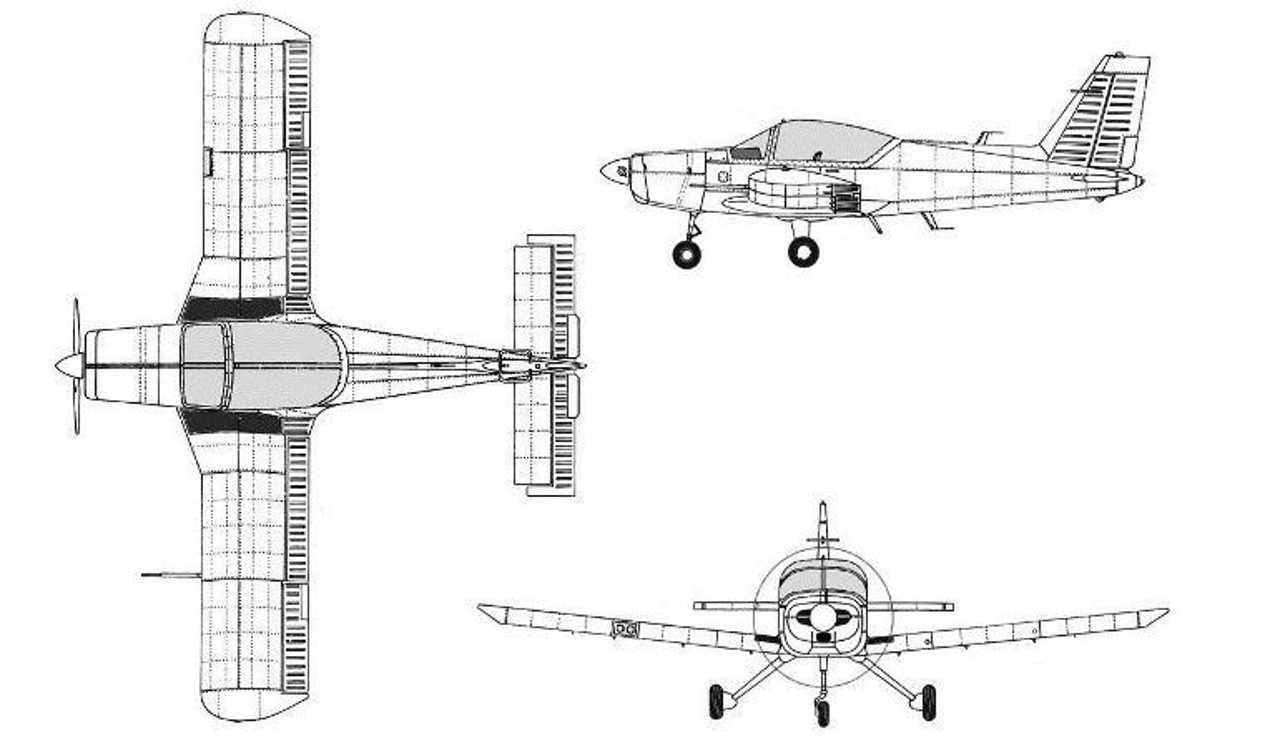
Development and Design
Valmet initiated development of the L-70 Vinka in September 1970 as Finland's answer to replacing the Swedish-built Saab Safir trainers in Finnish Air Force inventory. The design team aimed to create a versatile aircraft capable of primary flight training, aerobatics, night and instrument training, observation, liaison, target towing, and agricultural applications. The aircraft was designed to meet FAR 23 certification standards for both aerobatic and utility categories, with specific emphasis on operating from unpaved runways using fixed tricycle landing gear.
The prototype, designated LEKO-70, achieved its maiden flight on July 1, 1975, marking Finland's entry into indigenous military aircraft production. After extensive testing and refinement, the first production aircraft (VN-1) took to the skies on December 29, 1979. The Vinka featured an all-metal construction with a distinctive low-wing configuration and bubble canopy that provided exceptional visibility for training operations.
Military Service with the Finnish Air Force
The Finnish Air Force operated all 30 Vinka aircraft from 1980 until the type's retirement on September 1, 2022, providing over four decades of faithful training service. Initially based at Kauhava Air Base until 2005, operations subsequently moved to Tikkakoski, where the aircraft served in multiple training roles including first solo flights, type rating instruction, navigation training, night flying, instrument procedures, and aerobatic training.
Despite its primary role as a trainer, the Vinka possessed considerable armament capability. The aircraft could mount two 7.62mm machine guns with 500 rounds per gun or a single 12.7mm cannon with 150 rounds. Four underwing hardpoints provided mounting for up to 300 kilograms of ordnance, including 68mm rockets, 100-kilogram bombs, or AS-11 missiles, though these weapons were never employed in combat operations.
In 2002, the Finnish Air Force modernized the Vinka fleet with Garmin GNS 430 avionics systems, along with structural reinforcements to extend service life. This upgrade program demonstrated Finland's commitment to maximizing the aircraft's operational longevity.
Technical Specifications and Performance
The Vinka's powerplant consisted of a single Lycoming AEIO-360-A1B6 flat-four piston engine producing 149 kilowatts (200 horsepower). This reliable engine, weighing 117 kilograms dry, drove a two-bladed propeller and incorporated components such as an ALU-8421-LS alternator and RSA-5AD1 fuel injector system.
Performance figures reflected the aircraft's training-focused design philosophy. Maximum speed reached 240 kilometers per hour, with a never-exceed speed of 360 kilometers per hour and cruise speed of 222 kilometers per hour. The aircraft demonstrated gentle handling characteristics with a stall speed of just 85 kilometers per hour. Operational ceiling extended to 5,000 meters, while maximum range reached 860 kilometers with an endurance of 4 hours and 48 minutes.
With an empty weight of 792 kilograms and maximum takeoff weight of 1,250 kilograms, the Vinka provided adequate payload for its intended training missions while maintaining docile flight characteristics essential for student pilot instruction.
Valmet and Manufacturing Legacy
Valmet, Finland's state-owned industrial conglomerate, manufactured the L-70 Vinka at their Kuorevesi facility during the brief production run from 1980 to 1982. The company's aviation division later evolved into Patria, which assumed responsibility for Vinka maintenance under a €42 million contract spanning 2010 to 2018. Patria continues operations today as Finland's primary defense and aerospace group.
The limited production run of exactly 30 aircraft reflected the specialized nature of the Finnish Air Force's training requirements rather than any technical shortcomings. An advanced variant, the L-80 TP Turbo, featured turboprop power and retractable landing gear. This prototype first flew in February 1985 but crashed in April 1985, ending development of the more sophisticated variant.
Retirement and Current Status
Following retirement from Finnish Air Force service on September 1, 2022, approximately 15 Vinka aircraft were sold at auction during autumn 2022. Many found new homes with educational institutions and museums, ensuring preservation of Finland's aviation heritage. The Grob G 115E, previously known as the RAF Tutor, replaced the Vinka in Finnish Air Force training operations.
VN-20 (construction number 20, registered as OH-ION) gained international recognition when displayed at the Royal International Air Tattoo at RAF Fairford, United Kingdom, on July 21, 2024, representing one of the few Vinka aircraft to appear at major international airshows.
The Vinka's design influence extended beyond its original configuration, serving as the foundation for the L-90 Redigo development program. This evolution led to variants serving with air forces in Eritrea and Mexico, the Italian Aermacchi M-290, and the American A-90 Raider used for Joint Terminal Attack Controller training, ensuring the basic design's continued relevance in modern military aviation training programs.