
Service History
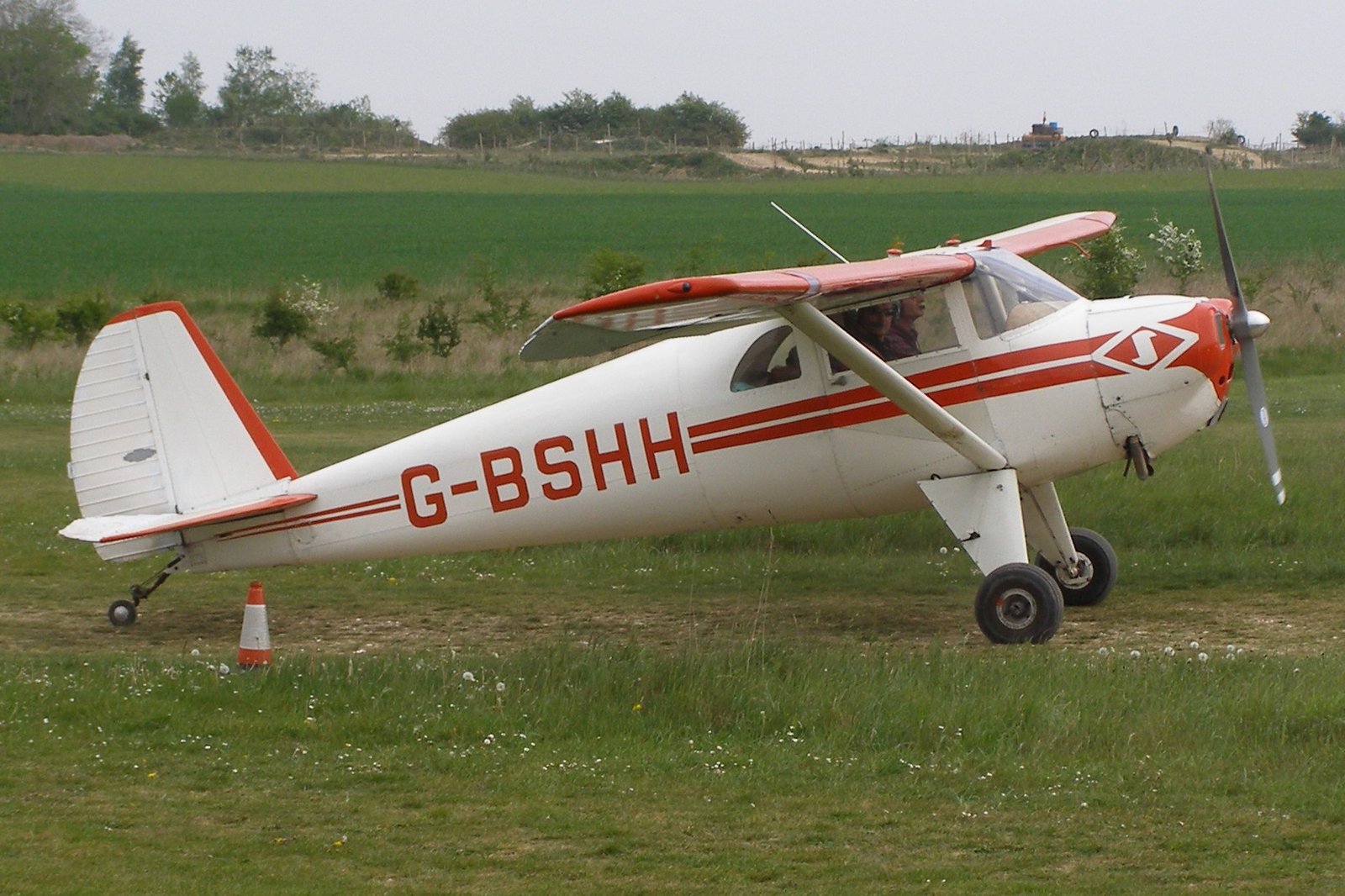
The Luscombe Silvaire 8A dominated the light aircraft training market in the immediate postwar era, becoming the benchmark against which competitors like the Cessna 120 and 140 were measured. By 1946, the 8A had captured significant market share in the booming civilian pilot training sector, with its $2,795 price point making it accessible to flying clubs and individual owners. The aircraft's robust all-metal construction proved particularly valuable in flight training environments where fabric-covered competitors suffered frequent damage from student pilots.
Wartime and Military Service
While primarily a civilian aircraft, the Silvaire served limited military roles during World War II. The U.S. Army designated impressed civilian models as the C-90 for light transport duties. Production ceased in early 1942 as Luscombe shifted to wartime manufacturing contracts. In 1947, the experimental XT8E variant competed unsuccessfully for a U.S. Air Force liaison contract, ultimately losing to the Aeronca L-16. A subsequent military variant, the tandem-seat T8F observer aircraft, entered competition in 1950 but lost to the Cessna L-19 Bird Dog.
The Manufacturer
Donald A. Luscombe founded the Luscombe Aircraft Corporation in the early 1930s, establishing production facilities in New Jersey. The company suspended civilian aircraft manufacturing in 1942 for wartime contracts, then relocated to Garland, Texas in August 1945 for postwar production. Financial difficulties led to bankruptcy in 1947-1948 during the general aviation industry collapse. Temco Aircraft Corporation acquired Luscombe's assets in 1948, producing approximately 50 additional Silvaires before focusing on military projects. In 1955, a Colorado investment group purchased the type certificate, forming Silvaire Aircraft Corporation under Otis Massey's leadership. This final iteration completed 80 aircraft using Temco-supplied parts before ceasing operations in 1960. The original Luscombe company remains defunct, though modern iterations have attempted to revive the design as light sport aircraft.
Engine and Technical Innovation
The 8A's Continental A-65-8F engine represented a significant upgrade from the original 1938 model's 50-horsepower powerplant. This four-cylinder, horizontally opposed engine displaced 171 cubic inches and provided reliable service throughout the aircraft's production run. Continental Motors produced thousands of A-65 series engines during the 1930s and 1940s, establishing their reputation for dependability in trainer aircraft. The engine's air-cooling system proved particularly well-suited to the demands of flight training operations.
Donald Luscombe's design innovations extended beyond the powerplant to the aircraft's structure. The Silvaire pioneered stamped aluminum ribs and all-metal wing construction in the light aircraft category, techniques that would become industry standard. Eugene W. Norris contributed significant engineering improvements in 1946, simplifying the wing design and reducing manufacturing costs. The aircraft's control system featured differential ailerons and a steerable tailwheel, providing responsive handling characteristics that instructors appreciated.
Pilot Perspective
Pilots praised the 8A's crisp control response and honest flying characteristics, though the aircraft demanded attention during ground operations due to its narrow landing gear stance. The side-by-side seating arrangement facilitated instruction better than tandem configurations, while the all-metal construction provided confidence in rough weather conditions. With dual 15-gallon wing tanks, the aircraft offered 340 nautical miles range at cruise power settings. The 510-pound useful load allowed two average-sized occupants with modest baggage, making it suitable for cross-country training flights.
The aircraft's 10,000-foot service ceiling and 650-foot-per-minute climb rate provided adequate performance for most training scenarios, though pilots noted the Continental engine's sensitivity to carburetor icing in certain atmospheric conditions. Modern owners frequently upgrade to 150-horsepower Lycoming engines through supplemental type certificates approved after 1965, significantly improving climb performance and cruise speeds.
Production and Legacy
Total Silvaire production reached 5,867 aircraft across all variants, with the 8A accounting for 278 prewar examples and additional postwar units. Manufacturing occurred at three primary locations: the original New Jersey facility, the postwar Garland, Texas plant, and finally Fort Collins, Colorado under Silvaire Aircraft Corporation. International sales included two 1957 Silvaire 8Fs delivered to Buenos Aires, Argentina.
Over 2,000 Silvaire aircraft remain airworthy today, testament to the design's structural integrity and continued utility. The type's influence on subsequent light aircraft development cannot be overstated—Cessna's successful 120 and 140 models directly responded to the Silvaire's market dominance. Modern restoration projects often focus on upgrading avionics and engines while preserving the aircraft's classic all-metal construction that made it a landmark achievement in affordable aviation.