
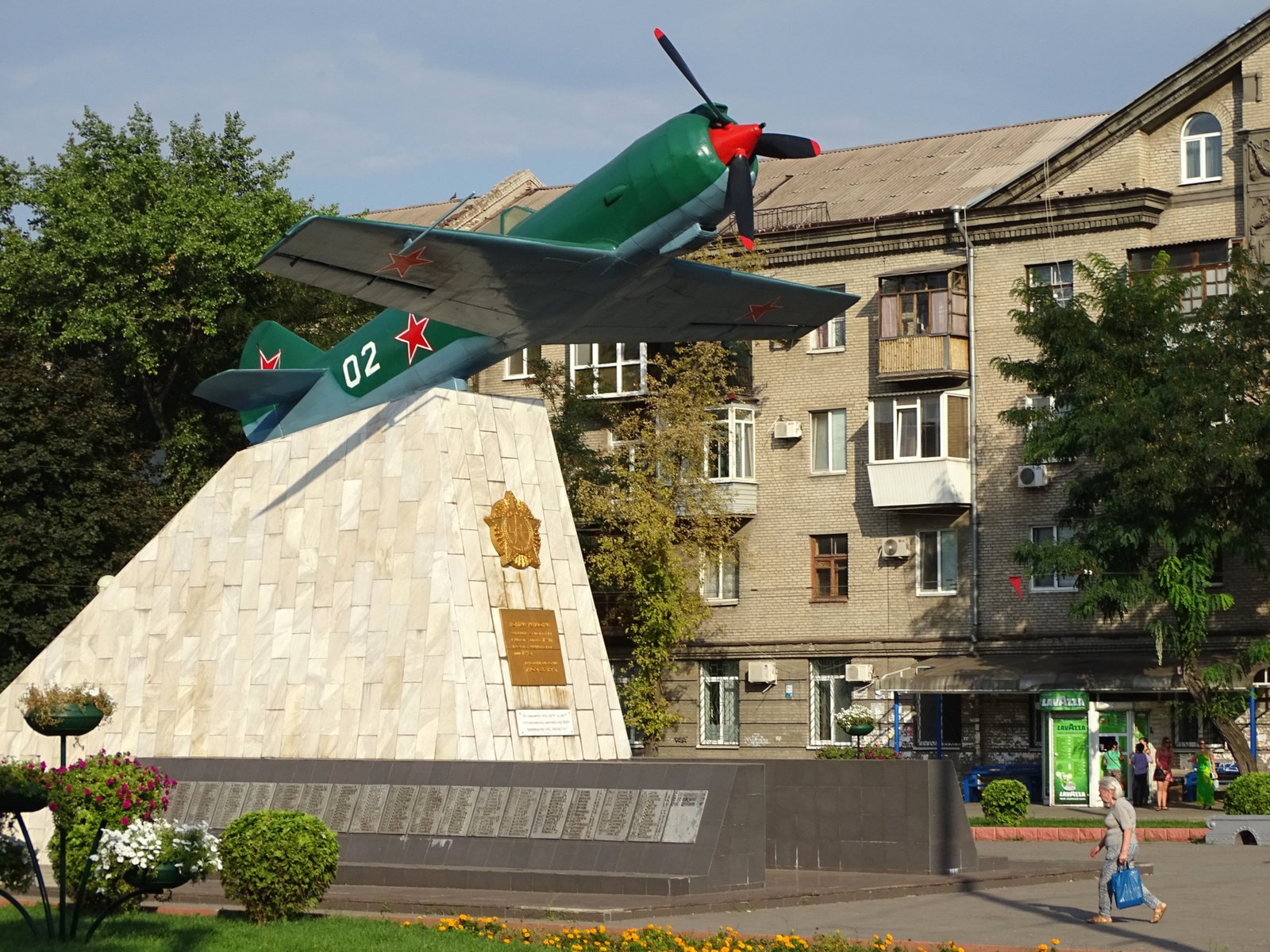
The Lavochkin La-11, known as the "Fang," was a long-range piston fighter developed by the Lavochkin OKB under the leadership of chief designer Semyon A. Lavochkin. The aircraft was a direct evolution of the all-metal La-9, representing the final stage of a design lineage that began with the LaGG-3 and continued through the La-5 and La-7. During its development, the aircraft was initially designated as the La-130 and later the La-9M before being officially certified for service as the La-11 in 1947. The prototype first flew in May 1947.
Designed specifically for long-range escort and interception, the La-11 featured several modifications to optimize endurance. While it maintained the general configuration of the La-9, designers removed one of the four 23 mm Nudelman-Suranov NS-23 cannons to reduce weight and accommodate additional internal fuel tanks. This trade-off resulted in a fighter equipped with three nose-mounted cannons, each with 75 rounds, but with a significantly extended range of 2,235 km. The aircraft was powered by a single Shvetsov ASh-82FN 14-cylinder air-cooled radial engine, producing between 1,850 and 1,900 hp and driving a three-blade constant-speed propeller.
Production began in 1947 and continued until 1951, with a total of 1,182 aircraft manufactured in the Soviet Union by the Lavochkin design bureau and the Sokol plant. In Soviet service, the La-11 operated as an interceptor for the Soviet Air Force (VVS) and the Anti-Air Defence (PVO). It saw early Cold War action, most notably on April 8, 1950, when four La-11s shot down a U.S. Navy PB4Y-2 Privateer over the Baltic Sea, and later in 1950 when two La-11s shot down a U.S. Navy P2V Neptune near Vladivostok.
Beyond the Soviet Union, the La-11 was exported to allies. The People's Liberation Army Air Force (PLAAF) of China imported 163 aircraft between 1950 and 1953, with the final units not retiring until 1966. North Korea also utilized the type during the Korean War, where it served as a long-range patrol aircraft. Additionally, Indonesia received 24 La-11s from China between 1958 and 1959. Despite its utility, the La-11's slow rate of climb (10–11 m/s) and limited ceiling of approximately 8,400–8,500 m made it ineffective against high-altitude B-29 bombers and early jet fighters, leading to its rapid replacement by the MiG-15 in Soviet units.