
Development and Design Origins
The Lake Buccaneer LA-4-200 emerged from decades of amphibian aircraft evolution that began with David B. Thurston's original designs in the 1950s. The lineage traced back to Colonial Aircraft Corporation's C-2 Skimmer, developed in Sanford, Maine. In 1959, former Grumman test pilot John F. Strayer acquired the manufacturing rights, establishing Lake Aircraft Corporation and renaming the aircraft the Lake Amphibian.
By 1968, Lake engineers recognized that their LA-4 model suffered from insufficient power, prompting development of an enhanced variant. They converted a 1968 LA-4-180 Amphibian (construction number 311) as a testbed, installing a more powerful engine and conducting initial flight testing. This prototype formed the foundation for what would become the LA-4-200 Buccaneer, representing 35 years of continuous design refinement.
Technical Specifications and Performance
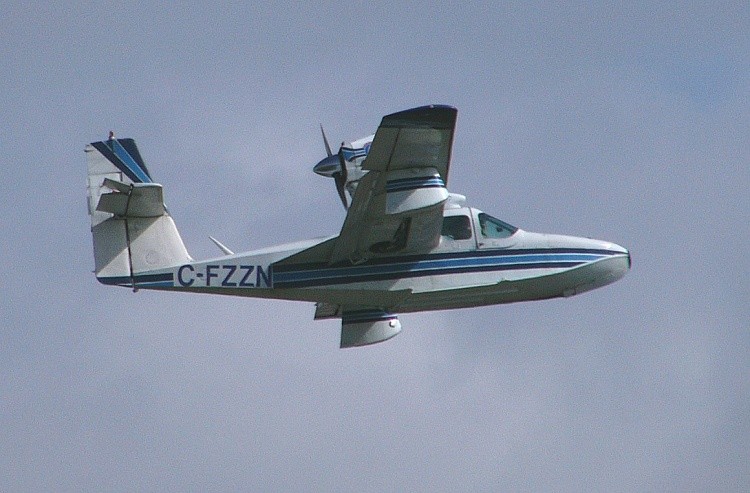
The LA-4-200's primary improvement centered on its powerplant: a 200-horsepower Lycoming IO-360-A1B fuel-injected engine mounted in pusher configuration above the aircraft's hull. This represented a significant 20-horsepower increase over the previous LA-4's 180-horsepower engine, directly addressing pilot complaints about inadequate climb performance and cruise speed.
The aircraft maintained the proven high-wing configuration with a 38-foot wingspan, measuring 23 feet 6 inches in length. Maximum gross weight increased from the LA-4's 2,400 pounds to 2,600 pounds, while useful load reached 825 pounds. The four-seat cabin provided practical accommodation for typical general aviation missions.
Fuel capacity expanded through integration of additional tanks within the wing pontoons, adding 15 gallons for a total capacity of 55 gallons. This enhancement extended operational range and improved mission flexibility, critical factors for amphibian operators frequently accessing remote waterways.
Production History
Lake Amphibian Inc., operating from Laconia, New Hampshire, launched LA-4-200 production in 1969 with serial number 431. Under CEO Herbert Lindblad's leadership, the company maintained steady production through 1981, delivering the final standard LA-4-200 at serial number 1073.
The company introduced the refined LA-4-200EP variant in 1982, continuing production through 1986 and encompassing serial numbers 1074 through approximately 1116. The EP model featured enhanced equipment including a cargo door, standard fuel floats, and modified fuel capacity of 54 gallons. By 1983, the LA-4-200EP carried a base price of $96,600, rising to between $110,000 and $125,000 by 2004.
Lake contracted with Aerofab for manufacturing support, enabling consistent production quality while meeting demand from civilian operators seeking versatile amphibian capabilities.
Operational Service and Market Position
The Buccaneer found its niche among private owners, flight training organizations, and commercial operators requiring dual land-water capability. Unlike purely seaplanes or conventional aircraft, the LA-4-200 offered operational flexibility that proved valuable for accessing remote fishing lodges, island communities, and waterfront properties lacking traditional airports.
Pilots appreciated the aircraft's improved climb performance compared to the earlier LA-4, though the pusher configuration required specific training for water operations and engine-out procedures. The high-wing design provided excellent visibility during water landings and enhanced stability on the water surface.
The Manufacturer's Evolution
Lake Amphibian Inc. represented one of the few successful manufacturers specializing in production amphibian aircraft during the general aviation boom of the 1970s. The company's focus on continuous improvement resulted in nearly 1,000 aircraft of all models delivered through the late 1990s, establishing a significant presence in the specialized amphibian market.
Following the LA-4-200's production conclusion, Lake introduced the LA-250 Renegade in 1982, featuring a lengthened hull accommodating six seats and either 250-horsepower or turbocharged 270-horsepower engines. A military variant received the designation Seawolf, though production remained limited.
Legacy and Impact
The LA-4-200 Buccaneer addressed the fundamental performance limitations that had restricted its predecessor's market acceptance. The 20-horsepower increase and additional fuel capacity transformed the aircraft from an underpowered curiosity into a practical amphibian capable of serious cross-country operations.
This success established Lake's reputation for responsive engineering and customer feedback incorporation. The Buccaneer's 12-year production run demonstrated sustained market demand for well-executed amphibian designs, contributing significantly to the company's overall production total and financial stability.
Today, surviving LA-4-200 aircraft continue operating throughout North America, particularly in regions with extensive waterway access. Their combination of land-water versatility and proven reliability maintains strong resale values within the specialized amphibian aircraft market.