
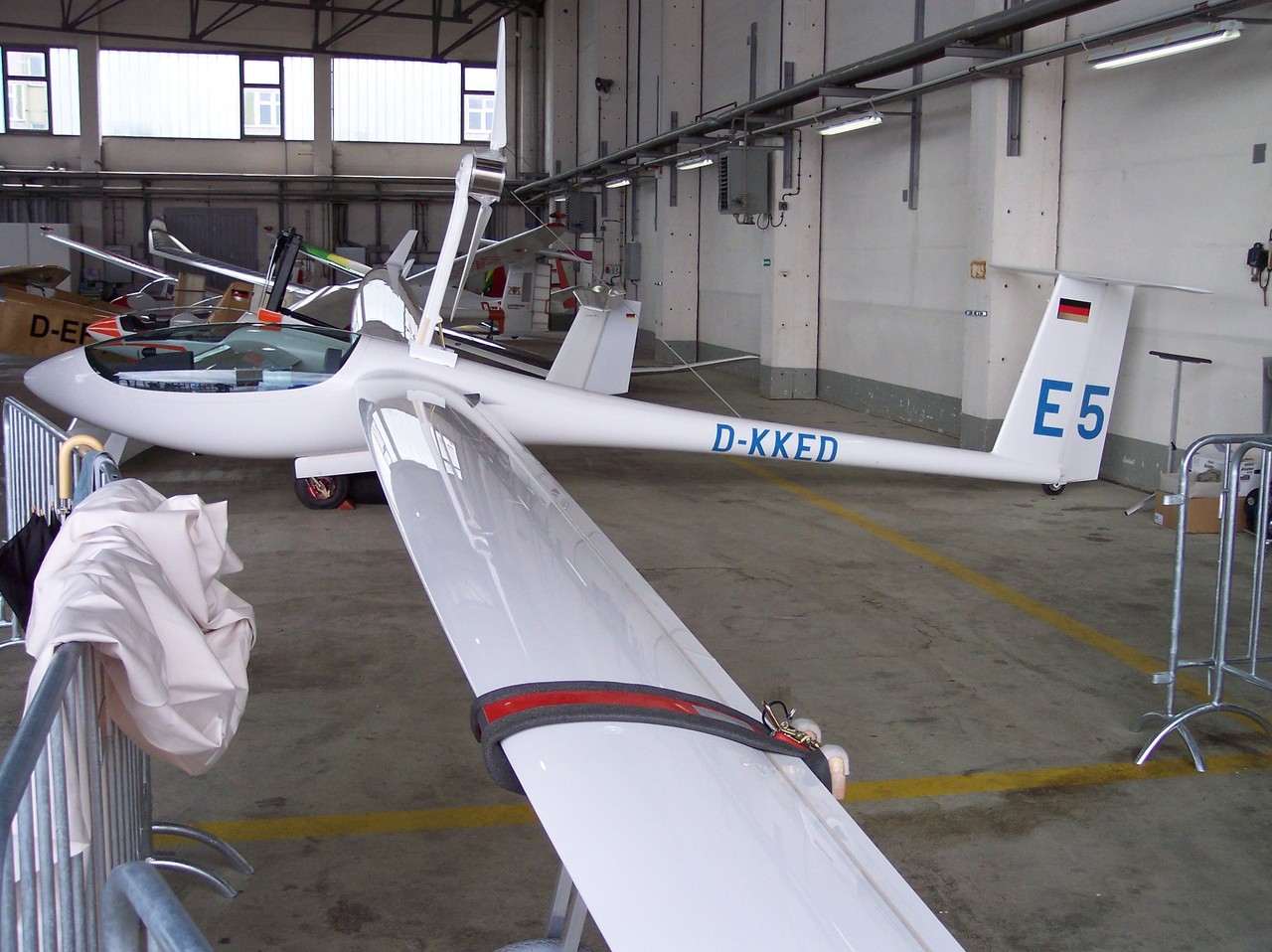
Revolutionary Electric Aviation
The Antares 20E represented a breakthrough in aviation technology when it achieved EASA certification in 2004, becoming the first manned electric aircraft approved for commercial production. This achievement culminated nearly a decade of development work that began in 1996 under the leadership of Axel Lange, a certified engineer and pilot who earned recognition as "the father of modern electric flight."
Lange's vision for zero-emission aviation drew inspiration from electric flight pioneers including Heinrich Brditschka's 1973 electric flight experiments and Günter Rochelt's Canard 2FL from 1981. The development program reached a major milestone on May 7, 1999, when a technology demonstrator first achieved flight, climbing to 1,900 meters using nickel-metal hydride batteries.
Design and Development
The production Antares 20E incorporated significant technological advances over the initial demonstrator. Most notably, Lange Aviation adopted lithium-ion batteries manufactured by SAFT, specifically the VL 41M cells that were revolutionary for aviation applications in the early 2000s. These batteries enabled the aircraft to climb to 3,000 meters, a substantial improvement over the prototype's performance.
The aircraft's propulsion system centered on the Lange EM 42 electric motor, an innovative asynchronous external rotor design producing 42 kW (57 hp). This configuration placed all electrical components on the stationary section, requiring only four wear parts: two ball bearings and two sealing rings. The motor drove a 2-meter propeller that could be raised and lowered using an electric-hydraulic mechanism, allowing the aircraft to operate as either a motor-glider or pure sailplane.
Manufacturing and Production
Lange Aviation GmbH established production at Zweibrücken airfield in Germany, beginning deliveries in 2004. The company maintained steady production through the decade, building approximately 50 units by April 2009. These aircraft found homes across three continents, with operators in Europe, North America, and Africa embracing the emission-free technology.
Notable owners included Richard "Dick" van Grunsven, the renowned aircraft designer, and Dave Nadler of Boston, Massachusetts, who showcased his Antares 20E at the 2009 Oshkosh AirVenture airshow. Nadler's aircraft, registered N33 with the call sign "Yankee Oscar," demonstrated the type's capabilities to American aviation enthusiasts.
Technical Innovation
The Antares 20E's specifications reflected its specialized role as a self-launching sailplane. With an empty weight of 460 kg and maximum gross weight of 660 kg, the aircraft incorporated 100 liters of water ballast capacity for optimized soaring performance. The 20-meter wingspan delivered an exceptional aspect ratio of 31.7, providing the high lift-to-drag ratios essential for thermal soaring.
The SAFT lithium-ion battery system represented perhaps the aircraft's most significant innovation. Rated for 3,000 charge cycles to 80 percent capacity, the batteries theoretically enabled over 4 million meters of total climb capability, equivalent to approximately 4,500 launches to 3,000 feet. This longevity addressed one of electric aviation's primary challenges: energy storage durability.
Operational Experience
Pilots praised the Antares 20E for its quiet operation and environmental benefits, though many competition pilots chose traditional aerotow launches to preserve battery capacity for emergency situations. The electric motor's maintenance requirements proved minimal, with sealing ring replacement required only every 200 motor hours or 10 years, and major overhauls scheduled at 900-hour intervals.
The propeller system operated at 1,500-1,600 rpm with flat torque characteristics, providing reliable performance throughout the climb envelope. Once thermal lift was established, pilots typically retracted the propeller and continued flight as a conventional sailplane, maximizing the aircraft's impressive glide performance.
Legacy and Continuing Development
The Antares 20E's success spawned additional development programs within the Lange Aviation organization. In 2009, the company delivered the hydrogen-powered Antares H2 to the German Aerospace Center (DLR), marking the first manned aircraft to complete a full flight cycle using fuel cells. This achievement demonstrated the company's continued leadership in alternative propulsion systems.
Lange Research Aircraft GmbH, an independent sister company, has continued developing advanced variants including the Antares E2, featuring a 23-meter wingspan and fuel cell propulsion capable of up to 3,000-kilometer range. These developments trace their origins directly to the foundational work accomplished with the original Antares 20E.
Today, many of the original 50 production aircraft remain active, testament to both their robust construction and the minimal maintenance requirements of electric propulsion. The Antares 20E established the template for sustainable aviation that continues influencing aircraft development more than two decades after Axel Lange first envisioned emission-free flight.