
Service History
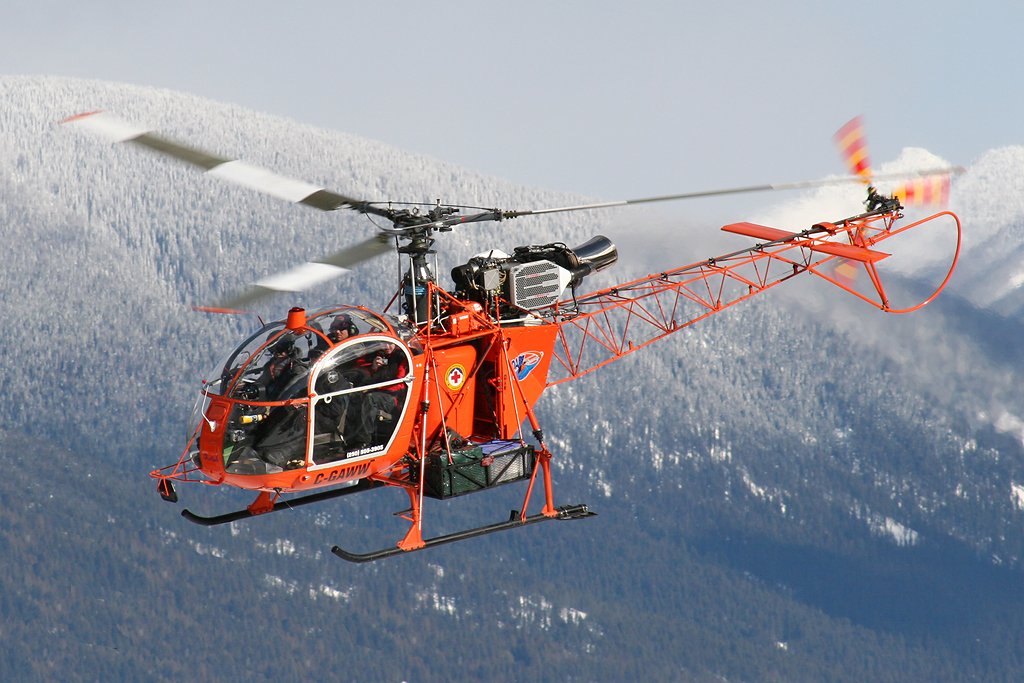
The Lama carved out a unique niche in helicopter aviation by enabling operations in environments previously considered impossible. By 1976, 68 operators across 11 countries had placed orders for 191 aircraft, demonstrating the type's specialized appeal. The helicopter's exceptional high-altitude performance made it indispensable for mountain rescue operations, geological surveys, and cargo transport to remote locations where conventional helicopters could not operate safely.
Military Operations
The Indian military became the Lama's most significant operator through the licensed Cheetah variant, utilizing the type extensively in the treacherous Siachen Glacier region along the India-Pakistan border. Indian forces achieved a remarkable landing record of 7,070 meters on November 2, 2004, showcasing the aircraft's capabilities in one of the world's most challenging operational environments. Hindustan Aeronautics Limited also developed the armed Lancer variant, though the standard configuration focused on transport, liaison, observation, and medical evacuation missions rather than combat roles.
The Manufacturer
Sud Aviation developed the Lama as part of France's post-war aerospace nationalization program, operating from the late 1940s until 1970. When Aérospatiale formed in 1970, production continued seamlessly, with the new company adopting the AS/SA prefix designation system. The design team brilliantly combined existing proven components—the Alouette II's lightweight airframe with the Alouette III's more powerful transmission and rotor system—creating a purpose-built high-altitude performer. Aérospatiale eventually merged into Eurocopter in the 1990s, which later became Airbus Helicopters, announcing withdrawal of the Lama's Type Certificate in 2020.
Engine & Technical Innovation
The Lama's performance breakthrough came from its Turbomeca Astazou IIIB turboshaft engine, strategically derated from 650 kilowatts to 410 kilowatts (550 shaft horsepower) to optimize high-altitude performance. This power management approach, combined with the aircraft's 11.02-meter main rotor diameter, enabled operations where larger, more powerful helicopters failed due to thin air density. The engine featured a 4-kilowatt starter-generator and 40 amp-hour battery system, consuming approximately 220 liters of fuel per hour during typical operations.
Record-Breaking Performance
Test pilot Jean Boulet achieved aviation immortality on June 21, 1972, when he piloted a Lama to an absolute helicopter altitude record of 12,442 meters. When the engine flamed out at peak altitude due to insufficient oxygen, Boulet executed the longest autorotation descent in helicopter history, safely returning to earth and establishing a record that stands today. Under normal operating conditions, the Lama could hover out of ground effect at 7,000 meters under International Standard Atmosphere conditions, or 6,250 meters in ISA+20°C temperatures—capabilities that no contemporary helicopter could match.
International Production
Licensed production expanded the Lama's global reach significantly. Hindustan Aeronautics Limited in Bangalore began Cheetah assembly in 1973, with the first Indian-assembled aircraft flying on October 6, 1973, and deliveries commencing that December. By 1981, HAL had produced 133 units from an initial program targeting 140 aircraft. Brazilian manufacturer Helibras launched Gavião production in 1978, though exact numbers remain uncertain. The 1971 selling price of approximately 745,000 Swiss Francs represented roughly 2 million in 2013 currency values.
Operational Characteristics
Pilots appreciated the Lama's maximum speed of 210 kilometers per hour and range of 500 kilometers, providing 2 hours and 45 minutes of endurance under standard conditions. The aircraft's maximum takeoff weight of 1,950 kilograms allowed for meaningful payload while maintaining high-altitude performance. At 6,000 meters altitude, the Cheetah variant could still carry a 90-kilogram payload—a remarkable capability for such extreme operating conditions.
Legacy and Current Status
Dozens of Lamas continue flying operations worldwide, with multiple examples maintaining active registrations in the United States bearing serial numbers from the mid-1970s production run. The type's influence extends beyond its direct service record through the continued development of the Cheetah line, including the upgraded Cheetal variant that first flew in 2003 and received orders through 2013. The Lama's pioneering high-altitude performance established new standards for helicopter mountain operations and proved that specialized design could overcome seemingly impossible environmental challenges.