
Service History
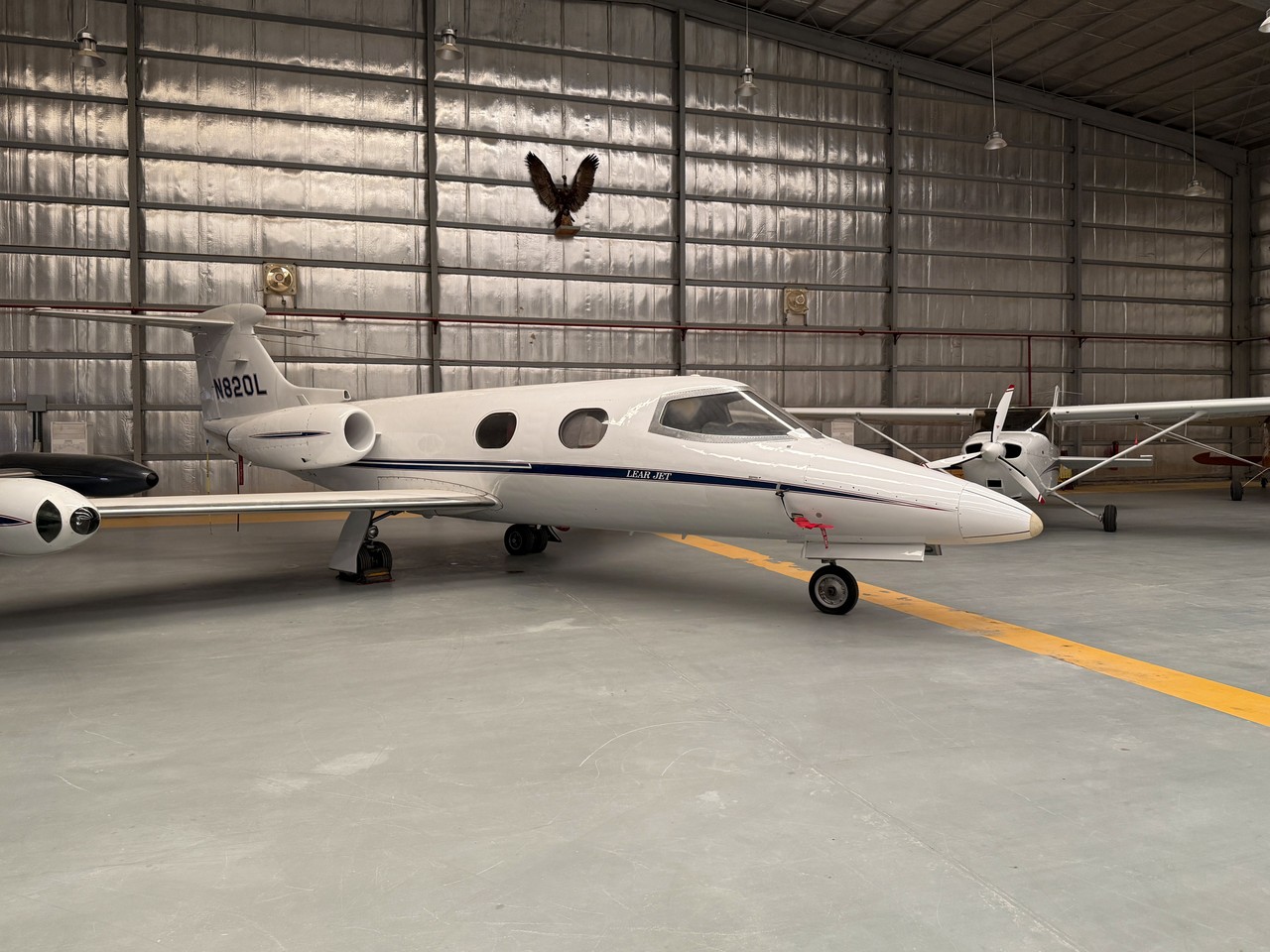
The Learjet 23 transformed business aviation by making high-speed jet travel accessible to corporations and wealthy individuals for the first time. The first production aircraft was delivered on October 13, 1964, to the Chemical and Industrial Corporation of Cincinnati, Ohio. During its brief production run from 1964 to 1966, over 100 aircraft were manufactured, establishing a new category of aviation that made "Lear Jet" synonymous with business jet travel for decades.
The aircraft's impact on business transportation was revolutionary. Unlike the larger piston-engined aircraft it replaced, the Learjet 23 offered superior performance despite its smaller size. Its design allowed for single-pilot operation under FAA CAR.3 regulations by maintaining a gross weight below 12,500 pounds, making it economical for air taxi operations without requiring Civil Aeronautics Board approval.
The Manufacturer
Lear Jet Corporation was established in August 1962 when aviation entrepreneur William P. Lear Sr. relocated his aircraft development project from Switzerland to Wichita, Kansas. Lear had initially begun preliminary design work in November 1959 at St Gallen, Switzerland, forming the Swiss American Aviation Corporation to develop what was originally known as the SAAC Lear Jet 23.
In 1967, Bill Lear sold the company to the Gates Rubber Company, which continued expanding the Learjet line through the 30, 40, 50, 60, and 70 series. Canadian aerospace company Bombardier Aerospace acquired the Learjet brand in 1990 and operated it for over three decades. After producing more than 3,000 private jets over 60 years, Bombardier ended Learjet production in 2021, delivering the final aircraft, a Learjet 75, in March 2022.
Engine & Technical Details
The Learjet 23 was powered by two General Electric CJ610 turbojet engines mounted on the rear fuselage. The first 30 production aircraft utilized CJ610-1 engines producing 1,293 kilograms of thrust each, while subsequent aircraft featured CJ610-4 engines of similar output. This powerplant configuration provided the aircraft with exceptional climb performance and cruise capabilities.
The design incorporated several innovative features for its era, most notably an area rule fuselage concept. This engineering approach narrowed the fuselage at points where the wing and engine nacelles extended outward, creating smooth airflow around the engines and reducing drag. The low-wing configuration with retractable landing gear further enhanced the aircraft's aerodynamic efficiency.
Design Innovation
William P. Lear Sr. drew inspiration from the cancelled Swiss FFA P-16 jet fighter, adapting military jet technology for civilian business use. The Learjet 23 represented the first business aircraft designed from the ground up as a civil jet, rather than being adapted from military designs. This approach resulted in an aircraft optimized specifically for business transportation needs.
The aircraft's responsive flight controls impressed pilots, while its 6,000 feet per minute initial climb rate allowed rapid ascent to efficient cruising altitudes. The design accommodated a crew of two with space for five to seven passengers in a pressurized cabin, providing comfort and performance previously unavailable in business aviation.
Development and Certification
Flight testing began with the first prototype's maiden flight on October 7, 1963, piloted by test pilots Henry Grady Beaird Jr. and Robert S. Hagan. The second and third prototypes followed on March 5 and May 15, 1964, respectively. Despite a setback when one prototype crashed on June 4, 1964, due to inadvertent spoiler deployment during takeoff, the certification process remained on schedule.
The Federal Aviation Administration awarded the Learjet 23 its type certificate on July 13, 1964, just 39 days after the accident. Remarkably, the insurance settlement from the crashed prototype actually provided financial resources that helped the company transition to production.
Production and Legacy
The Learjet 23 served as the foundation for an entire family of business jets. In 1966, Lear Jet Corporation introduced the Learjet 24 and Learjet 25 as direct derivatives that replaced the Model 23 in production. These successors incorporated improvements while maintaining the basic design philosophy that made the original so successful.
Today, several Learjet 23 aircraft are preserved in prominent aviation museums. The National Air and Space Museum houses the second prototype (N802L), which served as a test aircraft during the development program. The Museum of Flight displays a 1965-manufactured example, showcasing this pioneering aircraft to future generations.
The Classic Lear Foundation, established in 2022 with ten founding members, has undertaken restoration of historic Learjet 23 aircraft as part of a flying history museum. This initiative ensures that examples of aviation's first purpose-built business jet will continue flying, preserving both the aircraft and the flying experience that launched the modern business aviation industry.