
A Revolutionary Design Cut Short
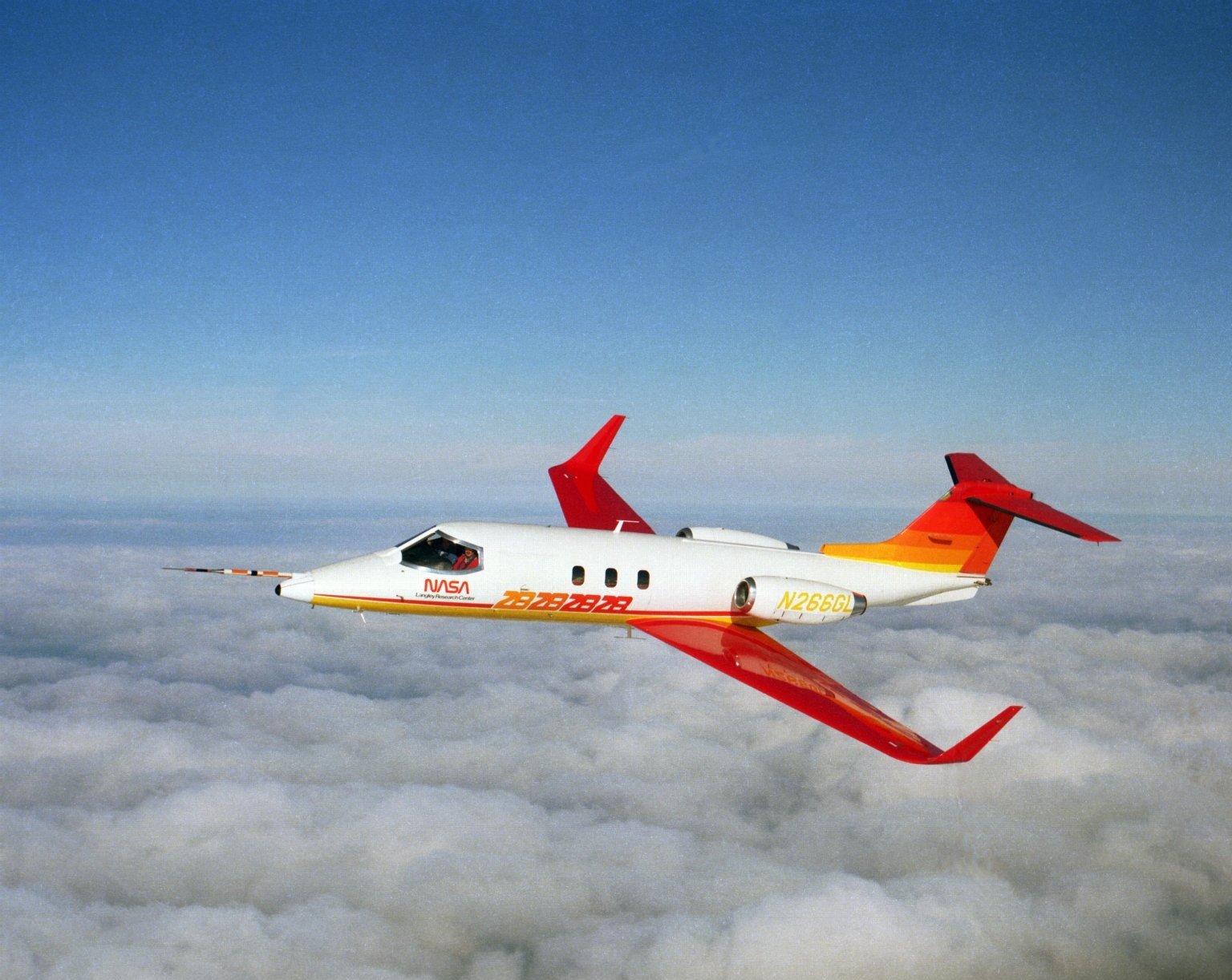
The Learjet 28 represented one of aviation's most significant technological advances, yet it became one of the industry's shortest production runs. Between 1977 and 1982, Gates Learjet produced just five Model 28 aircraft, making it among the rarest business jets ever manufactured. The aircraft's limited production stemmed not from design flaws, but from timing—its revolutionary winglet technology was paired with older turbojet engines that would soon become obsolete.
The Winglet Pioneer
The Model 28's claim to fame lies in its pioneering use of winglets, making it the first production jet aircraft, civilian or military, to employ this aerodynamic innovation. The completely redesigned wing featured distinctive upward-angled wingtip extensions that improved fuel economy and performance. This groundbreaking feature earned the aircraft series the marketing name "Longhorn," and the technology would eventually become standard on commercial and business aircraft worldwide.
Test pilot Peter Reynolds demonstrated the aircraft's capabilities by setting an official altitude record, climbing to 15,000 meters (49,212.598 feet) in just 12 minutes and 27 seconds over Kitty Hawk, North Carolina, on February 19. The flight carried Learjet program test pilot Armstrong and NAA observer Don Berliner, establishing both FAI and NAA class records for the new aircraft.
Gates Learjet's Manufacturing Heritage
The Learjet story began with an unlikely Swiss connection. The company purchased tooling from the abandoned FFA P-16 ground-attack fighter project and relocated it to Wichita, Kansas in 1962. Assembly of the first Learjet began on February 7, 1963, launching a new era in business aviation. The company underwent several name changes, becoming Lear Jet Corporation in 1964 and Lear Jet Industries Inc. in September 1966.
By the mid-1970s, Learjet had achieved remarkable milestones. In 1974, the worldwide Learjet fleet exceeded one million flight hours—the first manufacturer to reach this benchmark. The following year brought another first when the company delivered its 500th aircraft. Production had increased to 10 aircraft per month by late 1976, demonstrating the brand's growing market acceptance.
Engine Technology and Limitations
The Learjet 28 employed twin General Electric CJ610-8A turbojet engines, each producing 2,850 pounds of thrust at 16,500 rpm, or 2,950 pounds for takeoff operations with a five-minute time limit. These single-shaft axial-flow turbojets featured an 8-stage compressor section and 2-stage turbine, representing development from the military J85 engine series.
However, these older-generation turbojet engines proved to be the aircraft's Achilles' heel. While reliable and proven, they consumed significantly more fuel than the emerging turbofan technology, limiting the Model 28's market appeal despite its advanced aerodynamic design. This technological mismatch between cutting-edge airframe design and outdated powerplants contributed directly to the aircraft's brief production run.
The Longhorn Family
Gates Learjet developed the nearly identical Learjet 29 alongside the Model 28, distinguished primarily by the addition of a long-range fuel tank. This modification reduced passenger capacity from eight to six occupants but extended operational range. Even fewer Model 29s reached production—just four aircraft—before the entire Longhorn series was discontinued.
Both aircraft received FAA certification on July 29, 1979, nearly two years after the prototype's first flight. The extended certification period reflected the complexity of introducing winglet technology and ensuring its safety and performance characteristics met regulatory standards.
Legacy and Successor
The Learjet 35 replaced both Longhorn variants, incorporating the proven winglet design with modern Garrett TFE731-2 turbofan engines. This combination proved far more successful, with Gates Learjet producing 64 standard Learjet 35s and 612 Learjet 35A variants. The Model 35 retained the 28's innovative wing design while addressing the powerplant limitations that had constrained the earlier aircraft.
Corporate Evolution
Gates Learjet announced its Aerospace Division in 1984, but corporate changes continued throughout the decade. Integrated Acquisition purchased the company in 1987, renaming it Learjet Corporation in 1988. Bombardier Aerospace of Canada acquired Learjet Corporation in 1990, maintaining production until March 2022 when the final Learjet rolled off the Wichita assembly line.
Historical Significance
Despite its limited production, the Learjet 28 occupies a unique position in aviation history. Its winglets became ubiquitous throughout the industry, appearing on everything from regional jets to wide-body airliners. The five surviving Model 28s represent tangible links to this pivotal moment when aerodynamic innovation began transforming aircraft efficiency and environmental impact across all aviation sectors.