
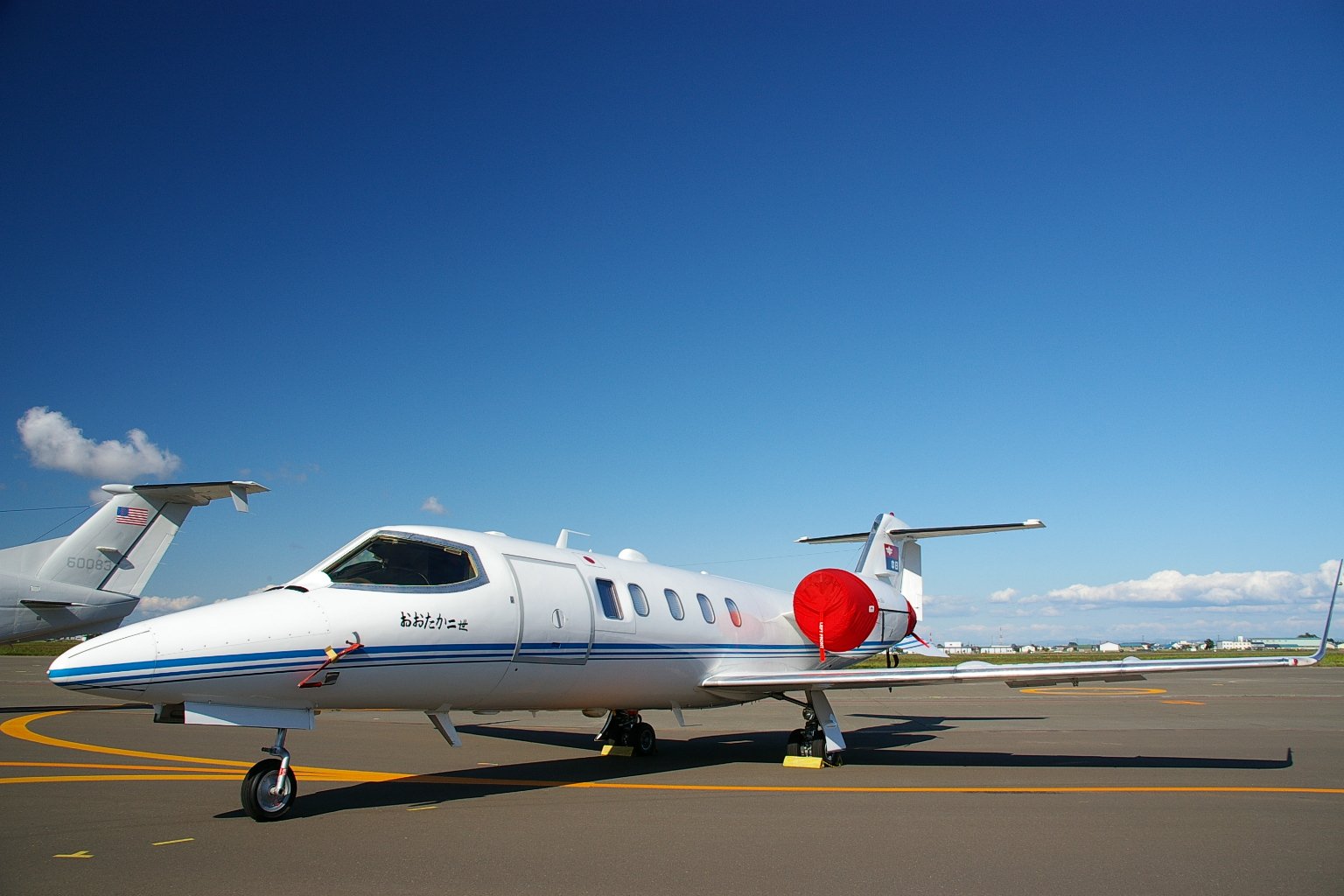
Service History
The Learjet 31 carved out a specialized niche in the competitive light business jet market during its 14-year production run from 1988 to 2002. With 242 aircraft delivered across both the original Model 31 and improved 31A variant, it served primarily corporate operators seeking high-altitude performance and speed for short to medium-range flights. Singapore Airlines notably purchased six Learjet 31s specifically for flight training operations, demonstrating the aircraft's value beyond traditional charter services. More than 200 Learjet 31s remained active in private operations as of 2018, testament to their enduring utility in the business aviation sector.
The Manufacturer
Learjet Inc., founded by aviation pioneer Bill Lear, had revolutionized business aviation with the original Model 23 in 1963. The company's innovative designs consistently pushed the boundaries of light jet performance throughout the 1970s and 1980s. In 1990, Canadian aerospace giant Bombardier acquired Learjet Inc., transforming it into a subsidiary while maintaining the iconic Learjet brand. Bombardier continued production of the Model 31 until 2002, when the company shifted focus to the larger Learjet 45 family, marking the end of an era for the classic Learjet lineage that had dominated business aviation for nearly four decades.
Engine & Technical Details
Powering the Learjet 31 were two Honeywell TFE731-2 turbofans, each delivering 3,500 pounds of thrust. These reliable engines, later upgraded to the more efficient TFE731-2C variant on production aircraft, enabled the jet to reach altitudes few civilian aircraft could achieve. The aircraft's innovative design combined proven elements from multiple Learjet models: engineers mated the fuselage and powerplants from the larger Learjet 35/36 series with the distinctive "Longhorn" wing from Models 28, 29, and 55. A critical design improvement came through the addition of delta fins beneath the empennage, which enhanced directional stability and eliminated the need for stall-prevention systems.
Design Innovation
The Learjet 31 emerged as Learjet's answer to market demands for improved performance over the preceding Model 29. Engineers achieved this by creating what was essentially a hybrid design, combining the best characteristics of existing Learjet components into a new configuration. The original model featured Collins avionics and Bendix King RDS-81 weather radar, while the enhanced 31A variant introduced in October 1990 upgraded to Bendix King Electronic Flight Information systems and Universal flight management computers. Additional refinements on the 31A included electric windshield heating and digital nosewheel steering, improvements that enhanced operational efficiency and pilot workload management.
Pilot Perspective
Pilots appreciated the Learjet 31's exceptional high-altitude performance capability, with its 51,000-foot service ceiling rivaling much larger business jets. The aircraft's compact dimensions and responsive handling characteristics made it well-suited for operations into smaller airports that couldn't accommodate larger corporate jets. However, the trade-off for this performance came in cabin space and amenities. The aircraft's interior could accommodate six to seven passengers comfortably, with an optional eighth seat available on the rear divan for smaller passengers. Unlike larger competitors, the Model 31 lacked galley facilities and offered limited baggage storage, positioning it primarily as a budget-conscious option for short domestic flights.
Production & Legacy
Learjet delivered the first production Model 31 in August 1988, just three months after receiving FAA certification. The original variant had a remarkably brief production run, with only 38 aircraft built between 1988 and 1991 before the superior 31A took over the production line. The final Learjet 31A, bearing serial number 31A-242, rolled out of the factory on October 1, 2003, closing the book on both the model and the classic Learjet design philosophy that had shaped business aviation since the 1960s.
By 2018, the used market reflected the aircraft's enduring value, with late-1990s Learjet 31As commanding prices starting at $600,000, while pristine 2002 Model 31A examples reached $1.75 million. The Learjet 31's significance extends beyond its production numbers or market performance—it represents the culmination of Bill Lear's original vision, incorporating nearly four decades of refinement and innovation into what would be the final expression of a design lineage that had fundamentally changed business aviation. When Bombardier discontinued the Model 31 in favor of the clean-sheet Learjet 45 design, it marked not just the end of a successful aircraft program, but the conclusion of an era in aviation history.