
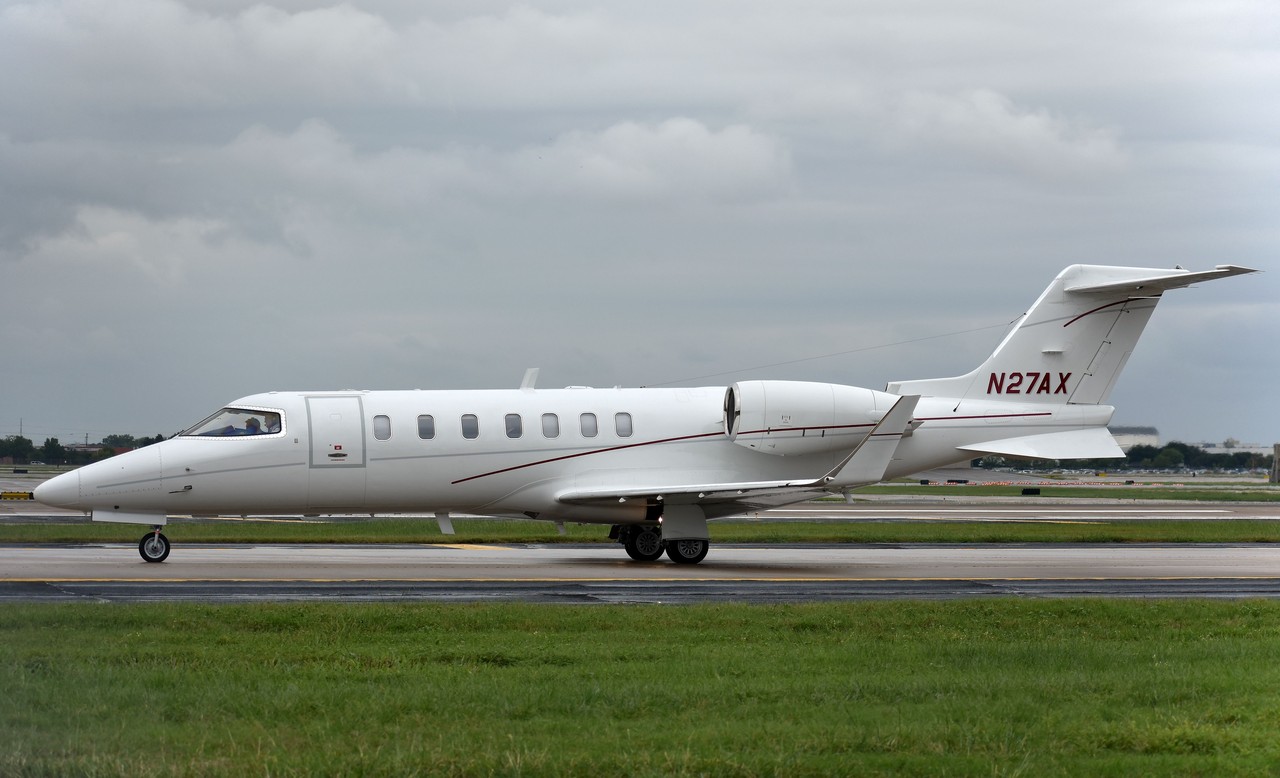
Market Position and Development
Bombardier positioned the Learjet 40 as a strategic bridge between light and mid-size business jets, pricing it more than $2 million below the Learjet 45 at approximately $9.5 million. The aircraft addressed specific shortcomings of the earlier Learjet 31A while delivering improved cabin comfort and performance characteristics that corporate operators demanded in the early 2000s.
Development proceeded rapidly from concept to certification. The prototype, a modified Learjet 45 airframe, completed its maiden flight on August 31, 2002, from Wichita Mid-Continent Airport. The first production aircraft followed just five days later on September 5, 2002, demonstrating Bombardier's confidence in the design's maturity.
Technical Innovation
Powered by two Honeywell TFE731-20AR turbofan engines producing 3,500 pounds of thrust each, the Learjet 40 achieved a maximum speed of 534 mph and cruise speeds of 526 mph at altitude. The aircraft's 905-gallon fuel capacity provided substantial range for transcontinental flights while maintaining the performance characteristics that made Learjets legendary among corporate pilots.
The shortened fuselage reduced maximum takeoff weight by 150 pounds compared to the Learjet 45, improving performance margins and reducing operational costs. Despite the reduced length, engineers expanded cabin width by 2 inches per seat compared to the Learjet 45, while increasing legroom and galley storage space. The cabin measured 17.7 feet long, 5.1 feet wide, and 4.9 feet high.
Enhanced Performance Variant
In 2005, Bombardier introduced the Learjet 40XR, featuring upgraded Honeywell "BR" engines replacing the original "AR" powerplants. These improvements delivered enhanced hot-and-high performance, faster climb rates, and extended cruise speeds exceeding 240 nautical miles per hour. The XR variant proved popular with operators in challenging environments, with 93 of the 134 total Learjet 40 family aircraft being XR models.
Bombardier's Learjet Legacy
Bombardier Aerospace acquired Gates Learjet Corporation in 1990, inheriting a legendary brand that had defined business aviation since the 1960s. The Canadian company maintained production at the historic Wichita facility, honoring the craftsmanship traditions established by Bill Lear's original team. Under Bombardier ownership, the Learjet line expanded to include the successful 31A, 45, and 60 models alongside the 40.
The Learjet 40 entered the market during aviation's second golden age of corporate flying in the early 2000s dot-com era. Production peaked before the 2008 Global Financial Crisis, following patterns established by earlier Learjet successes like the 35A in the late 1970s.
Operational Excellence
First customer deliveries began in January 2004, following FAA certification in July 2003 as an amendment to the existing Learjet 45 Type Certificate. Bombardier supported operators through an extensive network including six factory service centers in the United States, one European facility, and 19 authorized service locations worldwide.
The company backed each aircraft with comprehensive warranty coverage: 10 years or 10,000 hours on primary structure, 5 years or 5,000 hours on major systems, 5 years or 3,000 hours on engines, 5 years on avionics, and 2 years or 2,000 hours on paint and interior components. This support structure helped maintain the Learjet 40's reputation for reliability among corporate flight departments.
End of Production and Legacy
Production concluded in 2013 after 134 aircraft were delivered, marking another milestone in the gradual consolidation of the business jet market. The Learjet 40's 11-year production run contributed to Bombardier's total of 3,043 Learjet aircraft manufactured between 1963 and 2022, when the company ended Learjet production entirely.
As of 2021, more than 70 percent of all Learjets ever built remained in active service, representing 2,145 aircraft operating across 41 countries. The Learjet 40's contribution to this active fleet demonstrated the enduring value of its design philosophy: delivering maximum performance and comfort at an accessible price point for growing corporations and charter operators seeking reliable transcontinental capability.