
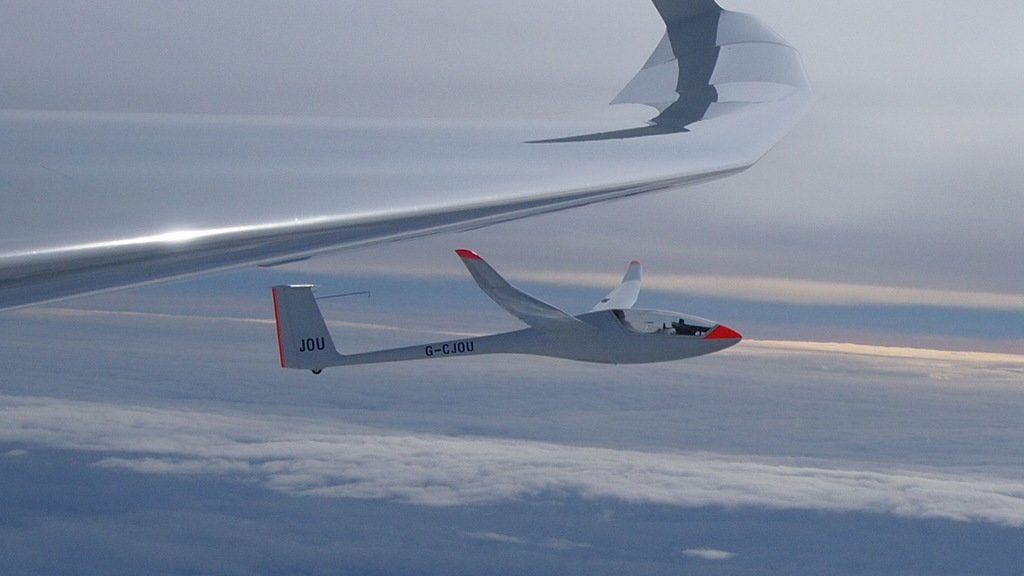
Development and Design Philosophy
The LAK-17AT emerged from Lithuania's rich gliding tradition, developed by members of the Lithuanian Aero Club to meet JAR-22 Utility category regulations. Building upon the foundation established by the BK-7 "Lietuva" composite glider from 1972, the LAK-17 series represented a new generation of competition sailplanes utilizing advanced composite construction techniques for the 1990s market.
The aircraft's designers prioritized versatility, creating a sailplane that could operate independently without requiring tow aircraft or winch systems. This self-sustaining capability addressed a critical need in remote locations and training operations, where traditional launch methods proved impractical or unavailable.
Technical Innovation
The LAK-17AT incorporates several advanced features that distinguished it from contemporary sailplanes. The composite construction utilizes a sophisticated wing airfoil combining LAP 92-130/15 at the root transitioning to LAP 92-150/15 at the tip, optimizing lift distribution across the span. The aircraft features airbrakes positioned on the upper wing surface and comprehensive water ballast tanks in both wings and fin, providing 180 liters of ballast capacity for performance optimization.
The retractable Solo 2350 two-cylinder air-cooled two-stroke engine serves as the aircraft's powerplant, housed within the fuselage and deployable when needed. This 2350-series engine draws from a 7.5-liter fuel tank, providing sufficient endurance for launch and emergency power requirements. The engine's retractable design maintains the aircraft's clean aerodynamic profile during unpowered flight phases.
Performance Characteristics
With a maximum glide ratio of 45:1, the LAK-17AT delivers exceptional soaring performance. The aircraft achieves a minimum sink rate of 0.53 meters per second, enabling pilots to exploit weak thermal conditions effectively. Maximum speed reaches 275 kilometers per hour, providing competitive cross-country capabilities.
The aircraft's 245-kilogram empty weight increases to a maximum gross weight of 500 kilograms, accommodating the pilot plus 188 kilograms of water ballast. This ballast system allows pilots to optimize wing loading for varying conditions, carrying additional weight in strong conditions for improved penetration speed while flying light in weak conditions for enhanced climb performance.
Manufacturing and Production
Sportinė Aviacija, operating as JSC Sportinė Aviacija in Lithuania's Prienal region, manufactured the LAK-17AT as part of their broader LAK-17 series production. The company's heritage traces back decades, with over 20 different glider and motor-glider types developed throughout their history. Following the company's privatization, approximately 200 to 220 units of LAK-17 variants in both 15-meter and 18-meter classes were manufactured and delivered worldwide over a 15-year period.
The LAK-17A achieved Lithuanian Civil Aviation Authority certification in November 1994, establishing the foundation for subsequent variants including the AT model. Production quality and design refinement continued through various iterations, with the LAK-17B FES variant achieving EASA certification by 2017.
Operational Service
The LAK-17AT serves recreational and competitive soaring markets globally, operated by private pilots and gliding clubs seeking high-performance capabilities with operational flexibility. The aircraft's self-launch capability proves particularly valuable for pilots operating from airports without dedicated glider support infrastructure or in regions where tow aircraft availability remains limited.
Competitive pilots utilize the LAK-17AT in both 15-meter and 18-meter class competitions, taking advantage of its performance characteristics and operational independence. The ability to launch independently, climb to desired altitudes, and then retract the engine for pure gliding flight provides tactical advantages in competition scenarios.
Safety Record and Airworthiness
The LAK-17 series maintains certification under European Aviation Safety Agency oversight, with various models holding EASA approvals. However, the type experienced safety challenges, including documented incidents such as a 2009 accident involving LAK-17AT registration D-KJGA. Additionally, EASA issued an Airworthiness Directive in September 2017 following fire incidents in the Czech Republic and United Kingdom involving LAK-17B FES aircraft.
Despite these challenges, the broader LAK series demonstrates reasonable safety performance, with the related LAK-12 series achieving over 150 aircraft in worldwide operation with no reported pilot fatalities.
Legacy and Continued Production
Sportinė Aviacija continues manufacturing LAK variants, maintaining Lithuania's position in the international sailplane market. The LAK-17AT and its variants represent the evolution of motor-glider technology, combining traditional soaring performance with modern powerplant integration. The aircraft demonstrates how specialized manufacturers can successfully compete in niche aviation markets through innovative design and quality construction, contributing to the diversity of available sailplane options for pilots worldwide.