
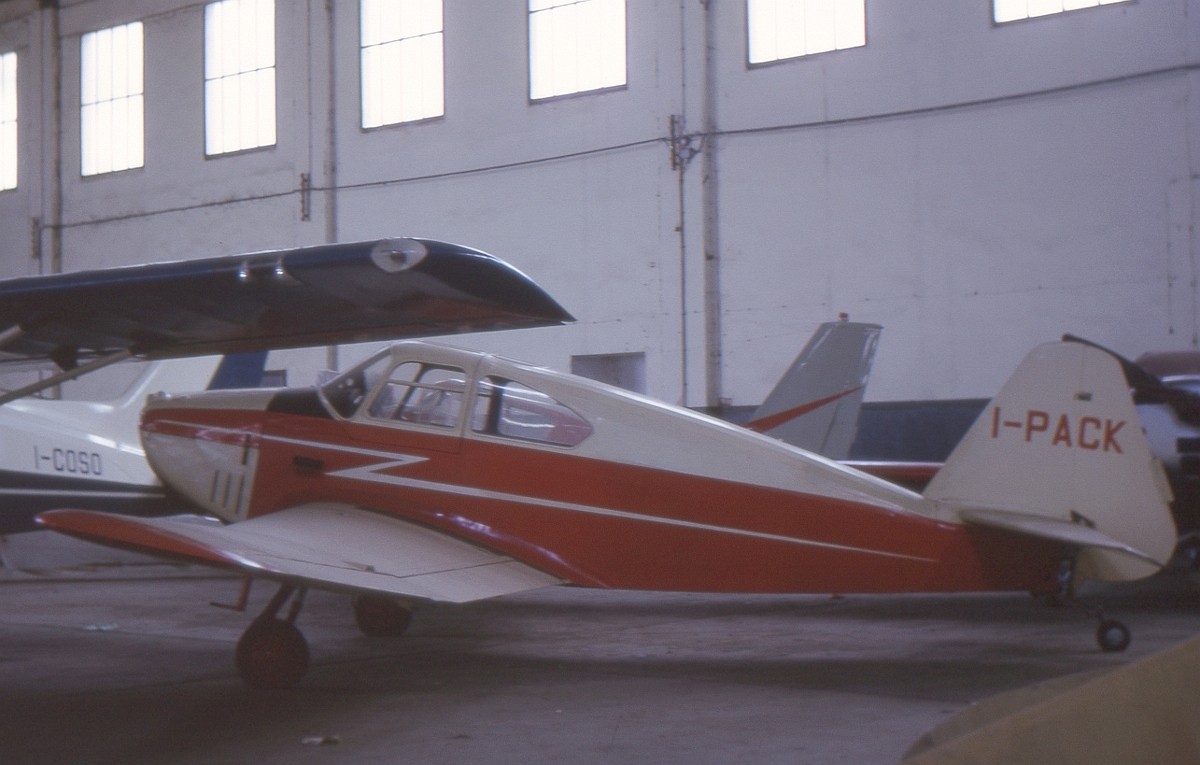
A Brief Flowering in Post-War Italy
The Lombardi LM-5 Aviastar represented the ambitious dreams of Italy's small aircraft manufacturers attempting to capitalize on the anticipated boom in private aviation following World War II. Designed by Pieraldo Mortara, the compact two-seater emerged at a time when aviation enthusiasts believed every middle-class family would soon own an airplane, much like automobiles.
Despite its limited production run, the LM-5 achieved notable recognition in European aviation circles. In 1949, Swiss pilot Walter Spahni flying LM-5 registration HB-UEM captured victory in the prestigious Tour Aerien de Suisse, demonstrating the aircraft's capabilities against international competition. This triumph provided brief validation for the design's performance credentials in a crowded field of light aircraft.
The Lombardi Legacy
Francis Lombardi's company inherited the aviation traditions of AVIA (Azionaria Vercellese Industrie Aeronautiche), which had operated since 1938 before being absorbed by Lombardi in late 1947. AVIA had previously produced aircraft like the FL.3, but the post-war transition proved challenging for small Italian manufacturers competing against established American and British designs flooding the European market.
Lombardi's production facility manufactured exactly five LM-5 aircraft and two examples of the enlarged LM-7 variant between 1945 and 1949. The LM-7 featured three seats with a removable rear seat for light cargo operations, powered by either Praga or Walter Minor engines rather than the Continental powerplant used in the LM-5. However, even this modest production proved excessive for market demand.
Technical Innovation in Miniature
The LM-5's design incorporated several advanced features uncommon in light aircraft of the era. Its retractable main landing gear, while adding complexity and weight, provided improved aerodynamic efficiency and gave the aircraft a more professional appearance than fixed-gear competitors. The cantilever low-wing configuration eliminated external bracing wires, contributing to both performance and aesthetic appeal.
Powered by the reliable Continental C90 flat-four engine producing 67 kilowatts, the aircraft achieved respectable performance figures. The 121 mph maximum speed placed it competitively among contemporary light aircraft, while the 19,500-foot service ceiling provided operational flexibility over Alpine terrain. Mixed construction techniques combined wood and metal components, reflecting both material availability constraints and traditional Italian craftsmanship methods.
Limited Commercial Success
The LM-5's commercial prospects were hindered by the harsh economic realities facing European aviation in the late 1940s. Potential private owners faced currency restrictions, fuel rationing, and limited airport infrastructure. Meanwhile, established manufacturers like Piper and Cessna offered proven designs with extensive dealer networks and spare parts availability.
One notable example, registered I-PIER and built in 1947, demonstrated remarkable longevity by remaining operational into the 1990s. This aircraft was regularly flown by a Turin-based pilot from airfields including Mirafiori and Venaria Reale, testament to the design's fundamental soundness despite its commercial failure.
Final Chapter and Preservation
Francis Lombardi ceased aircraft production in 1949, unable to achieve sustainable sales volumes in the challenging post-war market. The company had reached static testing phase with the LM-7 airframe and completed a prototype of the FL.4 design, but financial constraints prevented further development.
By 1965, one of the two LM-7 examples built in 1949 was hangared at Milan's Bresso Airport, while the prototype LM-5 I-PIER underwent restoration by the Ali Romantiche organization at Sandigliano. The LM-7 prototype, registered I-TTEN, also commenced restoration efforts, reflecting growing interest in preserving Italy's aviation heritage.
Historical Significance
The Lombardi LM-5 Aviastar remains a footnote in aviation history, representing the optimistic but ultimately unrealistic expectations for mass private aviation that characterized the immediate post-war period. Its rarity—with only seven aircraft built—underscores the challenges faced by small manufacturers competing against American mass production.
Today, the aircraft maintains official recognition with ICAO type designator LM5, ensuring its place in international aviation databases despite its minimal operational impact. The LM-5 serves as a reminder of Italy's diverse aircraft manufacturing heritage and the entrepreneurial spirit that briefly flourished before economic reality curtailed such ambitious ventures.