
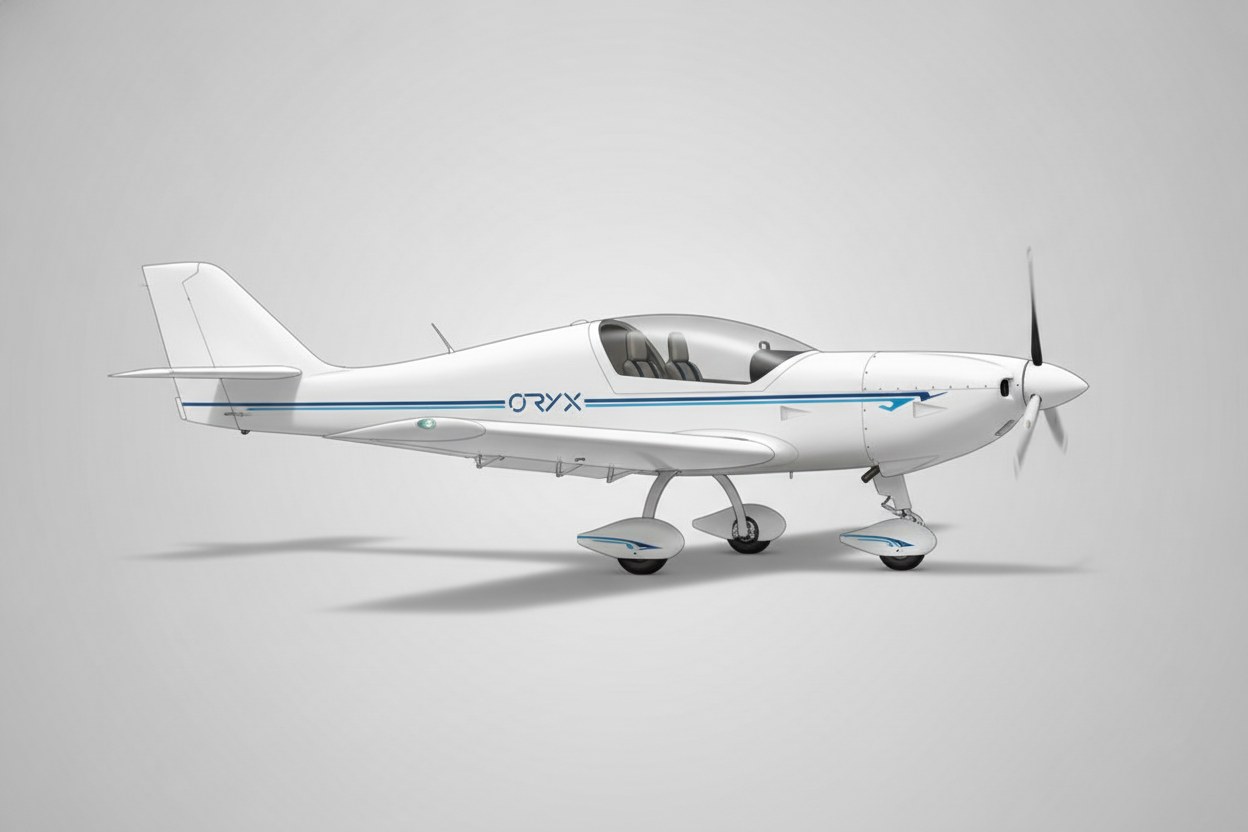
An Enigmatic French Design
The CATA LMK-1 Oryx stands as one of aviation's more mysterious aircraft, with official recognition but virtually no documented operational history. While the International Civil Aviation Organization maintains the LMK1 type designator in its official database, comprehensive details about this French light aircraft remain elusive to aviation historians and enthusiasts alike.
Manufacturing Origins
Constructions Aéronautiques du Béarn (CATA) developed the LMK-1 Oryx as part of France's post-war general aviation expansion. The company operated from the Béarn region, an area that became a minor hub for specialized aircraft manufacturers during the 1950s and 1960s. CATA shared geographic proximity with other small aviation firms producing designs like the GY-20 Minicab and GY-30 Supercab, suggesting a localized aviation industry cluster.
The exact operational timeline for CATA remains undocumented in available sources, though the company appears to have focused on low-volume, specialized aircraft rather than mass production. No records indicate whether CATA continues operations, has been acquired, or ceased business entirely, leaving the manufacturer's current status uncertain.
Technical Configuration
ICao classification systems designate the LMK-1 Oryx as an L1P aircraft, indicating light single-engine piston power. This configuration places it among thousands of similar designs that dominated general aviation markets during the mid-20th century. However, specific powerplant details, including engine manufacturer, model designation, and output specifications, remain absent from public records.
The aircraft's design philosophy appears conventional for its era, prioritizing reliability and simplicity over performance innovation. Without documented specifications for dimensions, weights, or performance parameters, the Oryx likely fell within typical ranges for single-engine aircraft of its period: wingspan between 30-40 feet, length around 25-30 feet, and seating for two to four occupants.
Limited Service Record
Unlike celebrated aircraft types with extensive operational histories, the LMK-1 Oryx appears to have achieved only minimal market penetration. Flight tracking records identify F-PLMK as at least one example that has operated in recent years, suggesting extremely limited production numbers—possibly fewer than ten aircraft total.
This scarcity indicates the Oryx either represented prototype development that never reached full production, or served a highly specialized market niche with limited demand. No evidence suggests military procurement, airline operations, or significant commercial success for the type.
The Mystery of Documentation
The LMK-1 Oryx presents aviation researchers with an unusual phenomenon: official recognition without substantive historical record. While major aircraft databases and regulatory documents acknowledge the type's existence through ICAO designation, traditional sources of aviation history—trade publications, manufacturer records, pilot reports, and technical documentation—provide virtually no coverage.
This documentation gap likely reflects the aircraft's minimal impact on aviation markets rather than deliberate secrecy. Small manufacturers often produced limited runs of specialized aircraft that served narrow markets without generating significant media attention or historical documentation.
Contemporary Context
The Oryx emerged during an era when numerous small manufacturers attempted to establish positions in expanding general aviation markets. Post-war prosperity, increased pilot populations, and growing recreational flying created opportunities for specialized designs. However, market realities eventually favored established manufacturers with broader product lines and distribution networks.
Many contemporary designs from small French manufacturers similarly disappeared from historical records, leaving only regulatory designations and occasional registry entries as evidence of their existence. The Oryx thus represents a broader pattern of ambitious but ultimately unsuccessful attempts to penetrate competitive aircraft markets.
Current Status and Legacy
Whether any LMK-1 Oryx aircraft remain airworthy today cannot be definitively determined from available sources. The tracking of F-PLMK suggests at least one example survived into the modern era, though its current operational status remains unknown. No museum collections publicly list Oryx aircraft among their holdings, indicating complete absence from preserved aviation heritage.
The aircraft's legacy exists primarily as a footnote in aviation regulatory history—a reminder that official recognition does not guarantee historical significance or commercial success. For aviation historians, the LMK-1 Oryx represents the challenges of documenting complete aerospace industry history, particularly for small manufacturers and limited-production designs that operated outside mainstream aviation markets.