
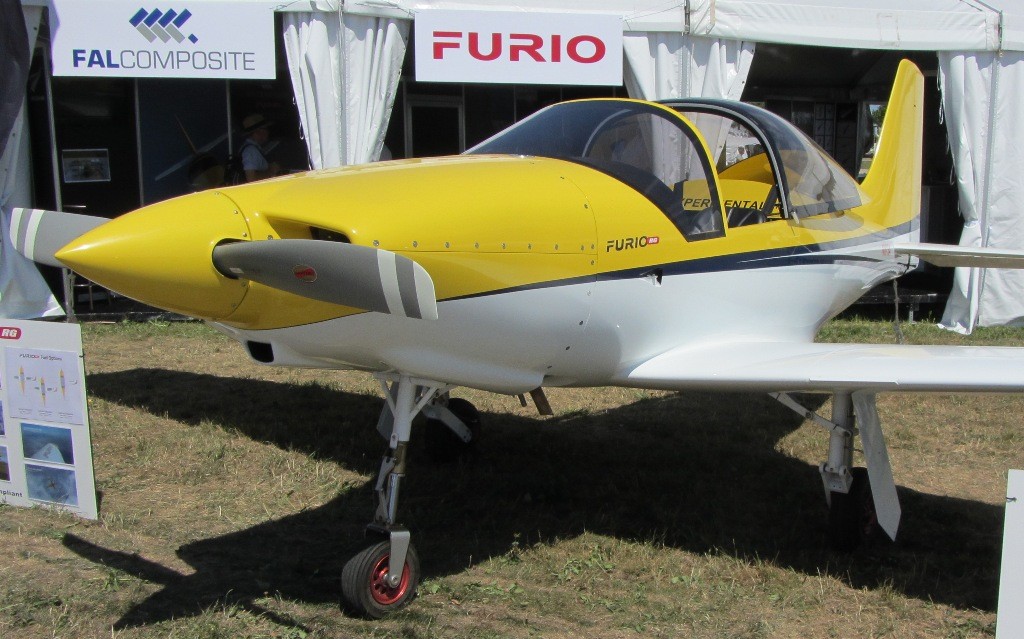
Revolutionary Composite Construction
The LN-27 Furio emerged from an ambitious vision to transform homebuilt aviation by eliminating the traditional barriers of composite aircraft construction. Founded in 2005 by Italian brothers Giovanni and Lapo Nustrini alongside Lapo Ancillotti, Falcomposite established operations in Auckland with the specific goal of reducing kit assembly time from the typical 2,000+ hours to approximately 200 hours. Their approach utilized advanced carbon fiber molding techniques borrowed from yacht construction, producing major components like complete fuselage shells ready for final assembly.
Design Philosophy and Innovation
The Furio's development represented a departure from its spiritual predecessor, the wooden Falco series, embracing modern materials while maintaining aerobatic capabilities. Lapo Nustrini's background in computer-aided design led the team to employ SolidWorks 3D modeling extensively, enabling what they termed "right first time" manufacturing without traditional prototype iterations. The design philosophy centered on pre-molded factory components that eliminated the need for jigs, brushwork, or adhesive application typically required in composite construction.
Prototype ZK-LLG, carrying construction number 001, achieved first flight on February 6, 2008, validating the design's ambitious performance targets. The aircraft featured retractable landing gear, side-by-side seating in a 1.1-meter wide cabin, and full aerobatic certification, targeting the sport aviation market with airliner-like cruise speeds.
Performance and Specifications
Powered by variants of the Lycoming O-360 series, including the Superior XP-IO-360 and Lycoming XIO-360M1A producing 180 horsepower, the Furio achieved cruise speeds exceeding 175 knots at 8,000 feet altitude. The MT three-blade scimitar propeller provided efficient power conversion, enabling a maximum range of approximately 1,400 nautical miles depending on fuel tank configuration. With a maximum takeoff weight ranging from 980 to 1,080 kilograms and an empty weight between 580 and 620 kilograms, the aircraft offered a useful load of 460 kilograms.
Market Reception and Production
By July 2007, before the first flight, Falcomposite had secured four pre-orders at $129,000 plus GST each, demonstrating market confidence in the revolutionary construction approach. The company planned kit deliveries beginning in early 2008, with complete aircraft shipping in standard 20-foot containers to minimize logistics costs for international customers. The modular design philosophy extended to powerplant options, allowing customers to select from various four-cylinder horizontally opposed engines to suit individual preferences and local availability.
Limited Production Legacy
Despite ambitious beginnings, production remained limited with at least six aircraft registered by October 2022—five in New Zealand and one in the United States. The prototype continued active demonstration duties through 2012, appearing at prestigious events including the Avalon Airshow and New Zealand's Flair Aviation Expo at Te Kowhai. These appearances, documented by the Historical Aviation Film Unit, showcased the aircraft's capabilities to potential builders and the broader aviation community.
Technical Innovation Impact
The Furio's primary contribution to homebuilt aviation lay in proving that high-performance composite aircraft could be manufactured using simplified assembly techniques. The yacht-industry-inspired molding processes and SolidWorks-driven design methodology influenced subsequent composite kit development across the industry. While Falcomposite explored electric propulsion variants in later development phases, these projects appear to have been shelved as the company's activity diminished after 2012.
Current Status
The registered examples continue flying primarily in New Zealand, where the prototype remains active in the experimental aircraft community. Featured prominently in publications such as Vector magazine in 2017, the Furio maintains recognition as a significant milestone in composite homebuilt development. Though Falcomposite's current operational status remains unclear, the aircraft established important precedents for factory-molded composite components that reduced traditional homebuilding complexity while maintaining high-performance capabilities exceeding 325 kilometers per hour in cruise flight.