
Service History
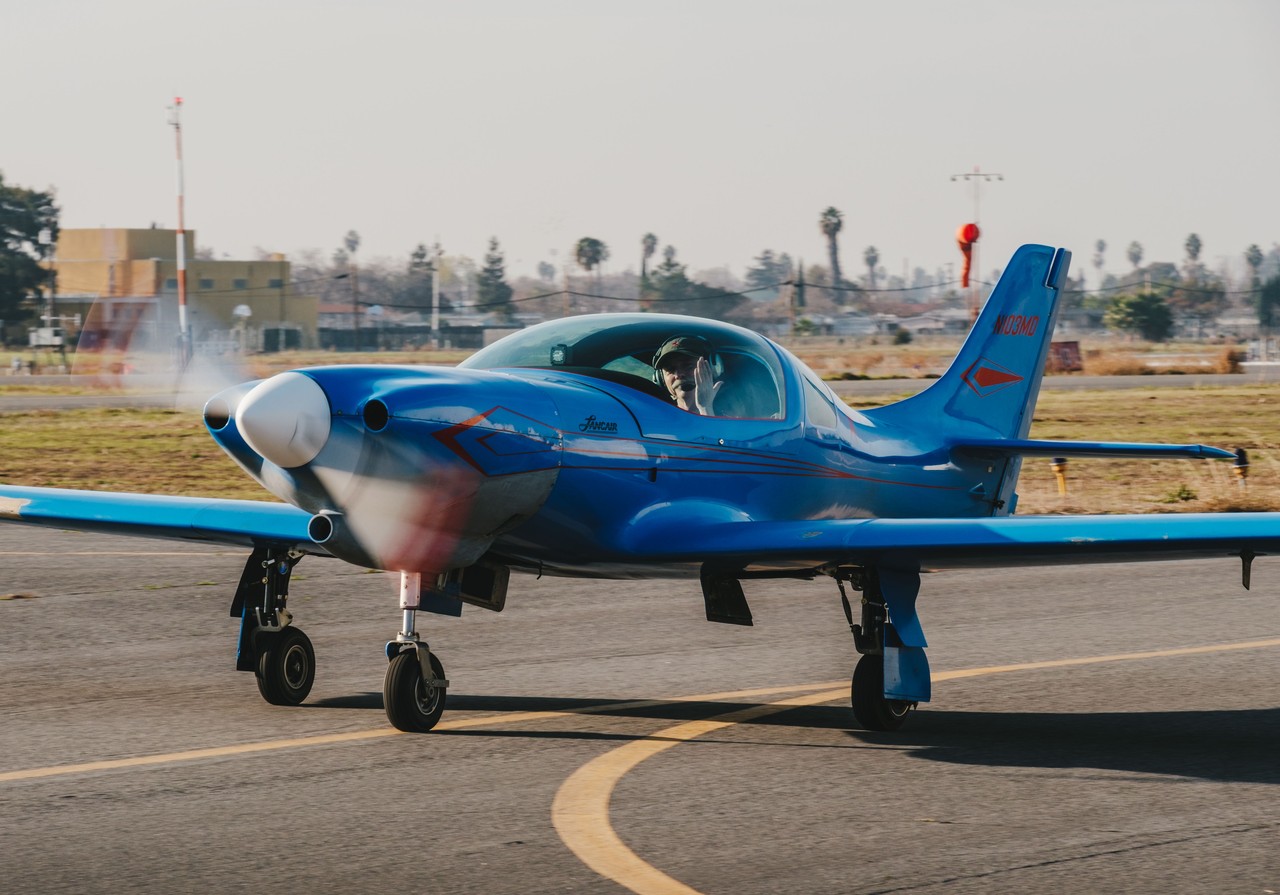
The Lancair 200 established itself as a game-changer in the homebuilt aircraft market during its six-year production run from 1984 to 1990. By the end of 1990, Lancair had captured a commanding 30 percent share of the entire kitplane market, with more than 600 kits sold and 100 aircraft already flying. The aircraft's impact extended far beyond its production numbers, fundamentally altering pilot expectations for homebuilt performance. Where previous kit aircraft offered modest capabilities, the Lancair 200 delivered airline-like cruise speeds that rivaled or exceeded many factory-built aircraft costing significantly more.
The Manufacturer
Lancair International emerged from humble beginnings when graphic designer Lance Neibauer began developing the aircraft concept in 1981. Working from a cramped 1,100-square-foot workshop in southern California, Neibauer spent an entire year constructing the prototype before achieving first flight in June 1984. The aircraft generated such overwhelming interest at its July 1985 debut at EAA AirVenture in Oshkosh that Neibauer abandoned his graphic design career entirely to focus on aircraft manufacturing.
The company relocated operations to Redmond, Oregon, where by August 1998, the facility employed 40 people and had delivered 1,400 kits across all Lancair models. In February 2003, Neibauer sold the business to Joseph Bartels, who continues leading the company as Lancair Aerospace International. The organization has expanded its reach globally, with more than 1,870 Lancairs now operating in over 34 countries across five continents.
Engine & Technical Details
The Lancair 200's exceptional performance stemmed from its marriage of the proven 100-horsepower Continental O-200 engine with groundbreaking composite airframe technology. The four-cylinder, horizontally-opposed, air-cooled powerplant from Continental Motors provided reliable operation while engineers optimized the engine installation and propeller integration for maximum efficiency.
The aircraft's most significant innovation lay in its laminar flow wing design, which maintained smooth airflow across more than 50 percent of the wing surface. This advanced aerodynamic feature, combined with the all-composite construction, enabled the aircraft to achieve performance figures that seemed impossible for its power rating. The retractable landing gear further enhanced efficiency by eliminating drag penalties during cruise flight.
Pilot Perspective
Pilots consistently praised the Lancair 200 for its responsive handling characteristics and impressive performance envelope. The aircraft delivered a remarkable rate of climb at 1,200 feet per minute, allowing rapid altitude gains that compressed trip times significantly. With a stall speed of just 48 knots, the aircraft remained manageable at slow speeds despite its high-performance nature.
Cruise performance provided the aircraft's primary appeal, with the 167-knot cruise speed representing a quantum leap over competing homebuilt designs. The efficient powerplant consumed only 6.0 gallons per hour at 75 percent power, enabling a maximum range of 868 nautical miles. This combination of speed and efficiency allowed pilots to undertake cross-country flights previously requiring much larger, more expensive aircraft.
Production & Legacy
The Lancair 200's production concluded in 1990, but its influence continues reverberating throughout the homebuilt industry. The design directly spawned the Lancair 235 in 1985, followed by the 320/360 series, and ultimately evolved into the modern Lancair Legacy. Each successive model refined and expanded upon the fundamental design principles established by the original 200.
By April 2019, only two examples remained registered with the Federal Aviation Administration in the United States, reflecting the model's limited production numbers and the natural attrition common among experimental aircraft. However, the original prototype achieved permanent preservation at the Experimental Aircraft Association Museum in Oshkosh, Wisconsin, recognizing its pivotal role in advancing homebuilt aviation technology.
The aircraft's most significant legacy lies in demonstrating the commercial viability of high-performance kit aircraft. The Lancair 200 proved that homebuilders could construct aircraft matching or exceeding certified aircraft performance while maintaining reasonable construction complexity. This success helped establish the kit plane industry as a major market segment that now outsells production aircraft by more than three to one, fundamentally reshaping general aviation manufacturing and ownership patterns.