
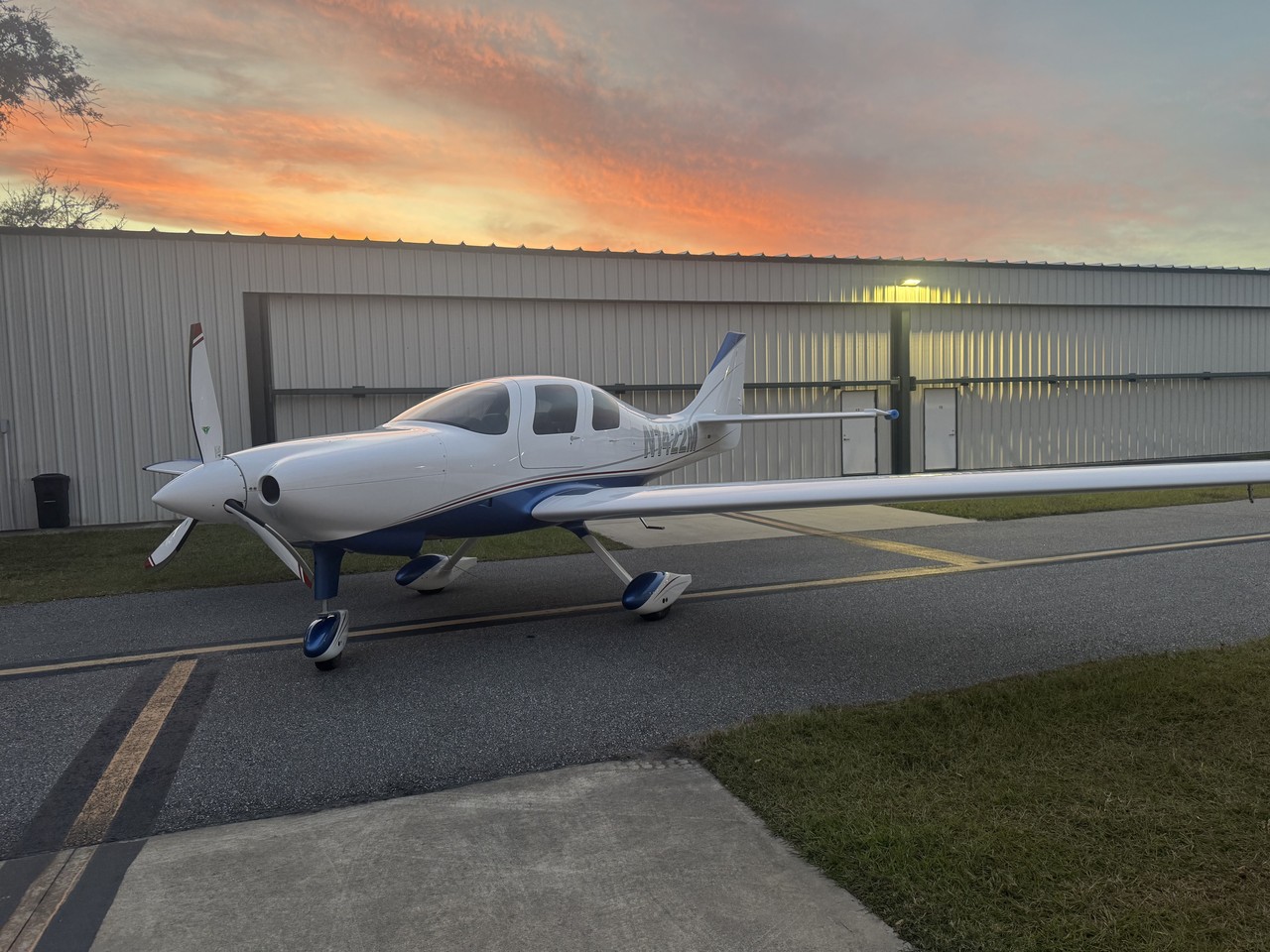
Revolutionary Kit Design
The Lancair ES emerged as one of the most ambitious homebuilt aircraft projects of the 1990s, offering amateur builders the opportunity to construct a certified-aircraft-quality machine in their own workshops. With an estimated construction time of 2,000 hours, the ES demanded significant commitment from builders but rewarded them with airline-like performance previously unavailable in the kit aircraft market.
The aircraft's composite construction utilized advanced materials and techniques that were revolutionary for homebuilders at the time. Lance Neibauer's design featured a sophisticated wing incorporating a McWilliams RXM5-217 airfoil at the root transitioning to a NACA 64-212 at the tip, creating a 140-square-foot wing area optimized for high-speed cruise flight. The cantilever low-wing configuration eliminated the need for external bracing while providing excellent ground clearance for the fixed tricycle landing gear.
The Manufacturer's Rise
Lancair International, Inc. was incorporated in 1991, though its origins traced back to 1984 when founder Lance Neibauer first flew his prototype Lancair 200. By 1990, the company had already sold over 600 kits across various models, establishing itself as a major force in the experimental aircraft market. The company's reputation was further enhanced in February 1991 when a Lancair IV shattered the class speed record between San Francisco and Denver at 360.3 mph.
By the early 1990s, Lancair claimed a commanding 30 percent share of the entire kitplane market, a remarkable achievement for a relatively young company. In February 2003, Neibauer sold the company to Joseph Bartels, who continued production until announcing in July 2016 that older lines including the ES would be sold to focus exclusively on the turboprop Lancair Evolution. The company continues today as Lancair Aerospace International, supporting legacy aircraft while developing new designs.
Engineering Excellence
The heart of the Lancair ES was its Continental IO-550 engine, a six-cylinder, air-cooled powerplant producing 310 horsepower. Manufactured by Teledyne Continental Motors (now Continental Aerospace Technologies), the IO-550 entered production in the late 1980s and has since powered tens of thousands of aircraft across numerous variants. This reliable engine enabled the ES to achieve its impressive performance figures, including a climb rate exceeding 2,200 feet per minute.
The aircraft's 105-gallon fuel capacity provided excellent range for cross-country touring, while the spacious cabin accommodated four occupants in comfort previously unknown in homebuilt aircraft. The 46-inch cabin width rivaled that of much larger certified aircraft, making the ES suitable for serious transportation rather than mere recreational flying.
Performance and Pilot Appeal
At cruise altitude of 10,000 feet, the Lancair ES could maintain 280 mph, performance that placed it firmly in the realm of high-end certified aircraft. The combination of speed and efficiency made it particularly attractive to pilots seeking to cover long distances quickly while maintaining reasonable operating costs. The aircraft's takeoff distance of just 183 meters allowed operations from shorter airfields, expanding the range of airports accessible to ES pilots.
In 2004, Lancair introduced a pressurized variant of the ES, further enhancing its appeal for high-altitude cross-country flight. This development reflected the aircraft's evolution from a fast recreational machine to a serious transportation tool capable of operating in the flight levels alongside certified aircraft.
Commercial Evolution
The ES design's success led directly to the development of certified variants built by Columbia Aircraft Manufacturing in Bend, Oregon, beginning in 1998. The Columbia 300 and 350 were essentially factory-built versions of the ES, offering the same performance with full FAA certification. When Cessna acquired the Columbia line, these aircraft evolved into the Cessna TTx, bringing Lancair's advanced design philosophy into the mainstream certified market.
Production Legacy
Production of the Lancair ES continued from 1993 until 2012, with manufacturing centered in Redmond, Oregon, though parts production in the Philippines employed up to 100 workers. By December 2011, 90 examples had been completed and flown, with the Philippine Aerospace Development Corporation contributing six units to the total. While production numbers remained modest compared to certified aircraft, the ES's influence on general aviation far exceeded its production count.
The aircraft represented a crucial bridge between traditional homebuilt aircraft and modern certified designs, demonstrating that amateur builders could successfully construct sophisticated, high-performance machines using advanced composite techniques. Today, the Lancair ES remains a sought-after design among builders seeking maximum performance from their homebuilt investment, with examples continuing to fly throughout North America and beyond.