
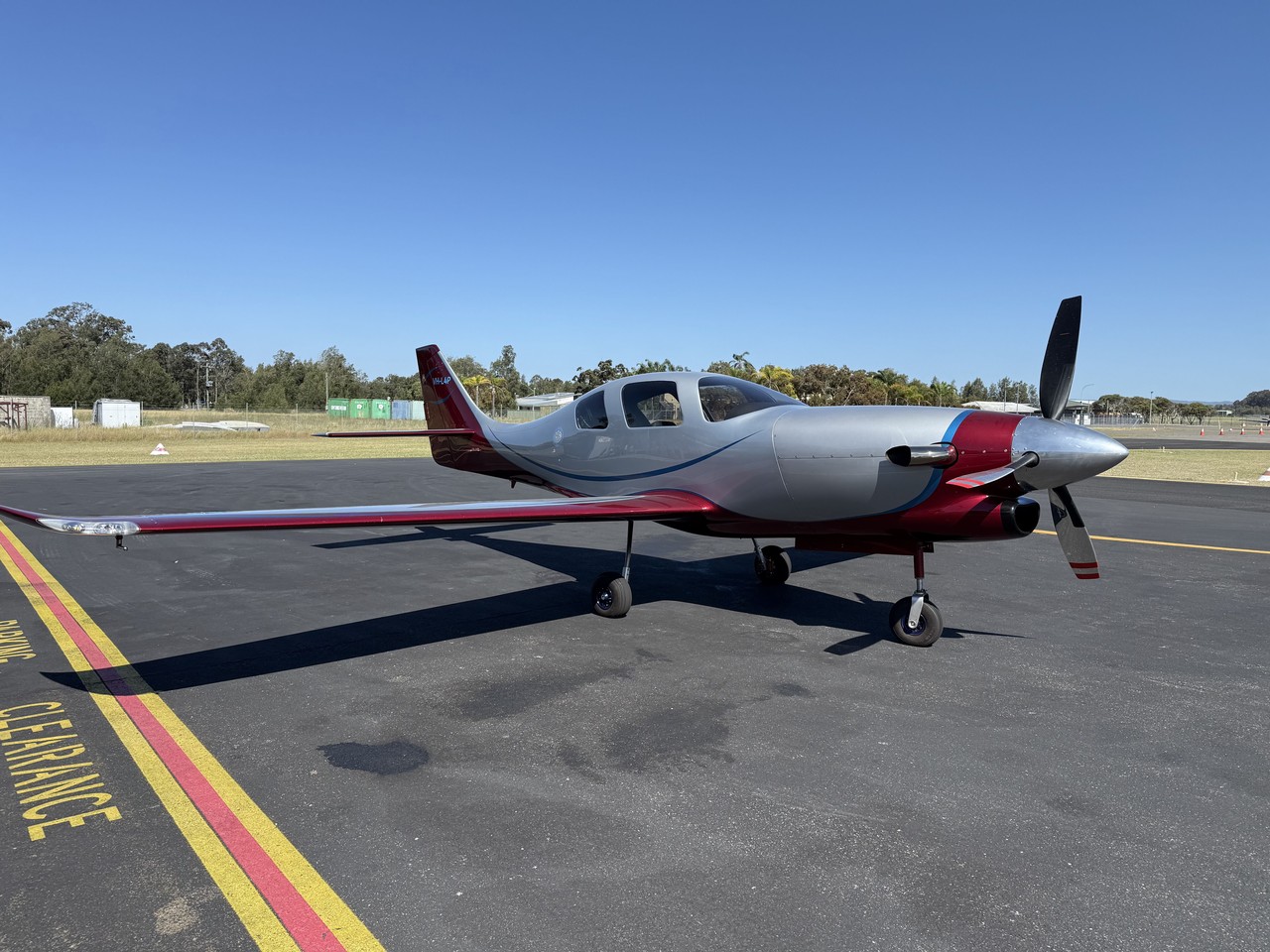
Revolutionary Design Achievement
The Lancair PropJet 4 emerged from an ambitious design goal established by Lance Neibauer in 1990: create a 345-mph, four-seat pressurized aircraft that amateur builders could construct in home workshops. This vision materialized over a decade later when Lancair successfully mated their proven composite airframe with turboprop power, creating an unprecedented offering in the experimental aircraft market.
Development accelerated in 2000 when Lancair began testing the concept of replacing the traditional piston engine with a turboprop powerplant. Within a year, the turbine-powered variant was airborne and available to kit builders, marking a significant milestone in homebuilt aviation history. The PropJet represented the first time that turboprop performance levels became accessible to individual aircraft builders rather than being limited to commercial operators.
Performance Excellence
The PropJet's performance specifications placed it in a category previously reserved for certified commercial aircraft. Powered by the Czech-manufactured Walter M601E turboprop engine producing 750 horsepower at sea level, the aircraft achieved remarkable climb rates of 4,000 feet per minute. At its service ceiling of 24,000 feet, the PropJet maintained cruise speeds of 325 knots, delivering cross-country performance that rivaled much larger and more expensive aircraft.
The pressurized cabin allowed operations in flight levels typically reserved for airline traffic, while the aircraft's 125-gallon fuel capacity provided substantial range capabilities. With a maximum takeoff weight of 3,800 pounds and an empty weight of 2,300 pounds, the PropJet offered a useful load of 1,500 pounds, accommodating four occupants and their baggage for extended cross-country flights.
Manufacturing and Production
Lancair International, founded by designer Lance Neibauer, produced the PropJet kit from 2001 through 2012. The company had established its reputation with the original Lancair IV design from 1991, and the PropJet represented the culmination of over a decade of composite aircraft development experience. Production ended in 2012 when Lancair discontinued its older kit-plane lines to focus on the newer Lancair Evolution design.
The manufacturing transition reflected broader changes in the experimental aircraft industry, as builders increasingly demanded more sophisticated and capable designs. In July 2016, Lancair announced the sale of its older aircraft lines, including the PropJet, while retaining the Evolution program. The original company subsequently became Evolution Aircraft Company, while the purchaser of the older designs continued operations as Lancair International, LLC.
Engineering Innovation
The PropJet's most significant innovation lay in successfully adapting a proven piston-powered airframe for turbine operations. The Walter M601E engine, originally developed for Eastern European commercial aircraft, provided the reliability and performance characteristics necessary for civilian operations. As an alternative, builders could specify the Pratt & Whitney PT6 turboprop, offering flexibility in powerplant selection based on availability and preference.
The aircraft retained the Lancair IV's distinctive low-wing configuration with a 9:1 aspect ratio, optimized for high-speed cruise efficiency. The composite construction techniques developed for the piston-powered variants translated effectively to the turboprop installation, demonstrating the versatility of the basic design philosophy. The three-blade constant-speed propeller installation required careful integration to handle the increased power and torque characteristics of the turbine engine.
Pilot Experience
For pilots transitioning from piston-powered aircraft, the PropJet offered jet-like performance with familiar handling characteristics. The turboprop powerplant eliminated the mixture management and engine monitoring complexities associated with high-performance piston engines while providing smooth, vibration-free operation throughout the power range. The pressurized cabin enabled comfortable flight operations above most weather systems, significantly enhancing dispatch reliability for cross-country missions.
The aircraft's climb performance allowed rapid transitions to cruise altitude, while the turbine engine's flat power curve maintained performance capabilities throughout the operating envelope. Pilots appreciated the reduced maintenance requirements compared to equivalent piston-powered designs, as the Walter turboprop demonstrated exceptional reliability in civilian service.
Legacy and Impact
The Lancair PropJet established a precedent for high-performance turbine power in the experimental aircraft category, demonstrating that sophisticated powerplants could be successfully integrated by amateur builders. Although production numbers remained relatively modest during the eleven-year production run, the aircraft proved that the technology gap between homebuilt and certified aircraft could be substantially narrowed through innovative engineering approaches.
The PropJet's influence extended beyond its immediate market impact, inspiring subsequent developments in turbine-powered experimental aircraft. The successful integration of proven turboprop engines with composite airframes established engineering principles that continue to influence contemporary kit aircraft designs. While exact numbers of airworthy examples remain undocumented, the durability of composite construction and the reliability of turbine powerplants suggest that many PropJets continue operating in private hands, representing one of aviation's most ambitious homebuilt aircraft programs.