
Design and Development
The LoCamp emerged from the vision of Francesco Rizzi, a retired Alitalia captain who founded Aerolab SRL with the goal of creating an airplane with "soul" that captured the essence of 1930s-era light aircraft. Development began in 2001 in Gallarate, near Milan, Italy, with Rizzi designing a cantilever low-wing aircraft that would blend vintage aesthetics with modern amateur-build construction techniques.
The prototype made its public debut at Sun 'n Fun in 2006, showcasing innovative features that distinguished it from typical homebuilt designs. The aircraft employs a welded steel tube fuselage structure combined with wings constructed from either wood or aluminum, all covered in doped fabric for authenticity. The NACA 4416 airfoil provides favorable flying characteristics while maintaining the period-appropriate appearance Rizzi sought.
Production History
Aerolab SRL initially offered three variants of the design: the low-wing LoCamp, a parasol-wing version called the HiCamp, and a biplane configuration known as the BiCamp. However, production remained limited during the Italian manufacturing phase, with kits entering the market in the mid-2000s but seeing slow adoption.
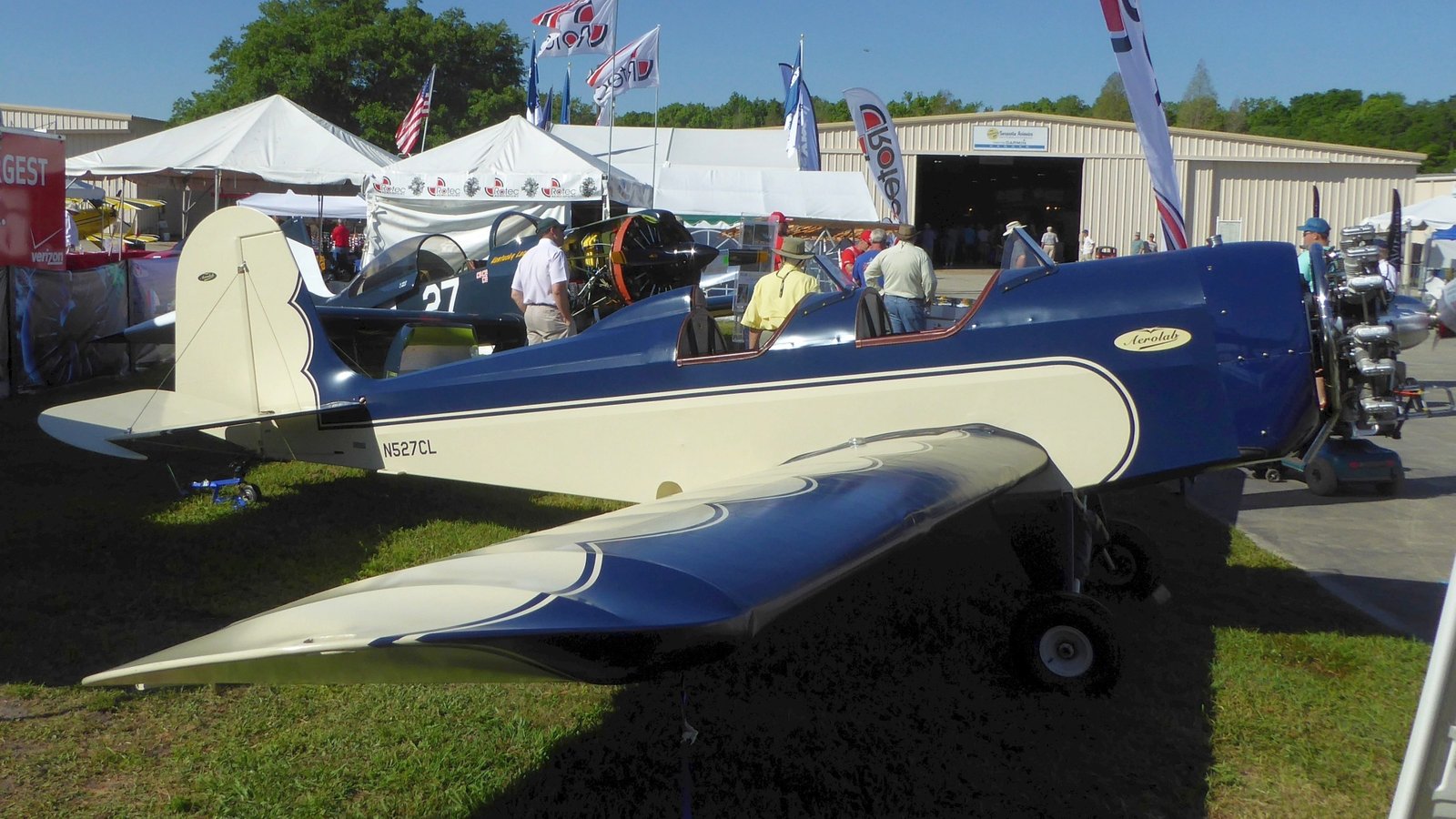
A significant transition occurred when production rights transferred to Golden Age Aeroworks, LLC in Richland Center, Wisconsin. Ed Leineweber, who had served as one of Aerolab's original dealers, led this American production effort. The first production kit under the new arrangement achieved flight in early December 2015 in Lone Rock, Wisconsin, registered as N527CL. This aircraft, built and flown by Leineweber himself, demonstrated the viability of the transferred production process.
Current manufacturing involves an international supply chain, with kits produced primarily in Argentina and components sourced from Mexico, while final assembly occurs in Wisconsin. As an amateur-built experimental aircraft, exact production numbers remain undocumented, though Golden Age Aeroworks continues offering kits today.
Technical Specifications
The LoCamp measures 22 feet in length with a wingspan of 29 feet 10 inches and stands 8 feet 3 inches tall with the propeller installed. The wing area totals 145 square feet, resulting in a wing loading of 44.4 kilograms per square meter at maximum gross weight of 1,321 pounds.
Power comes from the distinctive Rotec R2800, a 110-horsepower seven-cylinder radial engine manufactured in Australia. This air-cooled, four-stroke powerplant drives a wooden two-bladed propeller with a diameter of 6 feet. The radial engine choice proves crucial to achieving the authentic 1930s appearance while providing reliable modern performance. Alternative powerplant options under evaluation include the 65-horsepower Walter Mikron IIIc, though the Rotec remains the standard installation.
Performance and Handling
The LoCamp achieves a maximum speed of 121 mph and cruises at 106 mph, with a never-exceed speed of 132 mph. Stall speed drops to just 42 mph with flaps deployed, providing gentle landing characteristics appropriate for sport pilots. The aircraft climbs at 790 feet per minute and operates within load factors of +4.0 to -2.0 g.
With fuel capacity of 32 US gallons, the LoCamp achieves a range of 455 miles, making it suitable for cross-country recreational flying. The empty weight of 849 pounds allows a useful load of 472 pounds, accommodating two occupants and baggage while maintaining the desired performance envelope.
Operational Role
The LoCamp serves the experimental amateur-built category, targeting pilots seeking a unique flying experience that combines modern safety and reliability with vintage charm. The tandem open-cockpit configuration provides an authentic connection to aviation's golden age while meeting current light-sport aircraft regulations.
Unlike production aircraft, each LoCamp represents an individual builder's interpretation of the design, resulting in subtle variations while maintaining the core aesthetic and performance characteristics. The polycarbonate windscreens and modern instrumentation options allow builders to blend period authenticity with contemporary functionality.
Legacy and Current Status
While production numbers remain limited compared to mass-produced aircraft, the LoCamp occupies a specialized niche in recreational aviation. The design appeals to builders and pilots who value craftsmanship and distinctive appearance over pure performance or economy.
At least one confirmed example, the original Wisconsin-built N527CL, continues flying, though the total number of completed aircraft worldwide remains undocumented due to the kit aircraft's experimental nature. The LoCamp's significance lies not in revolutionary technology or massive production numbers, but in successfully translating 1930s aviation romance into a modern amateur-built package that captures the imagination of contemporary sport pilots.