
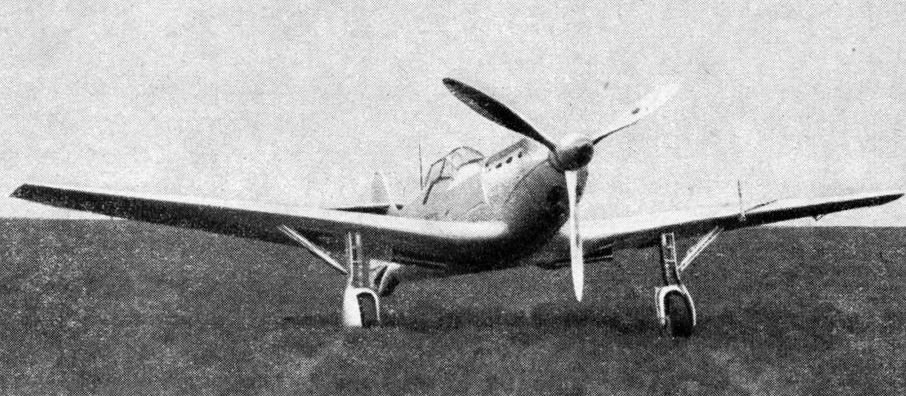
The Loire-Nieuport 161 was a French single-seat fighter prototype that emerged during the mid-1930s, a period characterized by intensive development within the French aviation industry. The aircraft's origins are tied to the Loire-Nieuport company, an entity that had been established around 1933. The development of the 161 is closely linked to the evolving requirements of the French fighter programs of the era, though its specific design lineage is marked by several designation changes.
Records indicate that the aircraft first took to the air on 5 October 1935. At the time of its maiden flight, the prototype was designated as the Nieuport 160. Following this initial flight phase, the aircraft was returned for a series of modifications intended to refine its performance and characteristics. The transition in nomenclature occurred later in the development cycle; the designation Nieuport 161 was officially applied after the Loire 250 fighter project was abandoned in 1936. This shift suggests the 161 was part of a broader effort to reorganize and re-evaluate fighter prototypes as the French military sought more capable interceptors leading up to the late 1930s.
Despite these development efforts, the Loire-Nieuport 161 did not progress to full-scale production. There is no verifiable evidence of a completed production run, nor are there records of the aircraft entering active operational service with the French military. While the Loire-Nieuport company remained active in the late 1930s—specifically contributing to naval aircraft such as the LN.401 dive bomber family—the 161 remained a prototype. Technical specifications, including engine details, horsepower, and precise dimensions, were not formally recorded in the available documentation. Consequently, the aircraft is remembered primarily as an experimental step in the pre-war French aviation landscape rather than a combat-proven platform. No surviving airframes or museum examples of the 161 are known to exist today.