
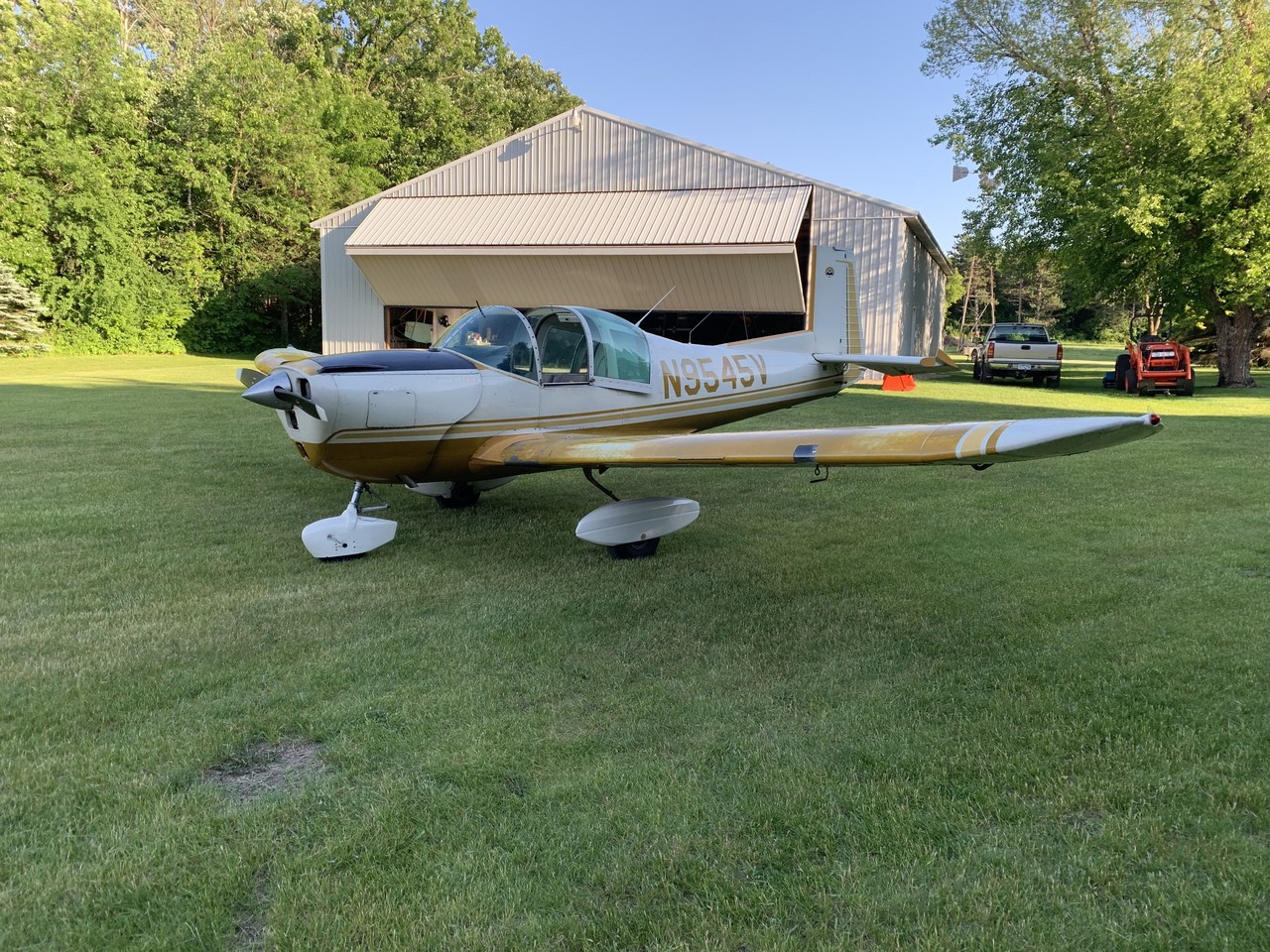
Revolutionary Training Design
The M-10 Cadet emerged from Mooney's acquisition of the Ercoupe type certificates from Alon Corporation in 1967, but represented far more than a simple rebadging effort. The aircraft's most significant innovation was replacing the Ercoupe's distinctive twin-tail configuration with a conventional single vertical stabilizer, fundamentally transforming the aircraft's training capabilities. This modification allowed the M-10 to spin deliberately, addressing a critical limitation that had restricted Ercoupe-trained pilots with FAA certificates limiting them to aircraft "characteristically incapable of spinning."
The Mooney Legacy
Mooney Aircraft Company's journey began in 1929 when brothers Albert and Arthur Mooney established their enterprise in Wichita, Kansas. Despite early bankruptcy in 1930, the company resurged after World War II, launching production of the single-seat Mooney Mite in 1946. The acquisition of Ercoupe rights in 1967 marked a strategic entry into the training market, though production would cease entirely from 1971 to 1973. Republic Steel Corporation purchased Mooney in 1974, officially reopening production lines on January 1, 1975. The company endured multiple ownership changes, including a 1984 merger with French firm Alexander Couvelaire, bankruptcy in 2001, and eventual acquisition by Advanced Aerodynamics and Structures in 2002, forming today's Mooney Aerospace Group.
Engineering Excellence
The M-10's Continental C-90-16F engine delivered 90 horsepower through a two-bladed McCauley 7153 metal fixed-pitch propeller measuring 5 feet 11 inches in diameter. The aircraft incorporated NACA 43013 airfoils with a wing aspect ratio of 6.31:1, optimizing performance for training operations. Engineers redesigned the ailerons and fuel tank venting system compared to the preceding Alon A2-A, while borrowing the characteristic "backward" empennage profile from Mooney's successful M-20 series. Unlike the M-20's innovative swiveling stabilator, the M-10 employed conventional fixed horizontal stabilizer and hinged elevator construction.
Operational Characteristics
Pilots found the M-10 Cadet delivered predictable handling characteristics essential for effective flight instruction. The aircraft's 24-gallon fuel capacity provided adequate endurance for training missions, while its 950-pound empty weight and 1,450-pound maximum takeoff weight offered reasonable payload flexibility. Approach speeds of just 40 knots made the aircraft forgiving for student pilots, while cruise speeds between 96 and 103 knots provided efficient cross-country capability for advanced training phases.
Limited Production and Market Impact
Production at Mooney's Kerrville facility yielded exactly 59 M-10 Cadets between 1969 and 1970, making the type among the rarest production aircraft in general aviation history. This brief production run reflected challenging market conditions and internal corporate difficulties that would soon force Mooney's temporary closure. Despite limited numbers, the M-10 successfully demonstrated that conventional training aircraft could incorporate modern design elements while maintaining the docile handling characteristics essential for flight instruction.
International Service
At least one M-10 Cadet achieved international recognition through its service in Australia. Construction number 700025, originally registered as N9534V and built in 1970, was imported to Western Australia in 1991 where it received registration VH-JXS. This aircraft continued active service for over two decades before transferring to the Recreational Aircraft Association register in December 2017, demonstrating the type's durability and continued utility in specialized roles.
Enduring Significance
While the M-10 Cadet's brief production run prevented it from achieving widespread recognition, the aircraft represented an important evolutionary step in training aircraft design. Its spinnable configuration solved a genuine problem in flight training, enabling instructors to provide complete aerodynamic education without regulatory restrictions. The M-10's innovative approach to conventional trainer design influenced subsequent aircraft development and demonstrated Mooney's engineering capabilities beyond their famous speed-oriented designs. Today, the surviving M-10 Cadets serve as reminders of an ambitious but short-lived attempt to revolutionize primary flight training during aviation's golden age of general aviation expansion.