
Racing Dominance
The Monocoupe 110 Special carved its legacy on the racing circuits of 1930s America, where speed and agility determined champions. The aircraft won a dozen Cleveland air races during the early 1930s and established a world speed record in its class. Racing pilots consistently clocked the 110 Special at 180 knots during competition, with some aircraft reaching a maximum speed of 195 mph. Robert Davis captured the Sportsman Pilot Race in 1937 at 178 mph, while other notable aviators like Johnny Livingston, Phoebe Omlie, and Edna Gardner Whyte piloted these machines to victory across the country's premier racing venues.
Notable Operators
The 110 Special attracted some of aviation's most skilled pilots during its competitive heyday. Edna Gardner Whyte raced her aircraft in the K.K. Culver race at the Miami Air Maneuvers, demonstrating the type's appeal to pioneering female aviators. Ken Olson continued the tradition by racing at Miami in 1940, extending the aircraft's competitive career into the next decade. These pilots appreciated the 110 Special's responsive handling characteristics and impressive climb rate of 1,700 feet per minute at sea level.
The Manufacturer Legacy
Don Luscombe's Mono Aircraft Corporation, later renamed Monocoupe Corporation and headquartered in Robertson, Missouri, created the 110 Special as the pinnacle of their design lineage. The company's evolution began with Luscombe's Mono 22 and progressed through the 70, 90, and 110 models, with the entire Monocoupe family totaling more than 800 aircraft built. Luscombe's engineering expertise would later establish the famous Luscombe aircraft line, cementing his influence on American general aviation development.
Engineering Excellence
The 110 Special featured a steel tube fuselage covered with fabric, providing both strength and weight efficiency crucial for racing performance. The clipped-wing design distinguished it from the standard 110 model, sacrificing some lift for reduced drag and enhanced roll rate. The aircraft's Warner 185 radial engine produced 200 horsepower, significantly more than the 145-horsepower radial engine found in the standard 110 model. This power advantage, combined with the aerodynamic refinements, enabled the 110 Special's exceptional performance envelope.
Operational Characteristics
Pilots found the 110 Special to be a demanding but rewarding aircraft that required skill to extract its full potential. The aircraft carried a useful load of 575 pounds and could accommodate 408 pounds of payload with full fuel tanks. Standard fuel capacity was 42 gallons, though optional tanks increased capacity to 54 gallons for extended range operations. The baggage compartment held a modest 20 pounds, reflecting the aircraft's focus on performance over utility.
Limited Production
The exclusivity of the 110 Special stemmed from its specialized racing mission and the economic realities of the 1930s aviation market. Only seven factory-built examples emerged from the production line between 1932 and the late 1930s, though additional conforming aircraft were constructed by other builders following the original specifications. This limited production run created a legendary status that persisted long after the aircraft's competitive career ended.
Modern Revival Attempt
In 1999, Aviat Aircraft recognized the enduring appeal of the 110 Special design and constructed a modernized version. This single aircraft, bearing serial number 7001 and registration N110XZ, incorporated a 200-horsepower Lycoming IO-360 engine and modern systems while maintaining the classic aesthetic. Aviat projected performance figures of 185 mph true airspeed in cruise and a range of 636 nautical miles with a five-gallon reserve, though only this one example was completed before the program ended.
Surviving Legacy
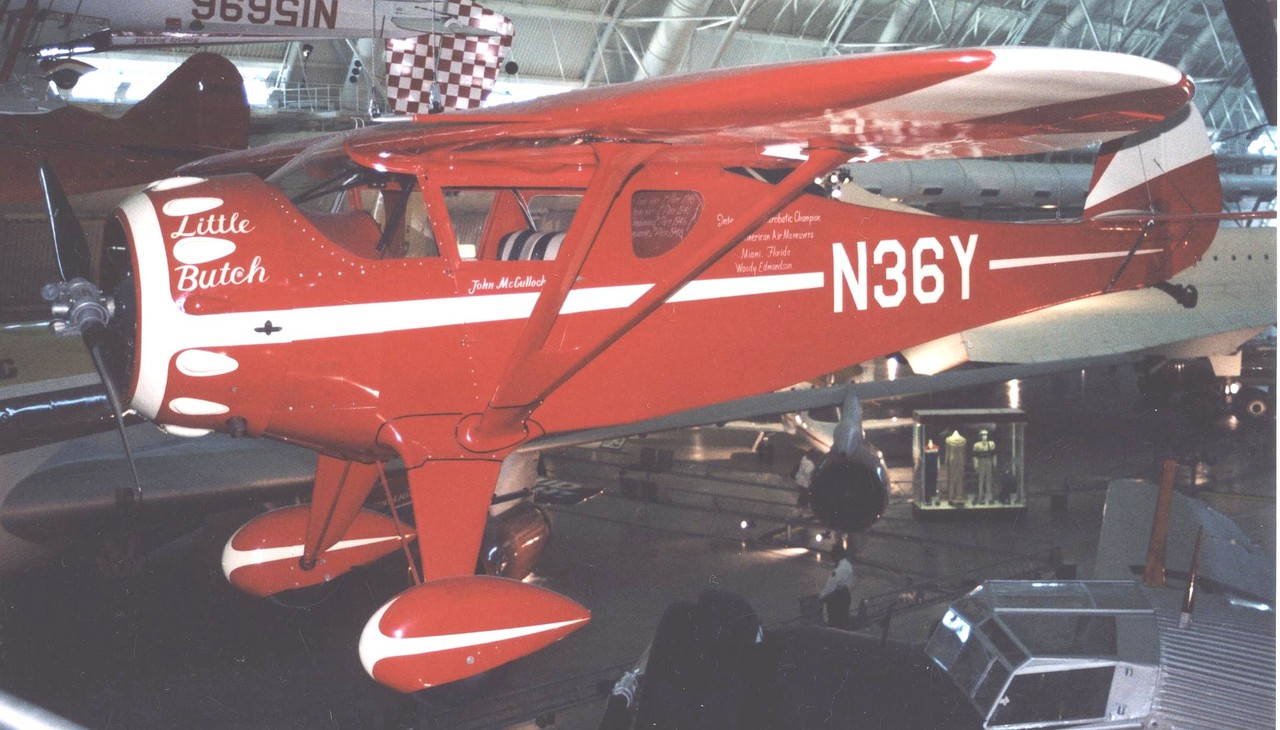
Multiple original 110 Specials survive today, preserved in museums and private collections. The Smithsonian Institution's National Air and Space Museum houses "Little Butch" (N36Y), which was built at the factory in Melbourne, Florida, and first flew on February 3, 1941. Another example resides at the Historic Aircraft Restoration Museum in Missouri, while documented survivors include aircraft registered as NC501W, NC101H, N2347, NC110SP, NC18642, NX1161, and N18RM. Several remain airworthy and continue flying, allowing modern pilots to experience the handling characteristics that made the 110 Special a racing legend.
The Monocoupe 110 Special represents more than a successful racing aircraft; it embodies the spirit of innovation and competition that defined American aviation's golden age. Its influence extends beyond racing victories to inspire future generations of aircraft designers and pilots who appreciate the marriage of engineering excellence with pilot skill.