
Design Origins and Development
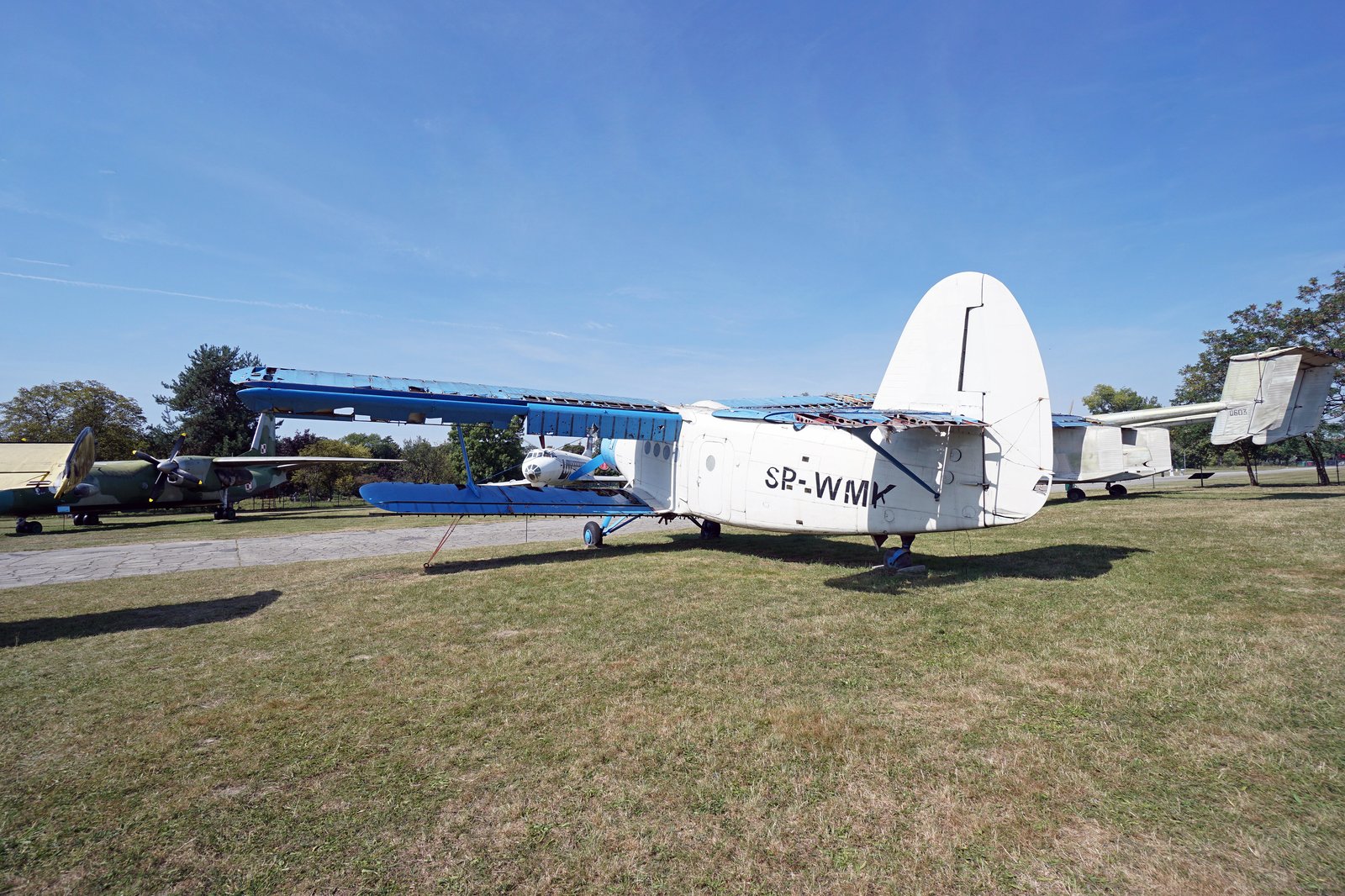
The M-15's development began in 1971 when WSK-PZL Mielec's design team, led by chief engineers Kazimierz Gocyła and Riamir Izmailov, embarked on creating an unprecedented agricultural aircraft. The Soviet Union demanded a jet-powered crop duster that would demonstrate technological superiority over Western agricultural aviation. The designers retained the proven biplane configuration from the successful Antonov An-2, which WSK-PZL Mielec had previously manufactured under license, to maintain superior low-speed lift characteristics essential for agricultural operations.
The prototype's maiden flight on May 30, 1973, marked the beginning of extensive testing, with a second prototype following eight months later. The aircraft's unusual appearance immediately distinguished it from conventional crop dusters, featuring wings connected by two prominent struts that housed the chemical tanks and a jet engine mounted high on the rear fuselage to avoid interfering with spray dispersal.
Technical Innovation and Configuration
The M-15's powerplant, an Ivchenko AI-25 turbojet engine generating 3,000 pounds of thrust, was the same unit used in the Yakovlev Yak-40 passenger jet and Aero L-39 Albatros trainer. This engine choice reflected Soviet ambitions to modernize agricultural aviation through jet propulsion, despite the inherent challenges of combining high-speed jet technology with low-altitude agricultural work.
The aircraft's chemical storage system utilized the distinctive twin columns between the upper and lower wings, accommodating 1,450 liters of agricultural chemicals dispersed through compressed air systems. Spray nozzles positioned at the lower wing tips and under the wings provided coverage patterns suitable for large-scale crop treatment operations. The fixed tricycle landing gear facilitated rapid ground turnaround times essential for agricultural efficiency.
Manufacturer Background
WSK-PZL Mielec brought considerable experience in agricultural aviation to the M-15 project, having successfully produced the An-2R crop duster variant under Soviet licensing agreements. The Polish manufacturer's expertise in adapting existing designs for specialized agricultural roles positioned them as the logical choice for developing the world's first jet-powered agricultural aircraft.
The company's engineering team faced the unprecedented challenge of integrating jet propulsion with the specific requirements of low-altitude, precision agricultural operations, including chemical resistance, rapid refueling capabilities, and the ability to operate from unprepared airstrips common in rural areas.
Operational Performance and Limitations
The M-15 achieved a maximum speed of 124 miles per hour with a service ceiling of 15,000 feet and an operational range of approximately 248 miles. While these performance figures exceeded those of traditional piston-powered agricultural aircraft, the jet engine's fuel consumption significantly reduced operational efficiency. The aircraft's empty weight of 7,209 pounds for production models made it substantially heavier than the An-2 it was intended to replace.
Pilot accommodation included a single-seat cockpit with optional space for two technicians when required for complex operations. The aircraft's handling characteristics, while stable, lacked the low-speed maneuverability that experienced agricultural pilots preferred for precise chemical application in confined areas.
Commercial Failure and Production End
Despite Soviet export promotion efforts, the M-15 found buyers only within the USSR, where operators quickly discovered its operational disadvantages. The aircraft's operating costs far exceeded those of conventional agricultural planes, while its reduced range compared to the An-2 limited operational flexibility. Maintenance requirements for the sophisticated jet engine proved incompatible with the remote agricultural airstrips where crop dusting operations typically based their aircraft.
Production ceased in 1981 after only 175 aircraft were completed, falling far short of the originally planned 3,000 units. Economic realities and poor operational feedback from Soviet agricultural operators convinced authorities that the jet-powered concept was fundamentally flawed for agricultural applications.
Cultural Legacy and Recognition
The aircraft gained its memorable nickname "Belphegor," after a mythical demon associated with discoveries, at the 1976 Paris Air Show where its distinctive appearance and loud jet engine attracted considerable attention from aviation enthusiasts and industry observers. The name perfectly captured the aircraft's status as both an ambitious technological experiment and a practical failure.
Today, the M-15 Belphegor stands as aviation history's most notable example of technological ambition exceeding practical requirements. Its unique position as the world's only production jet-powered agricultural aircraft ensures its place in aviation museums and enthusiast discussions, representing a fascinating footnote in the Cold War era's technological competition between East and West.