
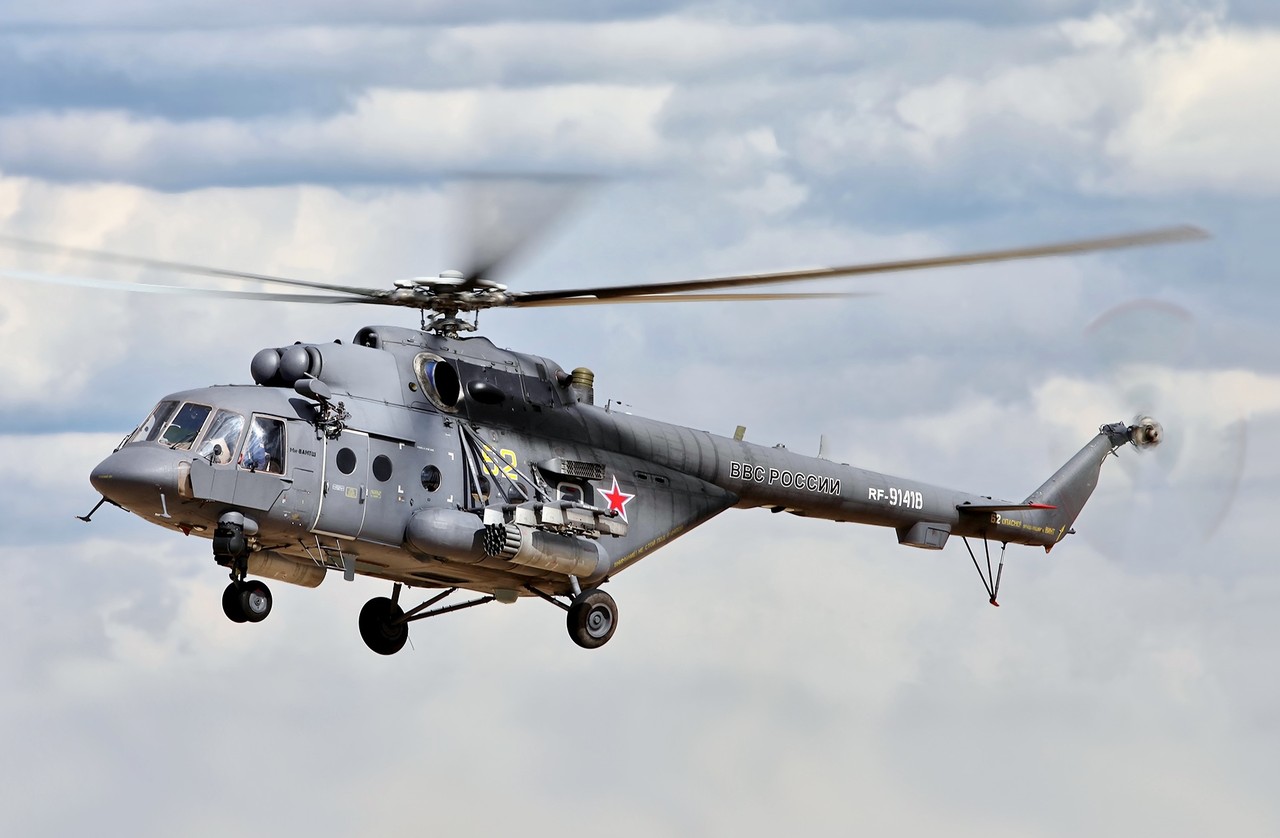
Development and Design Philosophy
The Mi-171C emerged from a unique international collaboration between Russian helicopter expertise and Chinese manufacturing capabilities. Development began as part of China's strategy to establish domestic helicopter production while leveraging proven Soviet-era designs. The aircraft incorporates key modifications specifically tailored for civilian operations, most notably its sophisticated radar package comprising forward-mounted weather radar and a Doppler navigation radar positioned beneath the tail boom.
The design traces its lineage directly to Mikhail Leontyevich Mil's foundational work on the Mi-8 series, which first flew as the Mi-17 prototype in 1975. The Mi-171C represents the latest evolution of this design philosophy, emphasizing operational versatility and enhanced situational awareness for civilian operators.
Manufacturing Partnership
Sichuan Lantian Helicopter Company Limited established its production facility in Chengdu specifically to manufacture the Mi-171C under license from Mil Moscow Helicopter Plant JSC. The arrangement involves shipping pre-manufactured component kits from Russia's Ulan-Ude Aviation Plant to the Chinese facility, where final assembly occurs. This partnership allowed China to establish helicopter manufacturing capabilities while providing Russia with expanded market access.
Production commenced in May 2008 with an initial output of 20 helicopters. The facility planned to scale operations to 80 units annually, though specific production totals for the Mi-171C variant remain undisclosed. This manufacturing model reflects broader trends in international aerospace cooperation, combining established design expertise with emerging market production capacity.
Technical Specifications and Performance
The Mi-171C employs the proven Klimov TV3-117 turboshaft powerplant configuration, with two engines each rated at 2,200 shaft horsepower. These engines provide the substantial power reserves necessary for the helicopter's diverse operational requirements, from passenger transport to heavy cargo lifting missions.
The aircraft's crew configuration typically accommodates two to three flight crew members, with passenger capacity reaching 24 to 30 individuals depending on seating arrangements and mission requirements. Alternative configurations allow for substantial cargo loads, maintaining the operational flexibility that characterizes the broader Mi-17 family.
The helicopter's distinctive radar suite sets it apart from standard Mi-17 variants. The forward-mounted weather radar enhances flight safety during adverse meteorological conditions, while the Doppler navigation radar beneath the tail boom provides precise positioning and ground speed information. This dual-radar configuration specifically addresses civilian operational requirements where enhanced navigation capability proves essential.
Operational Characteristics
The Mi-171C's most visible modification involves replacing the traditional clamshell cargo doors with a single ramp door configuration. This design change facilitates more efficient loading and unloading of passengers and cargo, particularly beneficial for commercial transport operations where quick turnaround times impact operational economics.
The helicopter maintains the robust operational characteristics inherent to the Mi-8/17 family, including reliable performance across diverse environmental conditions. The TV3-117 engines provide consistent power output across varying altitudes and temperatures, supporting operations in challenging geographical regions.
Family Heritage and Context
The Mi-171C belongs to the world's most prolific helicopter family, with the broader Mi-8/17 series exceeding 17,000 units produced since the 1960s. This production volume establishes it as the most manufactured helicopter in aviation history, with over 100 distinct modifications developed for specific operational requirements.
The Mi-17 series, introduced between 1977 and 1981, serves military and civilian operators in more than 60 countries worldwide. NATO designation "Hip" applies to the military variants, though the Mi-171C focuses primarily on civilian transport missions rather than military applications.
Current Status and Legacy
As of 2024, Mi-17 family production continues at Russian facilities in Kazan and Ulan-Ude, alongside the Chinese production line for the Mi-171C variant. The ongoing manufacturing reflects sustained global demand for medium-lift helicopter capabilities, particularly in regions requiring reliable transport solutions across challenging terrain.
The Mi-171C represents the evolution of licensed production models in modern aerospace manufacturing, demonstrating how established designs can be adapted for specific market requirements while maintaining core operational capabilities. The aircraft's specialized civilian focus, enhanced through its radar suite and cargo door modifications, illustrates the continuing relevance of the fundamental Mi-8 design philosophy more than five decades after its initial development.
Sichuan Lantian continues producing various Mi-17 derivatives, including the Mi-171, Mi-17V5, and Mi-17V7 variants, establishing China as a significant contributor to global helicopter manufacturing capacity within this proven design family.