
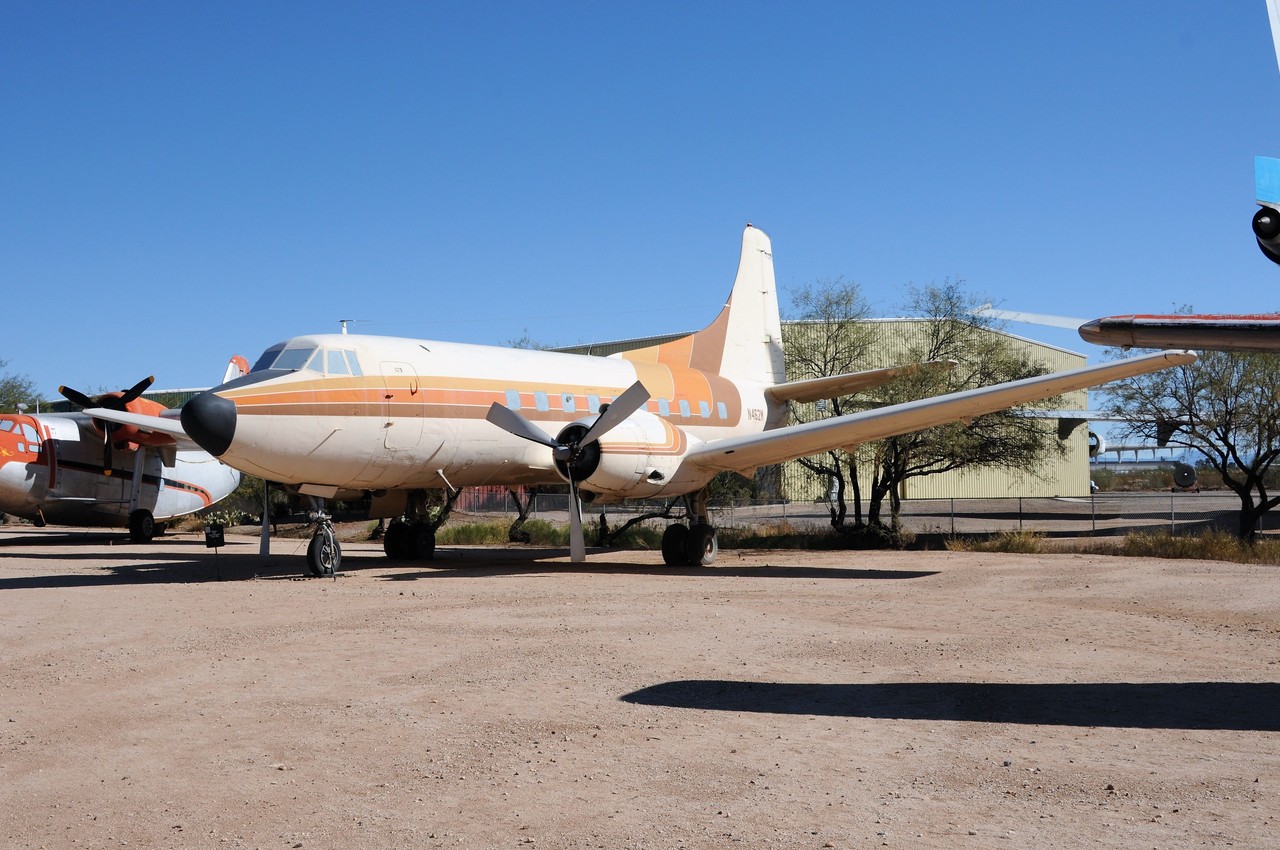
Service History
The Martin 4-0-4 entered commercial service in autumn 1951 with two major carriers leading adoption. Eastern Air Lines ordered 60 aircraft, branding their fleet as "Silver Falcons," while Trans World Airlines acquired 40 examples designated as "Skyliners." These initial operators validated the aircraft's design objectives of doubling DC-3 capacity while maintaining similar field performance requirements.
By the 1960s, the type had found its niche with regional carriers. Piedmont Airlines operated former TWA aircraft, while Southern Airways became the most significant secondary operator, receiving 25 ex-Eastern Martin 404s beginning in October 1961. Pacific Air Lines assembled a fleet of ten aircraft between 1959 and 1962, purchasing eight from TWA and two from Eastern. The type also served Ozark Air Lines, Mohawk Airlines, and later Air Florida through the following decades.
Southern Airways achieved a notable milestone by operating the Martin 4-0-4 until April 30, 1978, becoming the last major regional carrier to fly the type. Eastern Air Lines holds the distinction of conducting the final piston-engine airliner flight by any major U.S. carrier using the Martin 4-0-4. Most airlines replaced their fleets in 1968 with turboprop aircraft including the Fairchild F-27 and Fairchild-Hiller FH-227B, though some examples continued serving commuter airlines into the 1980s.
Military Service
The United States Coast Guard ordered two Martin 4-0-4s configured as executive transports, initially designated RM-1G before redesignation to RM-1 and finally VC-3A in 1962. These military variants served until 1969, when both aircraft transferred to the United States Navy. The Navy withdrew the aircraft from service by 1970, ending the type's brief military career.
The Manufacturer
The Glenn L. Martin Company brought six decades of aviation experience to the 4-0-4 project. Glenn L. Martin established his aircraft factory in 1909, merely six years after the Wright brothers' historic flight, positioning the company among America's aviation pioneers. Throughout its existence, Martin produced significant military aircraft including the B-10 Bomber, B-26 Marauder, and the Model 130 flying boat famously operated by Pan American Airways as the "Clipper" series.
The company no longer exists as an independent entity, having been absorbed through aerospace industry consolidations in the latter twentieth century. These mergers and acquisitions eventually contributed to the formation of Lockheed Martin through various corporate transformations.
Engine & Technical Innovation
Two Pratt & Whitney R-2800-CB16 radial engines powered the Martin 4-0-4, each producing 2,400 horsepower from 18 air-cooled cylinders. The R-2800 Double Wasp represented one of the most successful piston engines of its era, renowned for reliability and robust power output across numerous military and civilian applications throughout the 1940s and 1950s.
The aircraft incorporated several advanced features for its time, including cabin pressurization enabling operations up to 29,000 feet, comprehensive anti-icing systems for all-weather capability, and retractable tricycle landing gear. An innovative airstair built into the lower tail section allowed passenger boarding without ground equipment, enhancing operational flexibility at smaller airports.
With an empty weight of 29,126 pounds and maximum gross weight of 44,900 pounds, the aircraft achieved its design goal of 280 mph cruise speed with a range of 1,080 miles. The two-person crew could operate the pressurized cabin for 40 passengers, nearly doubling DC-3 capacity while exceeding its speed by over 100 mph.
Development Challenges
The Martin 4-0-4 evolved from earlier company designs that experienced significant setbacks. The unpressurized Martin 2-0-2 suffered wing structural failures that halted production, forcing the company to redesign the wing structure. Martin had already flown an improved version as the Martin 3-0-3 in 1947, providing the foundation for the pressurized 4-0-4 configuration.
These development delays cost Martin valuable market position, allowing competitors like Convair's 240-340-440 series to capture significant sales during the critical post-war airline expansion period. Despite these challenges, the 4-0-4 proved reliable in service and fulfilled its design objectives.
Production & Legacy
Production at the Glenn L. Martin factory in Baltimore totaled 103 aircraft between 1951 and 1953. While modest compared to competing designs, each aircraft served long careers with multiple operators, demonstrating the type's durability and operational economics.
Today, surviving Martin 4-0-4s number in single figures. The Airline History Museum in Kansas City displays serial number 14142, originally delivered to Eastern Airlines in February 1952. This aircraft served Eastern for 13 years before transferring to Southern Airways in 1965, then Air Florida, and finally the air show circuit as "Skyliner Kansas City." The Planes of Fame Air Museum maintains N636X (Serial Number 14135) in flying condition, one of the few airworthy examples remaining from the 1952 production year.
The Martin 4-0-4 represents a significant transition period in commercial aviation, bridging the gap between the DC-3 era and modern pressurized airliners while serving regional carriers effectively through the 1970s.