
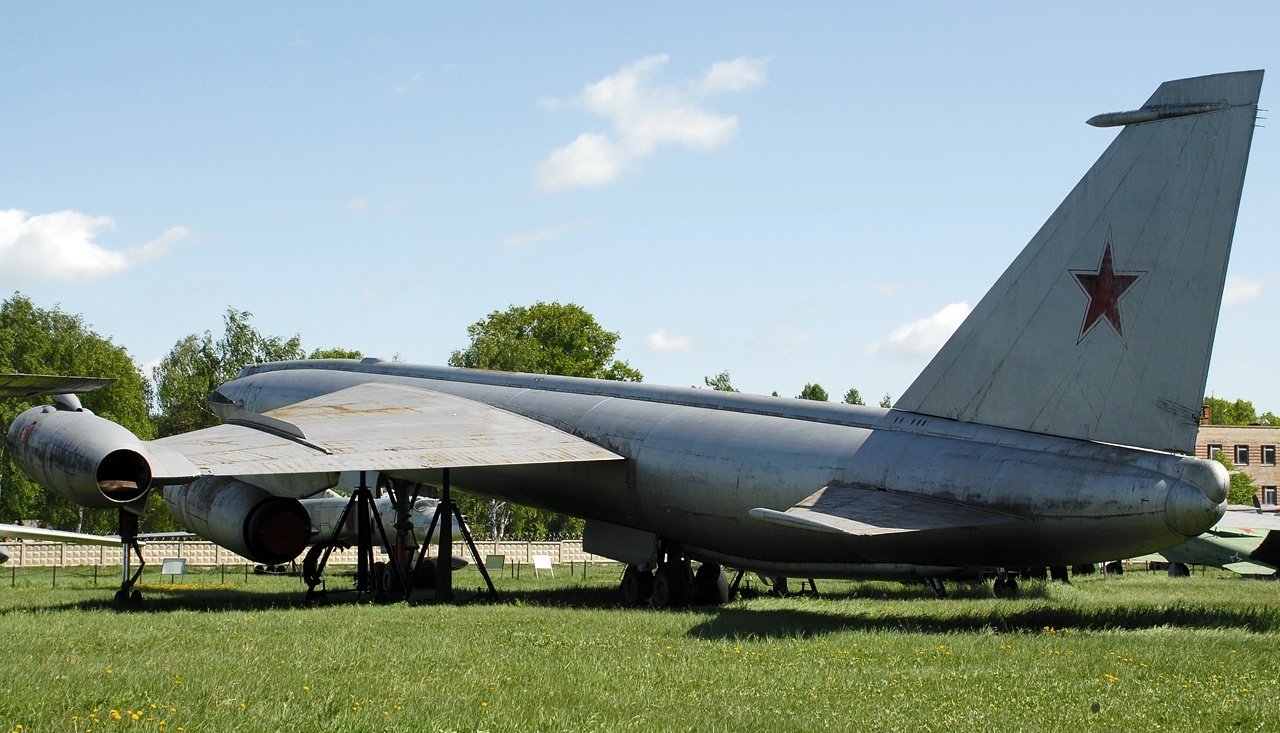
The Myasishchev M-50 represented one of the Soviet Union's earliest and most ambitious efforts to develop a supersonic intercontinental strategic bomber. Designed by Vladimir Mikhailovich Myasishchev and his associated design bureau (OKB-23), the aircraft was intended to operate as a high-speed strike platform for the Soviet Air Force. The M-50 first took to the skies on 27 October 1959, marking a significant milestone in Soviet aviation research. According to records from the Khrunichev State Research and Production Space Center, the M-50 was characterized as a supersonic aircraft that possessed characteristics many years ahead of its foreign counterparts.
Despite its advanced design and the high visibility it gained as a Cold War technology demonstrator, the M-50 never progressed to series production. The aircraft remained a prototype, with only one complete flying example, designated the M-50A, and at least one other incomplete airframe or modified test article reported. Because the project never entered a production phase, there are no documented production years or a standardized factory assembly line associated with the aircraft's manufacture. The development was handled within the structure of the Soviet aviation industry by Myasishchev’s OKB and related test facilities.
Technically, the M-50 was powered by turbojet engines, though specific manufacturer data and power output figures were not detailed in the available records. The aircraft's primary role was that of a strategic bomber, but it never achieved operational military service or saw combat in any conflict. Consequently, there were no front-line operators for the type.
While the M-50 did not enter service, it remains a notable example of Soviet aerospace ambition. It is remembered as a critical research tool that pushed the boundaries of high-speed bomber design. The legacy of the project is distinct from the modern Khrunichev State Research and Production Space Center, which, while sharing historical roots in Soviet aerospace, is now primarily known for space launch systems like the Proton and Rokot rockets following its formal establishment in its current form on 7 June 1993.