
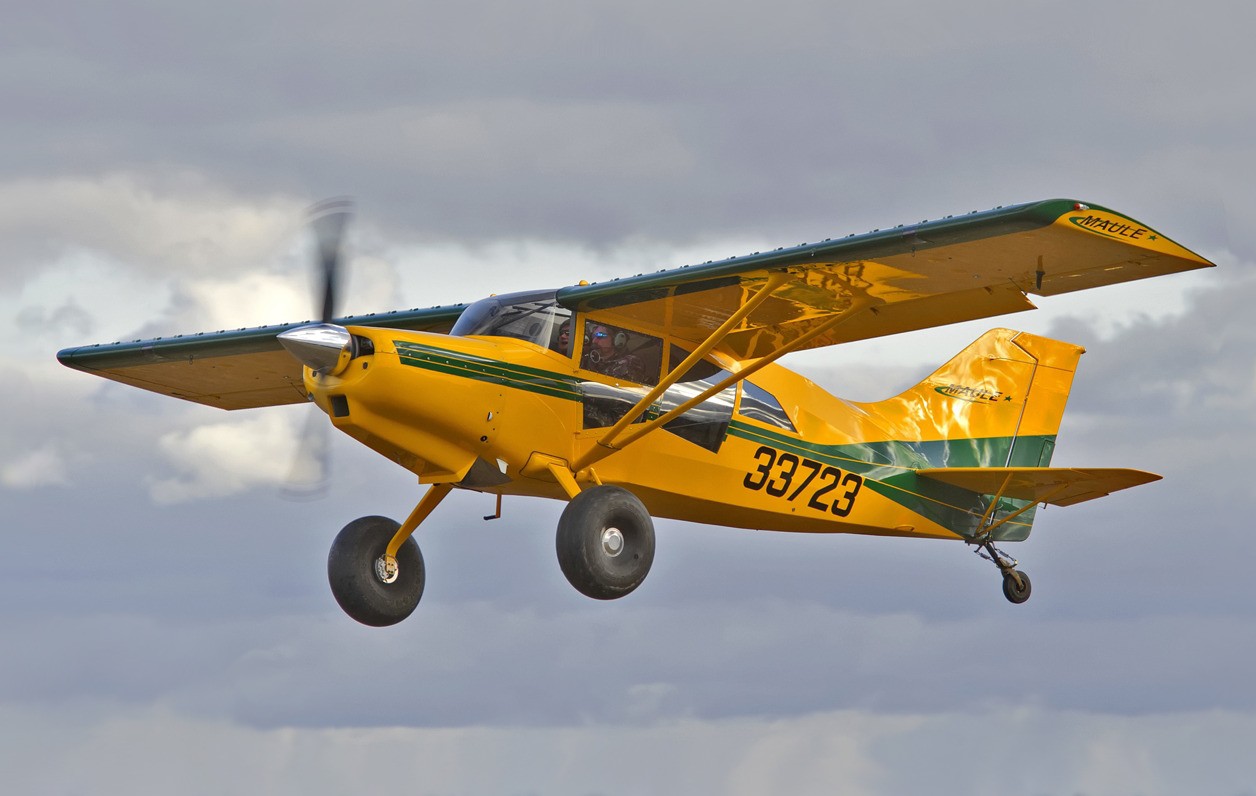
Development and Design Philosophy
The MX-7-420 Star Craft emerged from Maule Air's decades-long commitment to short takeoff and landing aircraft, tracing its lineage back to B.D. Maule's original M-1 design from 1930-1931. By 1984, when Maule introduced the M-7 series with the prototype N5656A, the company had established itself as a specialist in STOL aircraft for utility operations. The MX-7-420 represented the pinnacle of this evolution, featuring an extended cabin design with additional windows compared to earlier M-6 variants, plus enhanced wing, flap, aileron, and rudder areas optimized for short-field performance.
Powerplant Innovation
The defining characteristic of the MX-7-420 was its 313-kilowatt (420-shaft-horsepower) Rolls-Royce 250-B17C turboprop engine, a bold choice for a light utility aircraft. Maule engineers specifically rejected a lighter 300-horsepower Lycoming IO-540 piston engine installation that would have saved 150 pounds, instead prioritizing the turboprop's superior high-altitude performance and reliability. The 250-B17C, paired with a Hartzell HC-C2YR-1BF/F8468A-6R two-blade constant-speed metal propeller, provided exceptional power-to-weight characteristics that transformed the aircraft's operational capabilities.
The Manufacturer's Legacy
Maule Air, Inc. built its reputation on simplicity and rugged construction, principles that guided the company through nearly four decades of aircraft production by the late 1990s. Starting with B.D. Maule's motorcycle-engine-powered experiments in the 1930s, the company achieved FAA certification for its first four-place aircraft in 1961. By the early 2000s, Maule had produced nearly 2,000 aircraft across all models, including 970 M-7 series aircraft by mid-2003, demonstrating remarkable consistency in a volatile general aviation market.
Production and Variants
Production of the MX-7-420 continued through at least 2003, with the closely related MX-7-420AC variant recording specific delivery numbers: one aircraft in 1999, none in 2000, and single deliveries in 2001, 2002, and the first nine months of 2003. The MT-7-420, a tricycle-gear variant, received FAA certification on January 6, 2003, expanding the model's appeal to pilots preferring conventional ground handling characteristics. Both variants featured spring aluminum landing gear options and long-span wings optimized for STOL operations.
Operational Capabilities
The Star Craft's five-seat capacity and turboprop power made it exceptionally versatile for utility missions. With a maximum cruise speed of 147 mph (237 km/h) and a stall speed of just 49 mph (80 km/h) with flaps deployed, the aircraft delivered genuine STOL performance while maintaining respectable cross-country speeds. The never-exceed speed of 182 mph (293 km/h) and structural limits of +3.8/-1.5 g provided adequate margins for utility operations, while the turboprop's high-altitude capabilities opened mountain flying opportunities unavailable to most light aircraft.
Civil Service Record
The MX-7-420 found its primary market among private owners and specialized organizations requiring exceptional short-field performance. The Civil Air Patrol approved 15 MT-7-235 aircraft for glider towing operations in mid-2000, demonstrating the M-7 series' utility in specialized missions. Organizations like the Eyes On The Border Foundation and various bush flying operations appreciated the aircraft's combination of turbine reliability and STOL capabilities, particularly in remote areas where maintenance support for piston engines was limited.
Legacy and Current Status
By April 2001, Maule maintained a production backlog of 100 aircraft, indicating strong market demand despite the specialized nature of turboprop-powered light aircraft. The company's order book included 10 SMA diesel-powered MX-9 variants, showing continued innovation beyond traditional powerplants. Accident records extending into 2007 confirm that numerous M-7 and MX-7 variants remain active in service, though specific airworthy numbers for the MX-7-420 are not documented.
The Star Craft's significance in aviation history extends beyond its modest production numbers. As one of the few successful turboprop-powered light utility aircraft, it demonstrated that turbine engines could be economically viable in the STOL market segment. This pioneering approach influenced subsequent light aircraft development and established Maule's reputation for innovative powerplant integration, contributing to the evolution of modern utility aviation from its 1960s STOL origins.