
Service History
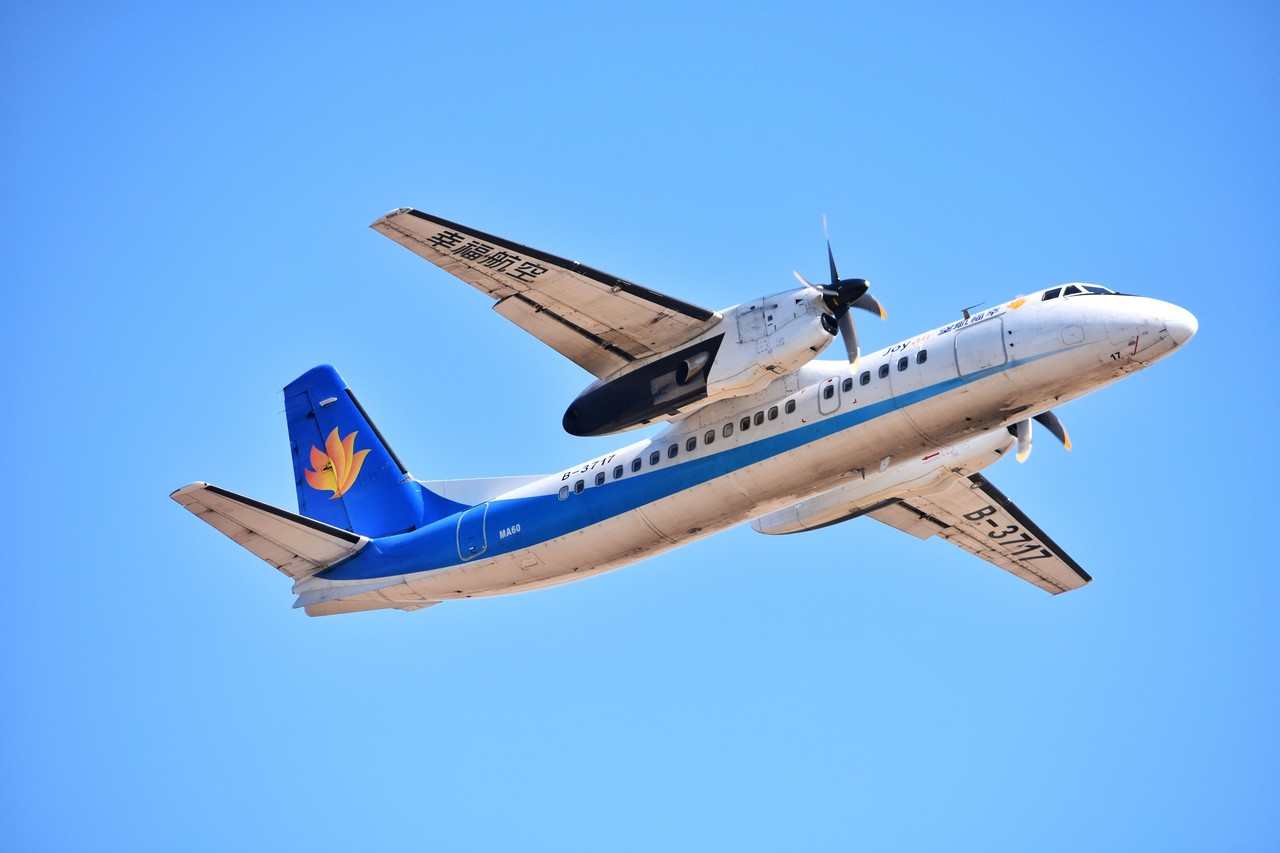
The MA-60 began commercial operations in August 2000 when launch customer Sichuan Airlines took delivery of the first production aircraft. By 2018, Xi'an Aircraft Industrial Corporation had delivered over 100 units from a total production run of 110 aircraft, serving operators across 15 countries including China, Cambodia, Nepal, Sri Lanka, and Zimbabwe. The aircraft found its niche in regional feeder services connecting remote destinations with limited airport infrastructure, though its safety record became problematic—by 2016, of 57 exported aircraft, 26 had been placed in storage due to maintenance and safety concerns, with 6 written off entirely.
The Manufacturer
Xi'an Aircraft Industrial Corporation traces its origins to 1958, initially focusing on assembling Soviet-licensed military aircraft including the H-6 bomber (based on the Tupolev Tu-16) in 1959 and the H-5 light bomber (derived from the Ilyushin Il-28). Following China's aviation industry restructuring in 2008, XAC became a subsidiary of the Aviation Industry Corporation of China (AVIC), the state-owned aerospace conglomerate. The MA-60 program represented XAC's ambitious leap from license production to indigenous design, building upon their experience with the Y7-200A transport aircraft.
Design Philosophy and Technical Innovation
General designer Lü Hai led the MA-60 development team with specific objectives: creating a rugged regional airliner capable of operating from unprepared grass or dirt runways with minimal ground support infrastructure. The design philosophy emphasized STOL (Short Take-Off and Landing) performance and low-speed control authority, essential for serving China's remote western regions and developing export markets in Africa and Southeast Asia. The shoulder-wing configuration provided superior low-altitude lift characteristics compared to conventional low-wing designs, while the 75-square-meter wing area incorporated TsAGI airfoils—the root section using the S-5-18 profile and wingtips the S-3-13.
Engine and Performance Specifications
Powering the MA-60 are two Pratt & Whitney Canada PW127J turboprops, each generating 2,750 shaft horsepower through four-bladed Hamilton Sundstrand 247F-3 constant-speed propellers. This powerplant combination enables a maximum speed of 319 mph and cruise speed of 270 mph, with a service ceiling of 25,000 feet and range of 990 miles. The aircraft's empty weight of 30,203 pounds allows for a maximum takeoff weight of 48,061 pounds, providing substantial payload capacity for regional operations.
Operational Challenges
Despite its technical capabilities, the MA-60 struggled with international acceptance due to certification limitations—it never received approval from the Federal Aviation Administration or European Aviation Safety Agency, restricting operations to domestic Chinese routes and select international markets. The aircraft's accident record became a significant concern, with more than a dozen incidents documented during its operational history. These safety issues contributed to Real Tonga's decision to cease MA-60 operations in 2015 following regulatory intervention.
Military Variants and Applications
While primarily designed for civilian use, the MA-60 spawned several military derivatives. The MA60H-500 variant features a rear cargo ramp for military transport duties, serving with air forces in Bolivia, Cambodia, Djibouti, Eritrea, Laos, and Zambia. In 2002, AVIC offered the MA60-MPA Fearless Albatross maritime patrol version, equipped for anti-submarine warfare and coastal surveillance missions, though production numbers for this variant remained limited.
Legacy and Current Status
The MA-60 program achieved its primary objective of establishing China's capability in regional aircraft development, serving as a technological stepping stone toward more advanced designs like the MA600 and MA700. However, its commercial success remained constrained by safety perceptions and certification limitations in key Western markets. China operates the largest MA-60 fleet with 24 aircraft in service and 29 additional units on order as of 2018, primarily serving domestic routes connecting smaller cities with major transportation hubs. The aircraft's significance lies not in its commercial triumph, but in its role as China's first serious attempt at competing in the global regional aviation market, providing valuable lessons for subsequent indigenous aircraft programs.