
Training Revolution
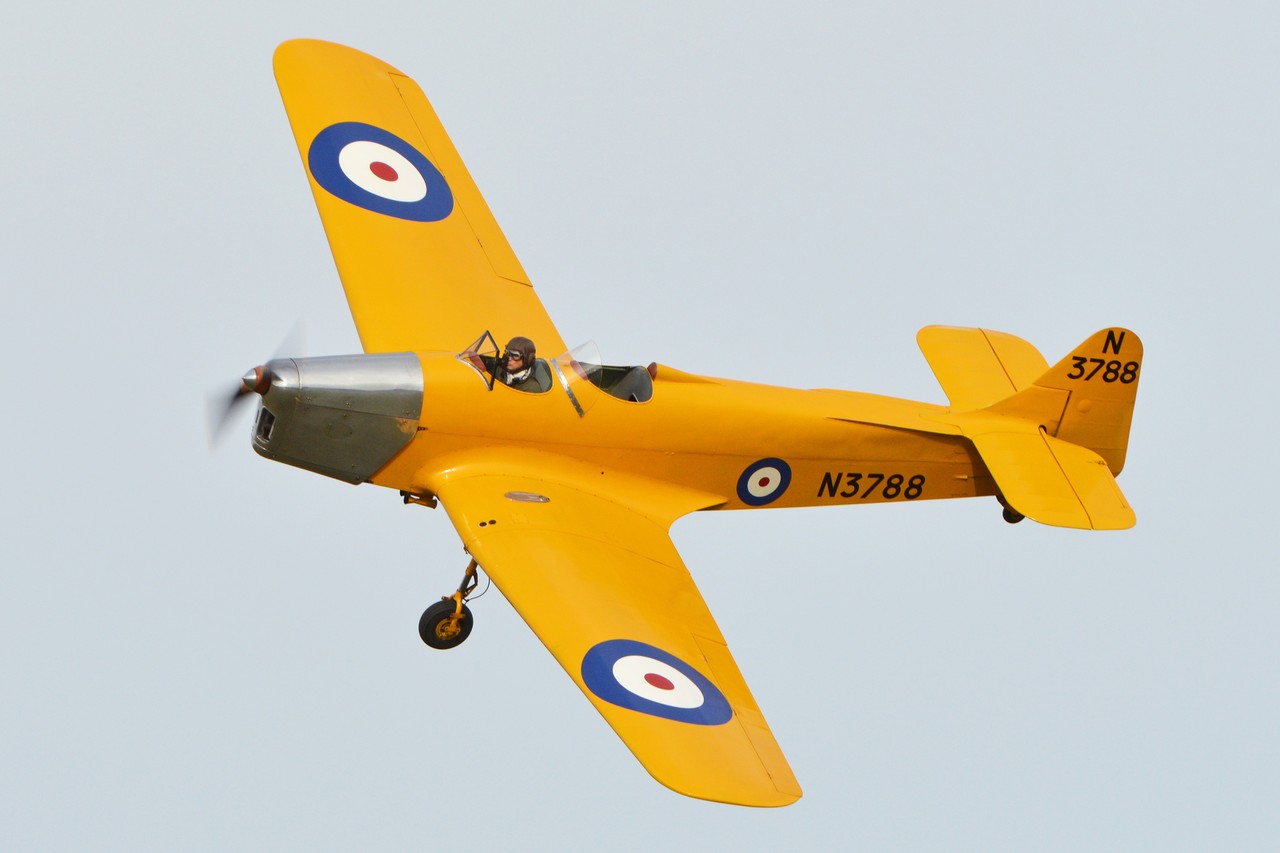
The Magister transformed RAF training methodology by bridging the critical gap between elementary instruction and operational fighter aircraft. By the outbreak of World War II, over 700 Magisters had entered service with RAF Elementary Flying Training Schools, eventually equipping 16 such institutions plus the Central Flying School. The aircraft's low-wing configuration and split trailing-edge flaps replicated the handling qualities of contemporary fighters, allowing pilots to transition seamlessly to front-line aircraft.
Combat Training Dominance
At peak wartime production, Miles Aircraft delivered fifteen Magisters weekly from their Woodley facility, demonstrating the urgent need for training aircraft. Approximately 40 Fighter Command squadrons maintained a Magister on strength as squadron hacks, while the type served multiple roles beyond basic training including glider pilot instruction, ground cooperation duties, and general communications work. The Fleet Air Arm also operated Magisters for naval pilot training, recognizing the aircraft's versatility across service branches.
International Operations
Beyond British service, the Magister found operators across multiple nations. Egypt acquired 42 aircraft for pilot training, while Turkey purchased 4 examples and subsequently manufactured 100 additional aircraft under license, representing the largest foreign production program. New Zealand operated 2 Magisters, and Eire acquired 15 aircraft, demonstrating the type's international appeal for training programs.
Phillips & Powis Aircraft Legacy
Miles Aircraft built upon their earlier success with the M.2 Hawk Trainer, which had been the RAF's first low-wing monoplane trainer. Company founder F.G. Miles personally christened the new design "Magister" and committed the company's entire manufacturing capacity to the program after securing a £2 million Air Ministry contract. The company abandoned production of other designs, including the Miles Peregrine, to concentrate resources on Magister mass production, highlighting the program's strategic importance.
Revolutionary Design Features
The Magister challenged contemporary Air Ministry preferences by utilizing wooden construction with plywood covering rather than preferred metal structures. Despite this unconventional approach, the aircraft became the first RAF machine to incorporate magnesium alloy castings for stressed components, demonstrating advanced metallurgical techniques. The design met Air Ministry Specification T.40/36, though production aircraft followed the revised T.37/37 specification as the M.14A variant.
Engine and Performance
The de Havilland Gipsy Major I inline piston engine provided reliable power for training operations, delivering sufficient performance for aerobatic instruction including protracted spins. The aircraft achieved a service ceiling of 18,000 feet with a range of 380 miles, while maintaining a remarkably low landing speed of just 42 mph that enhanced safety during student instruction. The tandem cockpit arrangement featured dual controls allowing instructors complete oversight of student progress.
Technical Challenges and Solutions
Early production encountered spinning difficulties that resulted in several training accidents. After the prototype crashed during spinning trials at the Aircraft and Armament Experimental Establishment at Martlesham Heath, though the pilot successfully escaped by parachute, engineers quickly rectified the handling problems. Modified aircraft received the M.14A designation, and subsequent production eliminated the dangerous characteristics that had plagued initial examples.
Wartime Innovation
During 1941, engineers tested a Magister with experimental wing modifications intended for medium bomber applications to increase bomb loads. The trials involved towing the modified aircraft to evaluate the new wing design's characteristics. However, this research became redundant with the introduction of four-engined heavy bombers that eliminated the need for enhanced medium bomber capabilities.
Extended Service Life
The Magister remained in RAF service until approximately 1948, when the final examples were retired and offered for disposal. This eleven-year service life demonstrated the aircraft's enduring value as a training platform, spanning the entire World War II period and extending into peacetime operations as the RAF transitioned to jet-powered aircraft.
Survival and Legacy
Today, approximately ten Magisters survive, though only a few remain in airworthy condition. The wooden construction that made wartime production feasible has limited long-term survival, as period adhesives have deteriorated over decades. Despite these preservation challenges, the Magister's role as Britain's first purpose-built monoplane trainer established design principles that influenced subsequent training aircraft development and validated the low-wing configuration for pilot instruction.