
Design Origins and Development
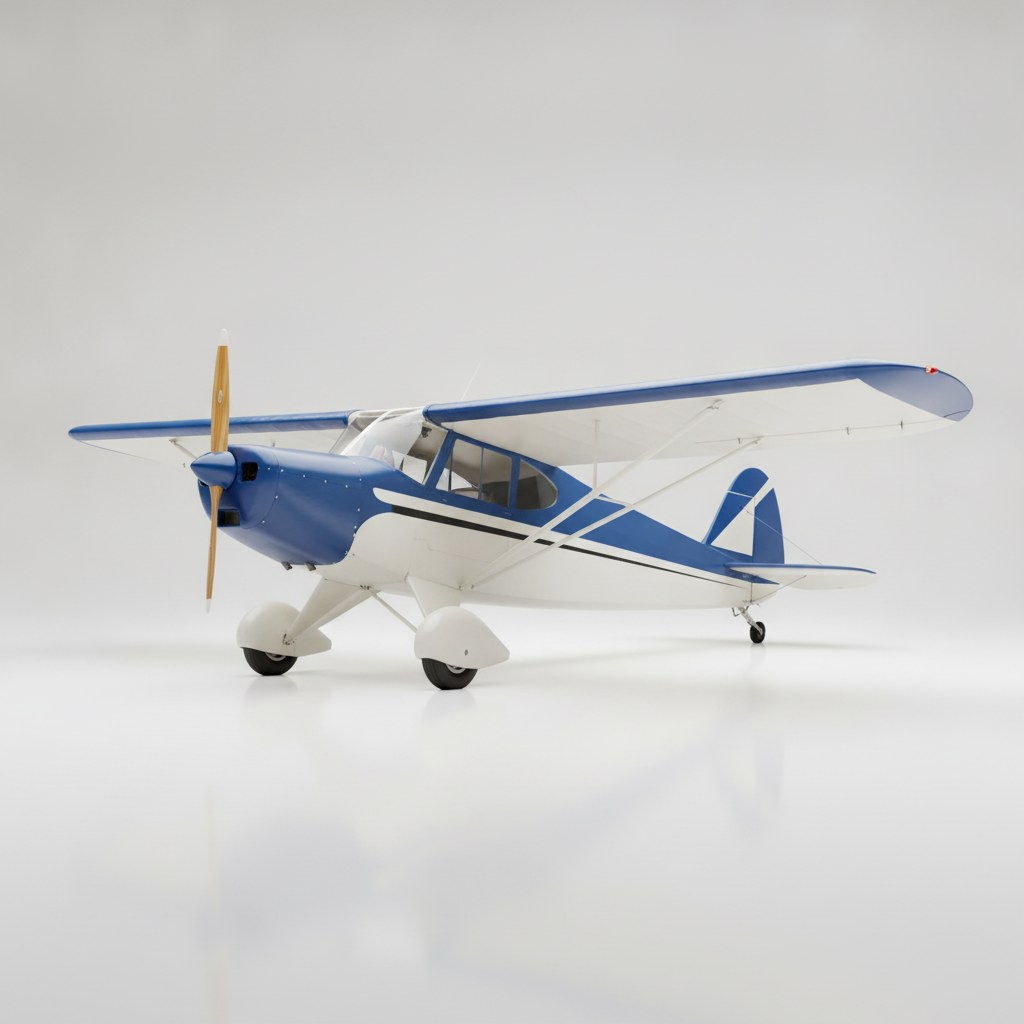
The LA-5 Major emerged from the drawing board of C.H. Latimer-Needham at Luton Aircraft Limited in 1939, conceived as a natural progression from the company's successful Minor design. Latimer-Needham, whose engineering expertise had already established Luton Aircraft as a respected name in British general aviation, envisioned the Major as offering increased capacity while maintaining the proven high-wing configuration and construction principles that had made the Minor popular among private pilots.
The aircraft featured a tandem seating arrangement for two occupants, housed within a fully enclosed cabin that provided weather protection superior to many contemporary light aircraft. This cabin monoplane configuration represented the modern approach to general aviation design in the late 1930s, prioritizing comfort and practical utility over the open-cockpit tradition still common in smaller aircraft of the era.
Manufacturing Challenges and Limited Production
Luton Aircraft Limited operated from an unusual trajectory in British aviation manufacturing. The company had evolved from the Dunstable Sailplane Company and established its primary manufacturing facility at Gerrards Cross, Buckinghamshire, after initially operating from Barton-Le-Clay Airfield in Bedfordshire. Between 1935 and 1939, the company had successfully designed and built at least five different aircraft types, demonstrating a remarkable engineering productivity for a relatively small manufacturer.
However, the Major's production story became one of aviation's most abbreviated chapters. Only a single example of the LA-5 Major was completed before world events intervened decisively. The outbreak of World War II in September 1939, just months after the aircraft's first flight, fundamentally altered Britain's aviation priorities and manufacturing capacity allocation.
Wartime Destruction and Company Closure
The final blow to the Major's prospects came in 1943 when fire completely destroyed Luton Aircraft's Phoenix Works facility. This catastrophic event not only ended any possibility of resuming Major production but effectively eliminated Luton Aircraft Limited as an active manufacturer. The timing proved particularly unfortunate, as the company had spent the intervening war years maintaining its design capabilities and potentially refining the Major's specifications for post-war civilian markets.
The destruction represented more than just the loss of manufacturing capacity; it eliminated tooling, documentation, and the accumulated expertise that would have been essential for any production restart. For C.H. Latimer-Needham, the fire marked the end of an era in which small, independent aircraft manufacturers could compete effectively in the British aviation market.
Design Legacy and Revival
Despite the original manufacturer's demise, the Major's design proved sufficiently sound to attract post-war interest. In 1958, fifteen years after the Phoenix Works fire, designer C.H. Latimer-Needham partnered with A.W.J.G Ord-Hume to establish Phoenix Aircraft Limited. This new venture acquired the design rights to both the Minor and Major, recognizing the growing homebuilt aircraft movement as a potential market for proven designs.
Phoenix Aircraft offered the Major as construction plans for amateur builders, with Latimer-Needham incorporating improvements developed during the intervening years. This approach reflected the changing nature of general aviation manufacturing, where regulatory requirements and economic realities increasingly favored either large-scale production or homebuilt construction over small-batch commercial manufacturing.
International Recognition
The Major's design merit gained recognition beyond British borders, with at least one example registered as CF-GWG in Canada appearing in aviation records. This international interest, despite the extremely limited original production, testified to the aircraft's sound engineering and the reputation that Latimer-Needham had established within the global light aircraft community.
Historical Significance
The Luton LA-5 Major represents a fascinating intersection of pre-war optimism, wartime disruption, and post-war adaptation in British aviation. Its story illustrates the challenges faced by small aircraft manufacturers during the tumultuous period from 1939 to 1945, when military priorities completely overshadowed civilian aviation development.
The aircraft's singular production run makes it emblematic of numerous promising designs that fell victim to historical circumstances beyond their manufacturers' control. Yet the design's survival through the homebuilt plans market demonstrates how sound engineering can transcend the commercial failures of its original incarnation.
Today, the Major stands as a testament to the innovation and ambition of Britain's smaller aircraft manufacturers during aviation's golden age of development, even as its extreme rarity makes it one of the most obscure chapters in the nation's rich aviation heritage.