
Design Philosophy and Development
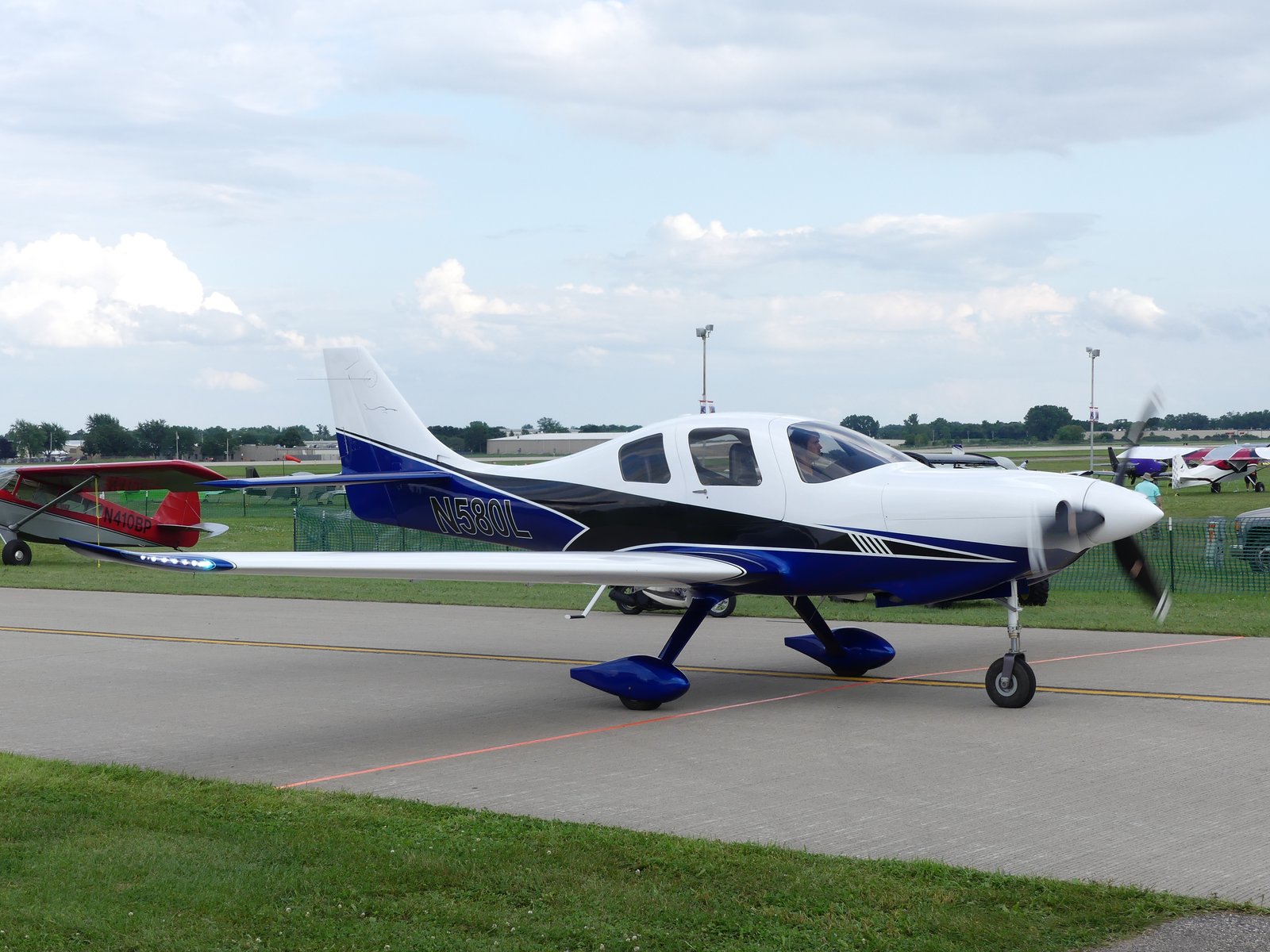
The Lancair Mako emerged from a clear market objective: delivering certified aircraft performance at experimental aircraft prices. Building upon the proven Lancair ES platform from the early 1990s and incorporating elements from the Lancair IV fuselage design, the Mako modernizes decades of composite aircraft development experience. The design team at Lancair International focused on creating a four-seat aircraft that could challenge the dominance of the Cirrus SR22 and Cessna TTx in the high-performance single-engine market.
The aircraft's composite construction utilizes advanced materials and manufacturing techniques refined through Lancair's production of over 2,100 kit aircraft since 1981. Unlike its retractable-gear predecessors, the Mako employs fixed landing gear to reduce complexity, maintenance requirements, and insurance costs while maintaining impressive performance figures.
Manufacturing and Production
Lancair International, LLC manufactures the Mako from their Uvalde, Texas headquarters following the company's acquisition by Mark and Conrad Huffstutler in 2017. This marked a significant transition for Lancair, which had previously operated from multiple locations including Redmond, Oregon, and Santa Paula, California, with parts production in Cebu, Philippines beginning in 1991.
Production commenced in 2018 with the first four customers beginning their builds that year. The company projected manufacturing approximately twelve kits annually starting in 2019. Each kit includes factory assistance, with builders spending two weeks at the Uvalde facility using professional fixtures to ensure proper assembly and quality control.
The Mako represents Lancair's first entirely new design since the company's reorganization, following a 2016 split that saw older product lines sold off before the Huffstutler acquisition. This focused approach allows Lancair International to concentrate on supporting legacy aircraft while developing modern designs like the Mako and Barracuda.
Powerplant Options and Performance
The Mako offers flexibility in engine selection, accommodating both naturally aspirated and turbocharged powerplants. Standard options include the 300-horsepower Continental IO-540 or IO-550 engines, while turbocharged variants feature the 350-horsepower Lycoming TIO-540 or Continental TSIO-550. These six-cylinder, air-cooled engines drive three-bladed constant-speed propellers, typically Hartzell units optimized for high-speed cruise performance.
The turbocharged T-Mako variant demonstrates the aircraft's impressive capabilities, achieving a maximum speed of 245 knots true airspeed and cruising at 225 knots at 25,000 feet. With a service ceiling of 28,000 feet, the Mako operates comfortably in the flight levels where turbocharged engines deliver their greatest efficiency advantages.
Range performance reaches 1,100 nautical miles with standard fuel capacity of 75 gallons, expandable to 109 gallons with optional tanks. The aircraft maintains docile low-speed handling with a landing configuration stall speed of just 58 knots, providing a remarkable speed envelope from near-stall to maximum cruise.
Construction and Specifications
Measuring 25 feet in length with a height of 7 feet 8 inches in turbocharged configuration, the Mako accommodates one pilot and three passengers in its composite fuselage. Empty weight ranges from 2,200 to 2,250 pounds depending on configuration, with a maximum gross weight of 3,550 pounds providing substantial useful load capacity.
The never-exceed speed of 220 knots indicated airspeed reflects the aircraft's structural strength and design margins, while the impressive climb performance and high service ceiling demonstrate the effectiveness of the turbocharged powerplant options.
Market Position and Legacy
The Mako addresses a specific market gap in experimental aviation, targeting builders who desire certified aircraft performance without the associated acquisition costs. By the time of Lancair's reorganization in 2017, the company had delivered between 2,100 and 2,250 kits across all models, with approximately 1,100 completed and actively flying.
As production continues into the mid-2020s, the Mako represents Lancair's commitment to advancing composite kit aircraft technology. The aircraft competes directly with established certified models while offering builders the satisfaction of constructing their own high-performance aircraft with professional factory support.
The Mako's significance extends beyond its individual performance merits, symbolizing the evolution of experimental aircraft from simple homebuilts to sophisticated machines capable of matching or exceeding certified aircraft capabilities. This progression reflects broader trends in general aviation, where experimental aircraft increasingly serve as platforms for innovation and performance advancement.