
Revolutionary Kit Construction
The Mini Coupe represented a watershed moment in homebuilt aviation when complete kits became available in the early 1970s. At $960 in 1972, builders received everything needed for construction: ribs, spars, wing skins, fuselage skins, tail assembly, control assemblies, landing gear, brakes, tires, tubes, wheels, and approximately 5,000 POP rivets. This comprehensive approach eliminated the need for builders to source individual components, dramatically simplifying the construction process for amateur aircraft builders.
Design Innovation
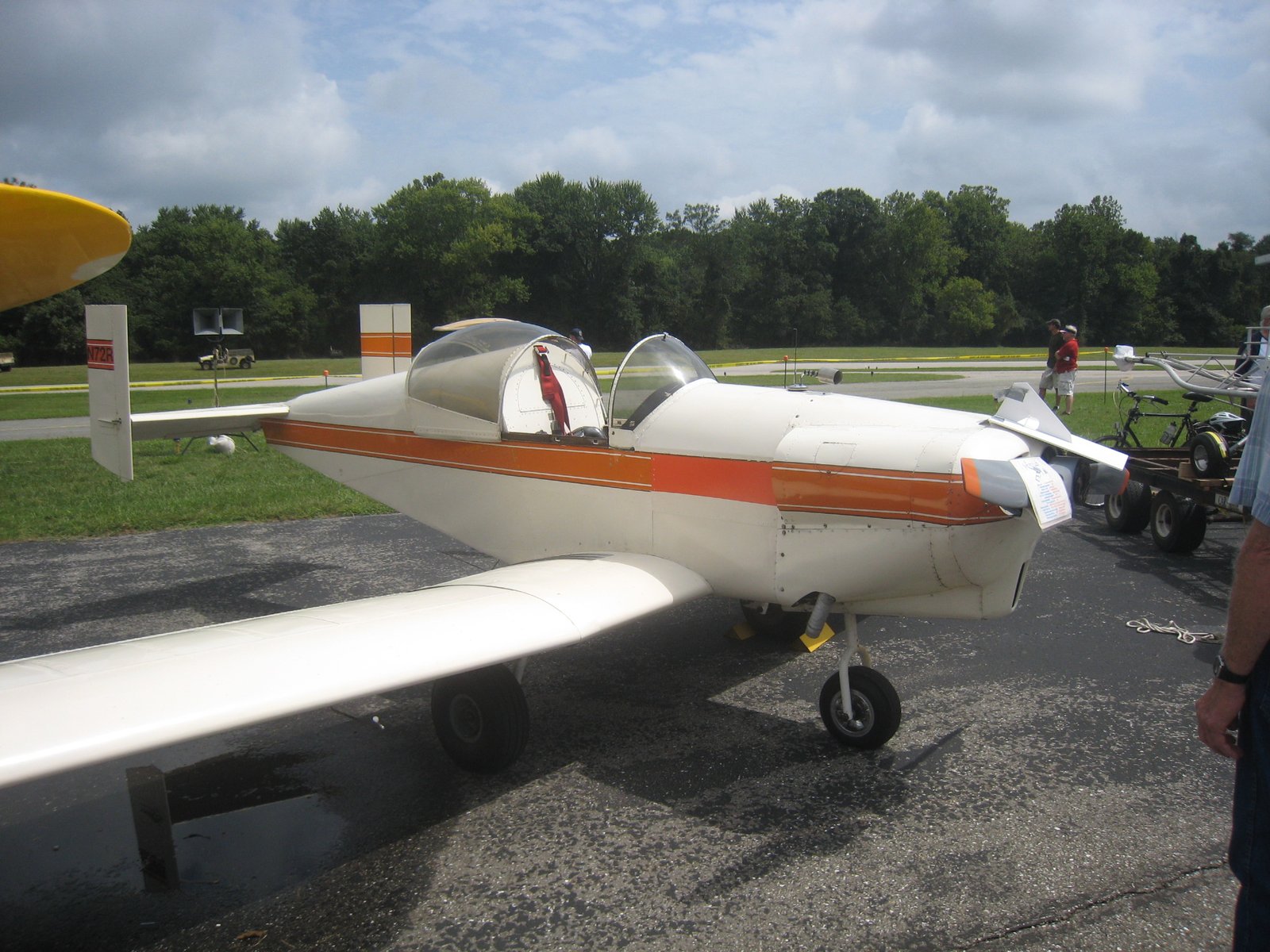
Bill Johnson's design broke new ground with its all-pushrod control system and distinctive twin-tail configuration. The aircraft's low-wing layout provided excellent performance characteristics while maintaining structural simplicity essential for kit construction. The twin vertical stabilizers not only gave the Mini Coupe its distinctive appearance but also improved directional stability and control authority at low speeds.
Automotive Power
The Mini Coupe's use of the 1700cc Volkswagen engine established a trend that would influence homebuilt aviation for decades. This automotive powerplant offered several advantages: widespread availability, reasonable cost, established parts supply network, and proven reliability in automotive applications. The VW conversion represented a practical solution to the perennial problem of affordable aircraft engines for amateur builders.
Manufacturing History
Chris Tena Aircraft originally developed and marketed the Mini Coupe kits, naming the aircraft after Bill Johnson's wife. The design rights subsequently transferred through multiple entities, including DCS Inc. and later Buck Sport Aviation, reflecting the volatile nature of the kit aircraft industry during its formative years. Johnson served as the second keeper of the design after Chris Tena, demonstrating the personal nature of many early homebuilt aircraft programs.
Proving the Concept
The aircraft's capabilities were dramatically demonstrated in 1972 when the two original prototype Mini Coupes completed a ferry flight from Oregon to Oshkosh and back. This cross-country journey proved the design's reliability and performance, while showcasing the potential of homebuilt aircraft at the world's largest general aviation gathering. The successful round-trip flight served as powerful marketing for the kit program and validated the concept of complete kit aircraft.
Technical Specifications
The Mini Coupe's compact dimensions made it ideal for builders with limited hangar space while still providing respectable performance. The aircraft's structure utilized modern materials and construction techniques that were revolutionary for the early 1970s homebuilt market. The all-pushrod control system ensured positive control response while remaining simple enough for amateur builders to construct and maintain.
Industry Impact
As the first modern materials kit aircraft, the Mini Coupe established construction standards and marketing approaches that influenced the entire kit aircraft industry. Its complete kit concept eliminated many barriers that had previously discouraged potential builders, making homebuilt aircraft accessible to a broader audience. The aircraft remains recognized among aviation historians as a standout design among 1970s homebuilts.
Legacy and Current Status
Production of Mini Coupe kits ended in the late 1970s, making original kits increasingly rare collector items. The design's influence extended far beyond its production numbers, inspiring countless other kit manufacturers to adopt similar comprehensive kit approaches. While specific numbers of airworthy examples remain unknown, the Mini Coupe's pioneering role in kit aircraft development ensures its place in general aviation history.
The aircraft's significance lies not merely in its technical achievements, but in its role as a catalyst for the modern homebuilt aircraft movement. By proving that complete, well-engineered kits could enable amateur builders to construct safe, reliable aircraft, the Mini Coupe opened the door for the thriving experimental aircraft industry that exists today.