
Service History
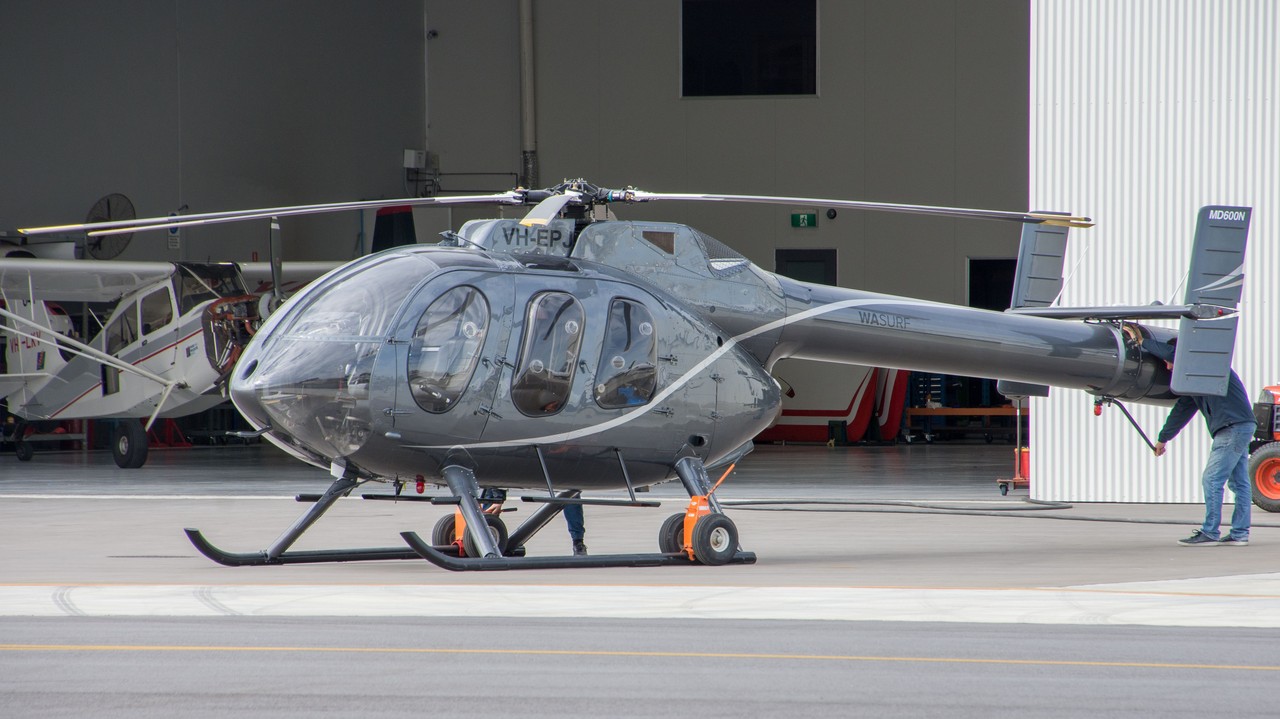
The MD-600N carved out a specialized niche in law enforcement and government operations, with the United States Border Patrol emerging as its primary operator. Multiple aircraft served with the US Border Patrol Air Operations unit at El Paso, where the helicopter's quiet NOTAR system proved invaluable for surveillance missions along the Mexican border. These aircraft typically served for over a decade before being retired, with several 1998-built examples remaining active until 2010 before entering storage.
Following their Border Patrol service, many MD-600N helicopters found new life internationally. Ex-Border Patrol aircraft were exported to Australia and New Zealand, where they continued serving in law enforcement, executive transport, and offshore operations. The helicopter's eight-seat capacity and 255-nautical-mile range made it particularly suitable for executive transport missions requiring noise-sensitive operations near urban areas.
The Manufacturer
McDonnell Douglas Helicopter Systems traced its origins to 1955 as the rotorcraft division of Hughes Aircraft Company, inheriting a legacy of innovative helicopter design. McDonnell Douglas acquired the helicopter business in 1984, positioning itself as a major player in the rotorcraft industry. The company's Mesa, Arizona facility became the center of MD-600N production when manufacturing approval was granted in March 1995.
The 1997 Boeing-McDonnell Douglas merger dramatically altered the helicopter division's future. Boeing sold the former MD civil helicopter lines to Netherlands-based RDM Holdings in early 1999, while retaining military helicopter programs. This corporate reshuffling led to the creation of an independent MD Helicopters company in 1999, which continues operations today from the original Mesa facility, maintaining the MD-600N production line.
Engine & Technical Innovation
The MD-600N's powerplant consisted of a single Rolls-Royce Model 250-C47M turboshaft engine, delivering 650 shaft horsepower for takeoff and 600 shaft horsepower for continuous operation. This engine choice provided the necessary power for the helicopter's 4,100-pound maximum takeoff weight while maintaining fuel efficiency for its extended range requirements.
The aircraft's most revolutionary feature was its NOTAR anti-torque system, eliminating the traditional tail rotor in favor of a ducted fan and circulation control tailboom. This innovation reduced noise signatures significantly, making the MD-600N ideal for operations in noise-sensitive environments. The main rotor system featured six fully articulated blades, a departure from the five-blade system used on the smaller MD-520N.
Structurally, the MD-600N represented a stretched development of the MD-520N, achieved through precise engineering modifications. Designers added a 2-foot-6-inch plug aft of the cockpit bulkhead and a 2-foot-4-inch extension in the tail boom, creating space for additional passengers while maintaining aerodynamic balance. The cabin featured a flat floor measuring six feet in length, maximizing passenger comfort and cargo flexibility.
Development Timeline
McDonnell Douglas announced the stretched MD-520N development on November 8, 1994, initially designating the project as the MD-630N. The company maintained strict secrecy around the program until its public unveiling at the Helicopter Expo in Las Vegas during January 1995. The prototype, based on a modified MD-530F, achieved first flight on November 22, 1994, validating the design concepts.
Production moved rapidly following the successful prototype phase. The production prototype completed its maiden flight on December 15, 1995, leading to an intensive certification program. The Federal Aviation Administration awarded type certification on May 15, 1997, enabling the first customer deliveries in June 1997.
Performance Characteristics
The MD-600N delivered impressive performance figures for its class, achieving a maximum speed of 134 knots and a service ceiling exceeding 20,000 feet. Range capabilities varied based on payload configuration, with specifications listing between 255 and 380 nautical miles depending on fuel load and passenger count. The helicopter's eight-seat configuration typically accommodated six passengers plus two pilots, though seating arrangements could be modified for specific mission requirements.
The NOTAR system provided unique handling characteristics compared to conventional helicopters, eliminating tail rotor authority issues during autorotation and reducing pilot workload during hovering flight. This technology particularly benefited law enforcement operations requiring extended periods of stationary flight for surveillance missions.
Legacy and Current Status
Production of the MD-600N continues today under MD Helicopters, though at reduced rates compared to peak production years. The helicopter's specialized role in noise-sensitive operations ensures continued demand from executive transport operators and law enforcement agencies worldwide. While exact production numbers remain proprietary, the aircraft's presence in international markets demonstrates its successful adaptation to diverse operational requirements beyond its original US Border Patrol missions.