
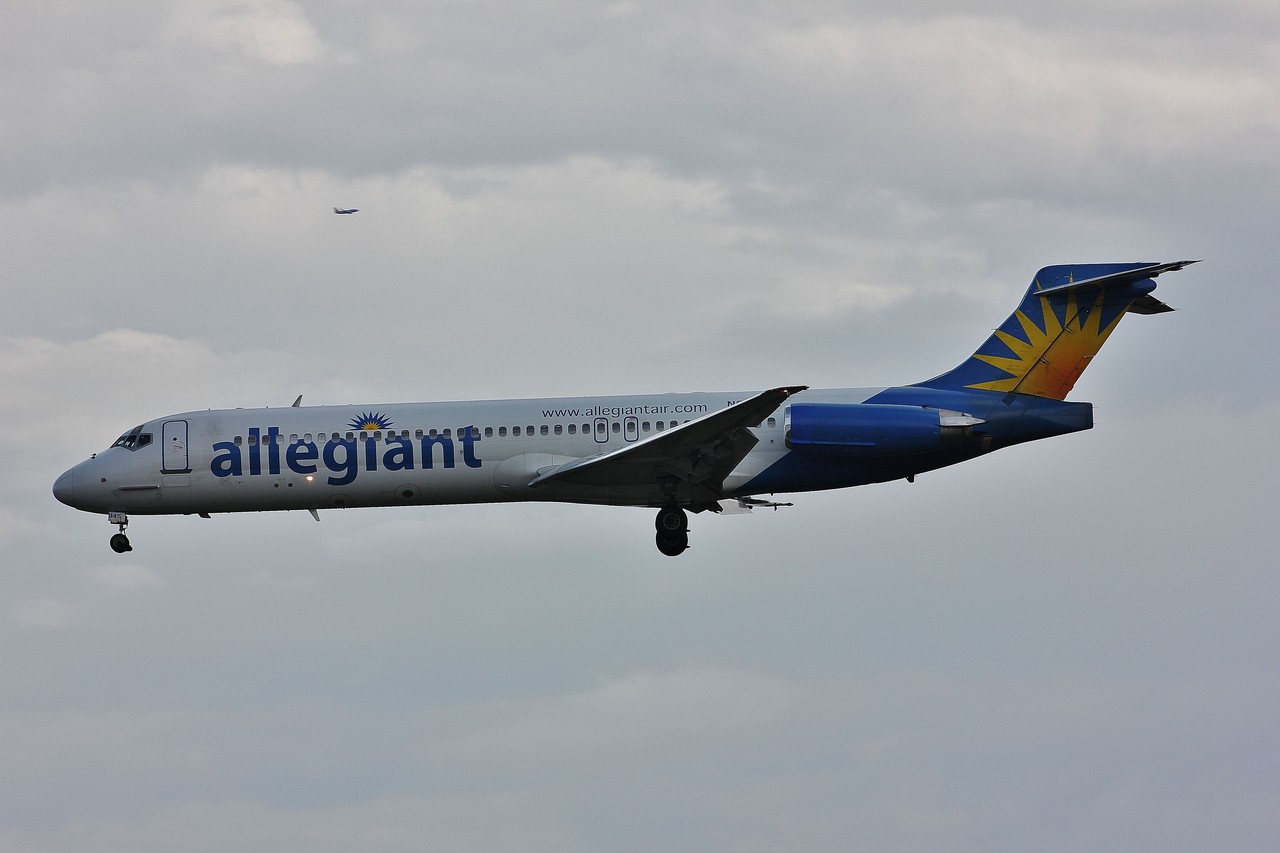
Limited Commercial Success
Despite its engineering merits, the MD-87 achieved only modest commercial success during its six-year production run from 1986 to 1992. With exactly 75 aircraft built, it became the least-produced variant in the entire MD-80 family. The aircraft found its primary market among European carriers seeking efficient equipment for regional routes, with launch customers Finnair receiving the first delivery on November 1, 1987 (registered OH-LMA), followed by Austrian Airlines on November 27, 1987.
Major operators included Iberia, Scandinavian Airlines System (SAS), and Aeromexico, with aircraft delivered to carriers across nine countries. The final MD-87 rolled off the production line on March 27, 1992, delivered to SAS as OY-KHW. The aircraft's limited appeal in the crucial U.S. market contributed to its commercial challenges, as American carriers showed little interest in the shortened variant.
McDonnell Douglas Heritage
McDonnell Douglas Corporation developed the MD-87 as part of its successful MD-80 series evolution. The company, formed through the 1967 merger of McDonnell Aircraft Corporation and Douglas Aircraft Company, had established itself as a major force in both commercial and military aviation. Beyond the DC-9 family that spawned the MD-80 series, McDonnell Douglas produced iconic aircraft including the F-4 Phantom II fighter and components for the space shuttle program.
The company reached peak MD-80 production of 12 aircraft per month in 1991 before market conditions forced a decline. McDonnell Douglas's independence ended with Boeing's $13.3 billion acquisition on August 4, 1997, after which Boeing completed remaining MD-80 and MD-90 production through 1999. Today, the MD-87's legacy continues under Boeing Commercial Airplanes.
Engineering and Design Innovation
The Douglas Aircraft Company division led the MD-87's development, with key contributions from figures like Gareth C.C. Chang, who played important roles in international sales efforts. Engineers focused on creating a shortened MD-80 variant specifically targeting thin-route efficiency, reducing overall length by 17 feet 5 inches to 130 feet 5 inches while maintaining the proven systems and powerplant of its larger siblings.
Significant design innovations included a distinctive fin extension above the tailplane and a new low-drag "beaver" tail cone that later became standard across other MD-80 variants. These modifications required extended flight testing beyond the initial December 4, 1986 first flight, but the Federal Aviation Administration granted certification on October 21, 1987, clearing the way for commercial service.
Powerplant and Performance
Pratt & Whitney JT8D-217, -219, and -217A turbofan engines powered all MD-87 aircraft, each producing 20,000 newtons (4,500 pounds) of thrust. These high-bypass turbofans, part of Pratt & Whitney's highly successful JT8D series that entered production in 1963, provided reliable performance for short and medium-haul operations with excellent hot and high altitude capabilities.
The JT8D engines featured noise-reducing modifications to meet Stage 3 compliance requirements and integrated effectively with the aircraft's supercritical wing design. With over 14,000 JT8D engines produced across all variants during more than 30 years of production, the powerplant offered airlines proven reliability and worldwide support.
Operational Characteristics
Pilots appreciated the MD-87's retention of standard MD-80 flight systems and procedures, enabling airlines to operate mixed fleets with minimal additional training requirements. The aircraft accommodated two pilots in the cockpit and offered seating configurations ranging from 109 to 130 passengers in typical layouts, with maximum capacity reaching 139 passengers in high-density arrangements.
Performance specifications included a best cruise speed of 500 knots indicated airspeed, maximum range of 2,980 nautical miles, and service ceiling of 37,000 feet. The aircraft demonstrated a climb rate of 2,700 feet per minute and required takeoff distances of 6,099 feet with landing distances of 4,688 feet, making it suitable for most regional airports.
Legacy and Current Status
The MD-87's brief production run and limited fleet size meant fewer examples remain in service compared to other MD-80 variants. As of August 2022, only 116 aircraft from the entire MD-80 family remained operational worldwide, with MD-87 numbers representing a small fraction of this total. Most surviving examples serve with smaller carriers or in specialized roles.
While the MD-87 never achieved the commercial success McDonnell Douglas envisioned, it represents an important chapter in the evolution of regional jet operations. Its development highlighted both the challenges of serving niche markets and the final innovations of the venerable DC-9 family before McDonnell Douglas's merger with Boeing ended an era in American aviation manufacturing.