
Design Philosophy and Construction
Peter Garrison embarked on the Melmoth 2 project in August 1981, shortly after the destruction of his original Melmoth aircraft in summer 1982. Unlike typical homebuilt projects, Garrison's vision extended far beyond conventional general aviation aircraft. He sought to create a four-seat, long-range personal transport capable of 200-knot cruise speeds at 17,000 feet—performance rivaling certified aircraft while maintaining the experimental category's flexibility.
The construction process became a testament to individual determination and technical innovation. Working largely alone at his California facility near John Wayne Airport in Orange County, Garrison spent over two decades perfecting every detail. Notable assistance came from Burt Rutan and Mike Melvill, who contributed their composite expertise from Scaled Composites during the initial fuselage lay-up phase, bringing proven techniques from the cutting edge of aerospace development.
Revolutionary Composite Design
The Melmoth 2 incorporated advanced composite construction throughout its structure, featuring foam-cored sandwich wings with graphite spars and 0.3-inch thick carbon fiber skins. This construction method provided exceptional strength while minimizing weight—a critical factor in achieving the aircraft's remarkable range capability. The wing design incorporated a Roncz laminar flow airfoil with a high aspect ratio of 12.6, optimized for efficient long-distance cruise performance.
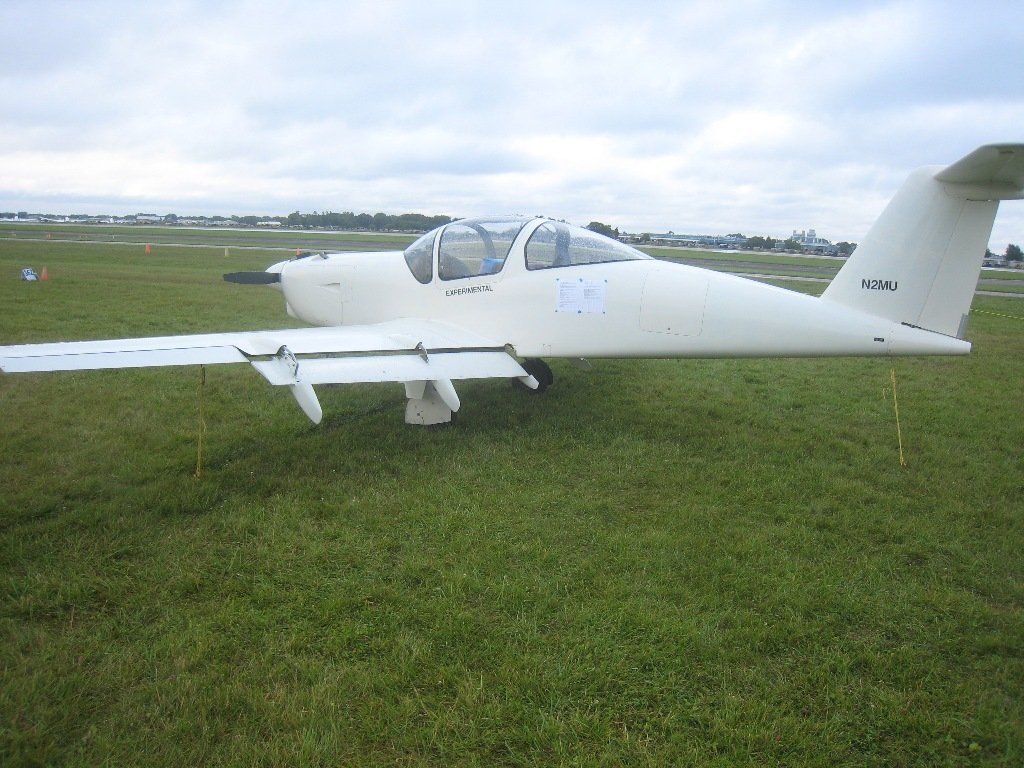
Innovative features distinguished the Melmoth 2 from conventional designs. The aircraft featured a distinctive T-tail configuration, 45-degree swept winglets, and large Fowler flaps that provided excellent low-speed handling characteristics. The landing gear retracted completely, with specially designed gear doors that maintained the aircraft's clean aerodynamic profile. A single updraft cooling inlet managed engine temperatures more efficiently than traditional designs.
Engine and Performance Specifications
Power came from a Continental TSIO-360 turbocharged engine producing 200 horsepower, driving a 76-inch diameter Hartzell constant-speed propeller salvaged from the original Melmoth. This powerplant choice reflected both practical economics and proven reliability, as the TSIO-360 series had demonstrated exceptional durability in high-performance applications since the 1960s.
The performance figures achieved validated Garrison's ambitious design goals. Maximum speed reached 220 knots, with cruise speeds of 200 knots at altitude—remarkable for a 200-horsepower aircraft. The 142-gallon fuel capacity, fully integrated into the composite wing structure, enabled the aircraft's extraordinary 2,600-nautical-mile range. Rate of climb exceeded 2,000 feet per minute, while stall speed remained a docile 53 knots despite the high-performance configuration.
Cabin Innovation
The interior layout reflected Garrison's focus on practical family transportation. The 48-inch-wide cabin provided exceptional comfort for long-distance flights, while the innovative aft-facing rear seats maximized space utilization and crash safety. This configuration, unusual in general aviation, demonstrated Garrison's willingness to challenge conventional thinking in pursuit of optimal design solutions.
Public Recognition and Legacy
After 21 years of construction, the Melmoth 2 made its public debut at EAA AirVenture Oshkosh 2003, where it attracted significant attention from the experimental aircraft community. Aviation publications, particularly Flying Magazine, documented the aircraft's development and performance through detailed flight reports and technical analyses, recognizing it as a significant advancement in homebuilt aircraft capability.
The aircraft's influence extended beyond its one-off status. As a "lightplane research prototype," it demonstrated possibilities for homebuilt aircraft that exceeded many certified designs in range, speed, and sophistication. The successful integration of advanced composite construction techniques, innovative cooling systems, and unconventional design elements provided valuable data for future experimental aircraft projects.
Current Status
Registered as N2MU with an FAA certificate valid through February 28, 2030, the Melmoth 2 remains the sole example of its type. Following Peter Garrison's passing, the aircraft continues under estate ownership, representing not merely a unique flying machine but a milestone in experimental aviation development.
The Melmoth 2's significance lies not in production numbers but in its demonstration of what dedicated individual effort could achieve in aircraft design and construction. It stands as proof that homebuilt aircraft could rival or exceed certified designs in specific performance parameters while maintaining the flexibility and innovation that defines experimental aviation. For the broader aviation community, it remains an inspiration and technical reference point for advanced composite construction and high-performance homebuilt design.