
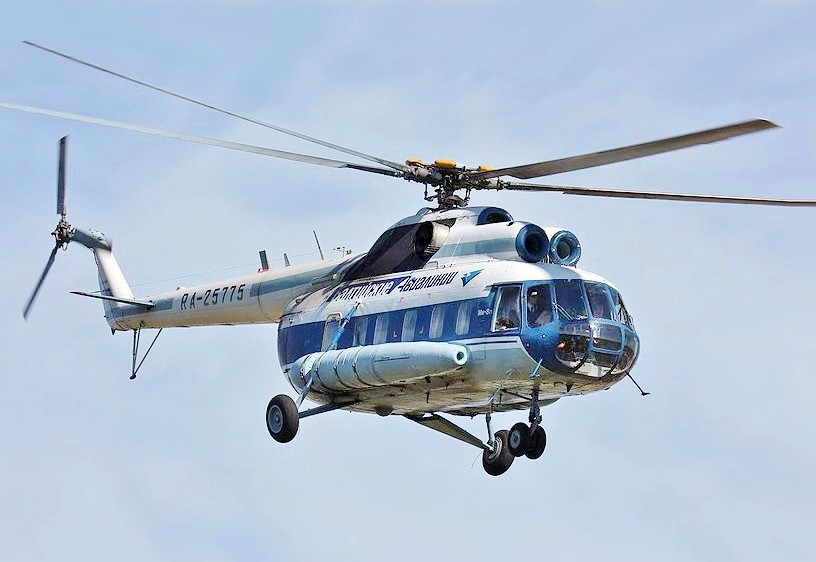
Service Dominance
The Mi-17 achieved unprecedented global reach, serving with more than 100 countries and accumulating over 100 million flight hours since entering service in 1977. With approximately 12,000 units produced across all variants, the Mi-8/17 family holds the distinction of being the world's most produced twin-engine helicopter. The aircraft dominated medium-lift operations in developing nations, where its rugged construction and relatively low operating costs made it indispensable for both military and civilian roles.
Combat Operations
The Mi-17 proved its mettle during the Soviet-Afghan War from 1979 to 1989, where it served as the backbone of transport operations in Afghanistan's challenging mountain terrain. Soviet forces employed the helicopter for troop insertion missions carrying 30 fully equipped soldiers, while armed variants mounted 12.7-millimeter nose guns and pods containing 192 57-millimeter rockets. The Mi-17-1V export variant, introduced in 1982, featured enhanced armament options including 23-millimeter GSh-23 gun pods and provisions for air-to-air missiles on the Mi-8AMTSh variant.
The helicopter's combat record extended far beyond Afghanistan, with extensive service in Chechnya, Syria, Ukraine, and numerous other conflicts. Despite suffering hundreds of losses to shoulder-fired missiles like the Stinger during the final years of the Afghan conflict from 1986 to 1989, the Mi-17's reliability and versatility ensured its continued production and deployment.
Manufacturing Heritage
Mil Moscow Helicopter Plant, established in 1951 as OKB-329 under the leadership of Mikhail Mil, created the Mi-17 as an evolution of their successful Mi-8 design. The company, founded in 1947, pioneered Soviet medium-lift helicopter technology and became part of Russian Helicopters in 2007 following a merger with Kamov under the state corporation Rostec.
Production centered at two primary facilities: Kazan Helicopter Plant, operating since 1927 and specializing in the Mi-8/17 series, and Ulan-Ude Aviation Plant in Siberia. Kazan Helicopters alone produced its 7,500th Mi-8/17 series aircraft as of recent records. International manufacturing expanded to China in May 2008, when Sichuan Lantian Helicopter Company in Chengdu began assembling 20 units from Ulan-Ude kits, with plans to reach 80 helicopters annually.
Technical Innovation
The Mi-17 MT incorporated significant improvements over its Mi-8 predecessor, most notably the relocation of the tail rotor to the port side and the installation of more powerful Klimov TV3-117MT turboshaft engines. Each engine generated 1,434 kilowatts (1,923 shaft horsepower) with emergency ratings reaching 1,637 kilowatts (2,195 shaft horsepower). The engines featured automatic power synchronization and specialized sand deflectors for operations in dusty environments.
Design enhancements included shorter engine nacelles with improved dust-protection intakes, a titanium rotor hub for increased durability, and an APU starting system using an AI-9V auxiliary power unit. These modifications enabled the Mi-17V-5 variant to achieve an out-of-ground-effect hover ceiling of 800 meters (2,600 feet), crucial for high-altitude operations.
Operational Characteristics
Pilots appreciated the Mi-17's forgiving handling characteristics and exceptional reliability in harsh operating conditions. The helicopter's two or three-person crew could operate effectively in temperatures ranging from -50°C to +50°C, while the aircraft's robust construction allowed operations from unprepared landing sites. With a cruise speed of 220 to 250 kilometers per hour and a range of 800 kilometers (extending to 1,000 kilometers in ferry configuration), the Mi-17 provided excellent operational flexibility.
The aircraft's versatility extended to specialized roles including the Mi-17-1BA flying operating theater for medical evacuation, capable of accommodating 20 wounded on stretchers or 12 intensive care patients. Civilian passenger variants could seat up to 36 passengers, while cargo configurations handled loads up to 4,000 kilograms.
Continuing Legacy
Production continues today at Russian facilities, with modern variants like the Mi-17V-5 incorporating updated avionics and enhanced performance capabilities. The helicopter's enduring success stems from its combination of proven reliability, reasonable acquisition costs, and extensive global support network. Notable examples are preserved at institutions including the Monino Air Museum in Russia and the Indian Air Force Museum, while the aircraft's cultural impact extends to popular films such as Rambo III, which featured Mi-17s in Afghan operations sequences.
The Mi-17 family's dominance in the global medium-lift helicopter market represents one of the Soviet aerospace industry's greatest export successes, establishing a standard for rugged, cost-effective rotorcraft that remains unmatched decades after its introduction.