
Service History
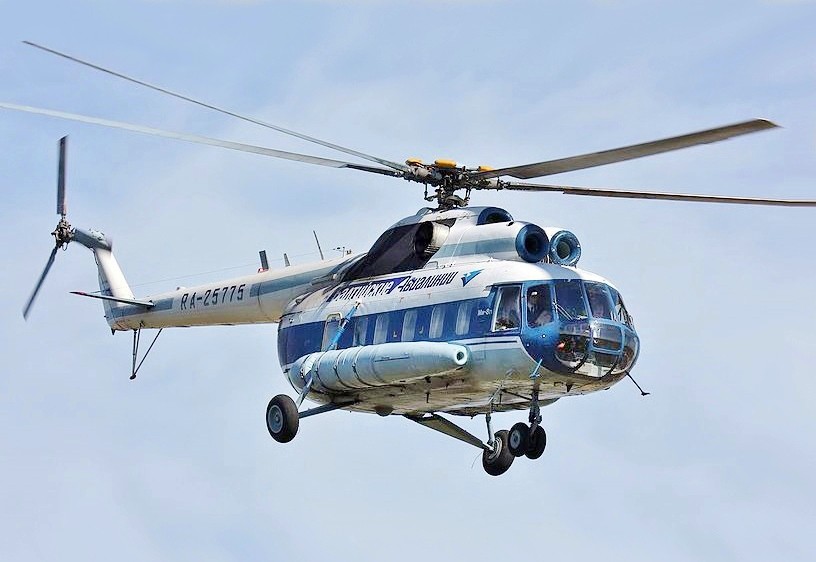
The Mi-8 achieved unprecedented global dominance in the medium-lift helicopter market, serving in more than 80 countries across six decades of continuous operation. By the 1970s, the helicopter had captured over 90 percent of the global market in its class, a position modernized variants maintain today. Serial production began at the Kazan Helicopter Plant in March 1965, reaching peak annual output of 700 to 800 helicopters. A second production facility at Ulan-Ude Aviation Plant opened in 1970, adding another 4,500 helicopters to the total production count.
The aircraft's versatility earned it the nickname "helicopter of 100 professions," reflecting its adaptation to roles ranging from passenger transport to medical evacuation, cargo hauling, and military operations. The civilian sector was actually first to exploit the new Mi-8, with demand quickly spreading to military applications worldwide.
Military Service
The Soviet Air Force formally adopted the Mi-8 in 1968, designating it with the NATO codename "Hip." The success of the American Bell UH-1 helicopter during the Vietnam War prompted Soviet military leadership to rush a troop-carrying variant into production. The transport version, designated Mi-8T, could carry 28 fully armed paratroopers, while the passenger variant Mi-8P served in support roles.
The helicopter has seen extensive combat service across multiple conflicts, including recent operations where both Russia and Ukraine have deployed Mi-8s. The Indian Air Force procured 107 Mi-8s between 1971 and 1988, followed by an additional 151 Mi-17 helicopters between 2008 and 2013, primarily for high-altitude mountain operations. Even the United States has operated Mi-8s, with the CIA and Special Forces employing them for clandestine operations.
The Manufacturer
Mikhail Leontyevich Mil conceived the Mi-8 at his design bureau (Mil OKB) in the late 1950s as a revolutionary advancement in helicopter technology. Development began with Mil's vision of employing gas turbine engines to transform helicopter construction, dramatically improving flight characteristics and economic efficiency over existing piston-engine designs.
Production was executed by two major Soviet facilities: the Kazan Helicopter Plant, which initiated serial production in 1965, and the Ulan-Ude Aviation Plant, which joined manufacturing in 1970. Both facilities now operate under Russian Helicopters holding company, part of the state-owned Rostec defense conglomerate, and continue producing modernized variants today.
Engine & Technical Innovation
The Mi-8's primary powerplant consists of twin Klimov TV3-117MT turboshaft engines, each producing 1,454 kilowatts (1,950 horsepower). This twin-turbine configuration represented a major technological leap from the earlier Mi-4 helicopter and established the Mi-8 as one of the first helicopters to successfully employ gas turbine engines rather than piston powerplants.
Early prototypes initially used a single modified Ivchenko AI-24 aircraft engine while domestic gas turbine engines remained in development. The definitive five-blade rotor system was introduced in 1964, contributing to the helicopter's exceptional lifting capacity and stability. The 2015 Mi-8AMTSh-VA Arctic variant features advanced heating systems enabling engine startup at -60°C with half a turn, plus improved thermal insulation for extreme cold weather operations.
Design Motivation
The Mi-8's development carried Cold War significance beyond its technical merits. Soviet Premier Nikita Khrushchev, after experiencing the American presidential helicopter during his 1959 visit to the United States, demanded an impressive helicopter to showcase Soviet technological capabilities. This political impetus accelerated the program's timeline and ensured adequate funding for Mil's ambitious twin-turbine design.
The helicopter's robust construction and adaptability to diverse operating conditions established its reputation for reliability in harsh environments worldwide. Its ability to operate from unprepared surfaces and perform in extreme weather conditions made it invaluable for both military and civilian operators in remote regions.
Performance Characteristics
The Mi-8 demonstrates a transport range of 465 kilometers (290 miles) with 30-minute fuel reserves while carrying substantial payloads. The helicopter's high service ceiling and ability to operate in mountainous terrain made it particularly valuable for operators like the Indian Air Force, which required reliable performance at extreme altitudes along the Himalayan frontier.
Crew requirements typically involve two or three personnel, depending on mission configuration and variant. The helicopter's forgiving flight characteristics and robust construction contributed to its widespread adoption by air forces with varying levels of pilot training and maintenance capabilities.
Legacy and Continued Production
With production spanning from 1965 to the present day, the Mi-8 family represents one of the longest-running aircraft manufacturing programs in history. The helicopter's fundamental design soundness has enabled continuous modernization and adaptation to contemporary requirements while maintaining the core characteristics that made the original successful.
Modernized Mi-8 and Mi-17 variants continue dominating their market segment, with Russian Helicopters maintaining over 90 percent market share in the medium-lift helicopter category. This sustained success validates Mikhail Mil's original vision of gas turbine-powered helicopters as the future of rotorcraft design, a concept that transformed the global helicopter industry.