
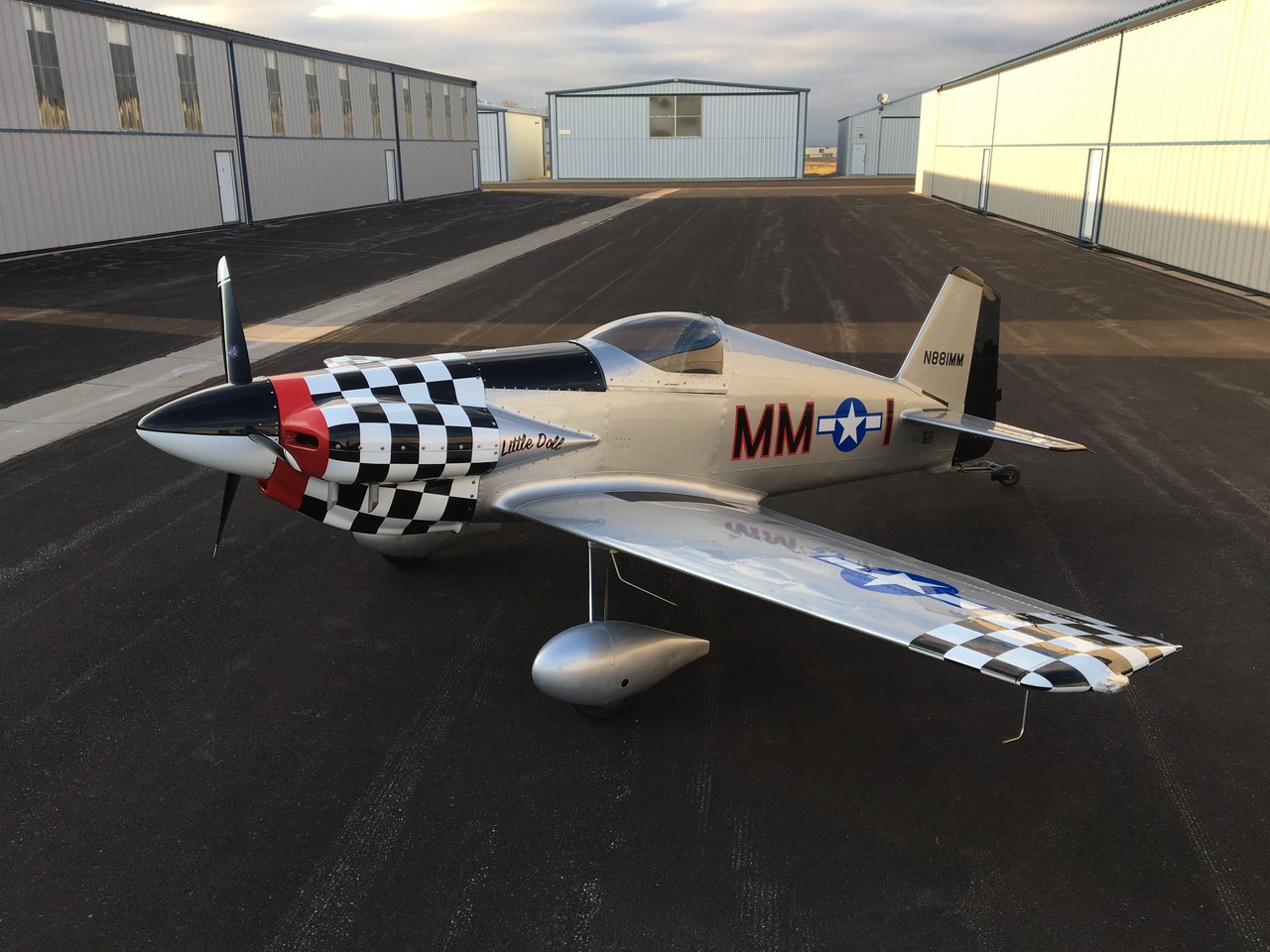
Racing Origins and Early Development
David Long, chief engineer at Piper Aircraft, conceived the Midget Mustang in 1948 as the ultimate post-war sport plane, combining racing capability with aerobatic prowess and cross-country utility. Long's prototype, registered as "P-Shooter," made its dramatic debut at the 1948 Cleveland National Air Races in the Goodyear Midget Racer class, where it placed second in elimination heats before mechanical troubles forced retirement from the finals.
The design met stringent racing specifications: minimum weight of 500 pounds, minimum wing area of 66 square feet, fixed landing gear, 6G structural rating, and stock 190 cubic inch engines. Long's innovative all-metal construction set the Midget Mustang apart from fabric-covered contemporaries, while its fighter-inspired aesthetics captured the imagination of sport aviation enthusiasts.
Tragedy and Rebirth
Long built a refined second prototype (N10N) with improved features, including repositioned landing gear mounted to the wings rather than the engine mount. He partnered with Schweizer Aircraft for production, targeting a retail price under $5,000. However, the anticipated post-war aviation boom never materialized, leaving the project commercially stillborn.
Tragedy struck in June 1950 when Long's engine failed during flight testing. Attempting to bail out from just 200 feet altitude, the designer perished in the crash, seemingly ending the Midget Mustang's story before it truly began.
The Bushby Era
In 1958, Robert W. Bushby of Dolton, Illinois, recognized the design's potential and purchased the rights, tooling, and wreckage of prototype N10N. Bushby flew his rebuilt Midget Mustang on September 9, 1959, launching a homebuilt aviation phenomenon that continues today.
Bushby established Bushby Aircraft at Glenwood in 1964, revolutionizing the design for amateur construction. He modified the structure to utilize 2024-T3 aluminum alloy and adapted construction methods for home builders, selling plans that enabled enthusiasts worldwide to build their own Midget Mustangs.
Variants and Evolution
The design expanded into multiple variants addressing different engine installations and performance requirements. The MM-1-85 accommodated Continental C-85 engines and powerplants in the 90-130 horsepower range, typically fitted with fixed tricycle landing gear. The SM-1-85 variant featured retractable main gear for enhanced performance.
For pilots seeking greater power, the MM-1-125 provided structural reinforcement for engines producing 125-160 horsepower, with the 135-horsepower Lycoming O-290 series becoming the most popular choice. This variant delivered the aircraft's maximum performance potential, achieving the advertised 260 mph top speed.
Bushby's most significant expansion came with the 1966 introduction of the two-seat Mustang II (M-II), first flown as N1117M. This larger variant ultimately achieved even greater popularity than the original single-seater, broadening the design's appeal to pilots wanting to share the Midget Mustang experience.
Modern Production
In 1992, Chris Tieman formed Mustang Aeronautics in Troy, Michigan, acquiring both Mustang I and Mustang II designs. The company modernized kit production, reducing build times to under 1,000 hours with complete component packages, while maintaining the design's original performance characteristics.
Close to 400 Midget Mustangs have been completed worldwide, most built from plans alone rather than comprehensive kits. This impressive total reflects the design's enduring appeal and the dedication of homebuilders who recognize exceptional performance when they encounter it.
Championship Recognition
The Midget Mustang's excellence earned recognition at aviation's most prestigious gathering. Four examples have claimed Grand Champion honors at the EAA Oshkosh Fly-In, including Lloyd Butler's polished 1973 masterpiece featuring retractable gear and folding wings, and Bill Johns' 1978 champion from Osawatomie, Kansas.
These victories validated the design's combination of performance, craftsmanship potential, and visual appeal. Judges consistently praised the aircraft's clean lines, quality construction, and attention to detail achievable by dedicated builders.
Pilot Experience and Performance
Pilots universally praise the Midget Mustang's handling characteristics, describing it as the most enjoyable aircraft they have flown. The design delivers genuine fighter-like performance in a manageable package, capable of 6G pull-ups at 175 mph while remaining docile during normal operations.
Configuration options include original sliding canopies or bubble canopies with lowered turtle decks for enhanced military styling. Landing gear choices span fixed tailwheel, fixed tricycle, or retractable main gear arrangements, allowing builders to optimize for their intended use.
Enduring Legacy
More than seven decades after David Long's first flight, the Midget Mustang remains highly sought after for its combination of classic aesthetics, exceptional handling, and genuine high performance. Mustang Aeronautics continues supporting the design with improved components, including Don Caskey's enhanced nose gear that became standard equipment.
The aircraft represents homebuilt aviation at its finest: a design so fundamentally sound that it transcends its era, continuing to deliver unmatched flying experiences to new generations of pilots who demand the very best from their sport aircraft.