
Market Positioning and Success
The M-18 Mite emerged during a catastrophic collapse in the general aviation market, when aircraft production plummeted from 35,000 units in 1946 to just 3,000 by 1948. While other manufacturers abandoned single-seat designs, Mooney persisted with the Mite, producing 283 aircraft over eight years. The aircraft found its niche among flying clubs, flight schools, and private owners seeking an economical entry point into aviation, with operating costs as low as 3.5 gallons per hour at cruise power.
Design Innovation and Engineering
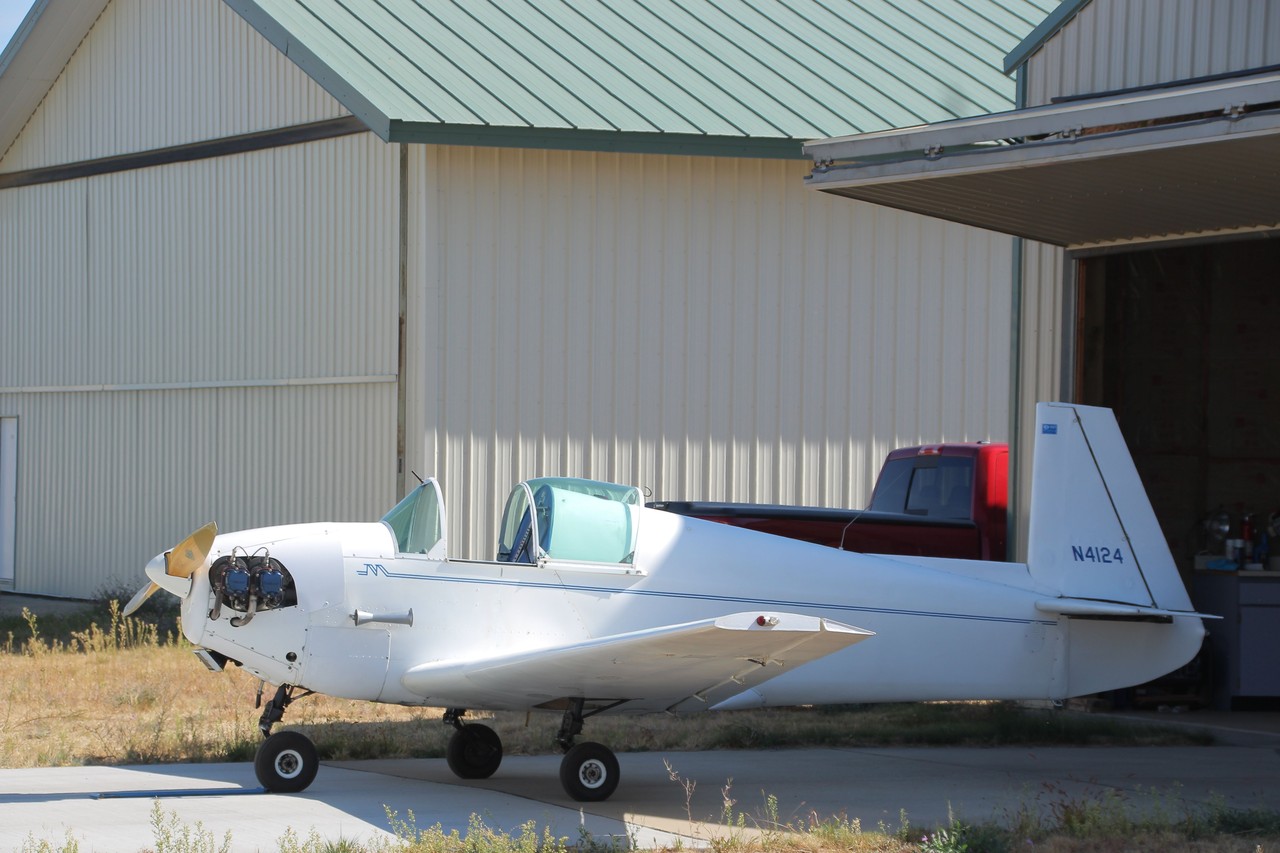
Al Mooney, drawing from his experience designing the PQ-8 and PQ-14 military drones at Culver Aircraft Corporation, prioritized aerodynamic efficiency above all else. The Mite featured a wooden wing with metal spars, an innovative trailing-link landing gear system that provided excellent ground handling, and exceptionally clean lines that delivered impressive performance from modest power plants. The prototype began with modified Luscombe 8A components, but the production aircraft represented an entirely original design philosophy focused on maximum efficiency.
Engine Development and Variants
The Mite's engine evolution tells the story of post-war powerplant availability. The initial M-18 variant used a 25-horsepower Crosley Cobra automotive conversion, with only seven to ten aircraft delivered in late 1947 before chronic crankshaft failures forced Mooney to offer free retrofits. The M-18L, introduced in mid-1948 with the 65-horsepower Lycoming O-145, became the most successful variant with approximately 239 units produced. The M-18C followed in 1950 with the Continental C-65 engine, while the final M-18C55 variant appeared in 1955 with pricing reaching $3,800.
Manufacturing History
Mooney Aircraft Corporation began operations in 1946 at Wichita Municipal Airport, founded by Al Mooney and Charles G. Yankey, both former Culver Aircraft executives. Financial pressures forced the company to relocate to Kerrville, Texas, in 1953, where approximately 50 to 65 Mites were completed. The death of partner Yankey in December 1953 created additional financial strain, and local government eventually foreclosed on company stock for unpaid taxes. Al Mooney departed in September 1955, ending the Mite era as the company transitioned to the M-20 series.
Performance and Specifications
The Mite delivered exceptional efficiency for its era, achieving a range of 360 nautical miles with just 11 usable gallons of fuel. At 10,000 feet, the aircraft cruised at 120 knots while consuming 3.5 gallons per hour, making it one of the most economical aircraft ever produced. With a service ceiling of 19,400 feet and an approach speed of just 37 knots, the Mite provided excellent performance margins despite its light 850-pound maximum takeoff weight. The aircraft measured 17 feet 7 inches in length with a height of 6 feet 2 inches.
Pilot Experience
Owners consistently described the Mite as delightful to fly, with responsive controls and forgiving handling characteristics. The trailing-link landing gear system provided excellent directional control during ground operations, while the clean aerodynamics delivered impressive speed for the available power. One early customer demonstrated the aircraft's capabilities by flying 1,200 miles from the Wichita factory to a California dealer, showcasing both the aircraft's reliability and range.
Legacy and Preservation
Production ended in 1955 as the market definitively shifted toward multi-place aircraft, rendering single-seat designs commercially obsolete. At least one M-18 remained airworthy as of 1999, with serial number 136, a 1953 M-18LA owned by George Meenach. The Planes of Fame Air Museum in Chino, California, displays a static M-18C for public viewing. The Mite's emphasis on aerodynamic efficiency and innovative design solutions established the foundation for Mooney's reputation, carried forward in the M-20 series that continues production today. While the type certificate remains valid, no current production exists, though the design influences modern homebuilt aircraft projects.