
Service History
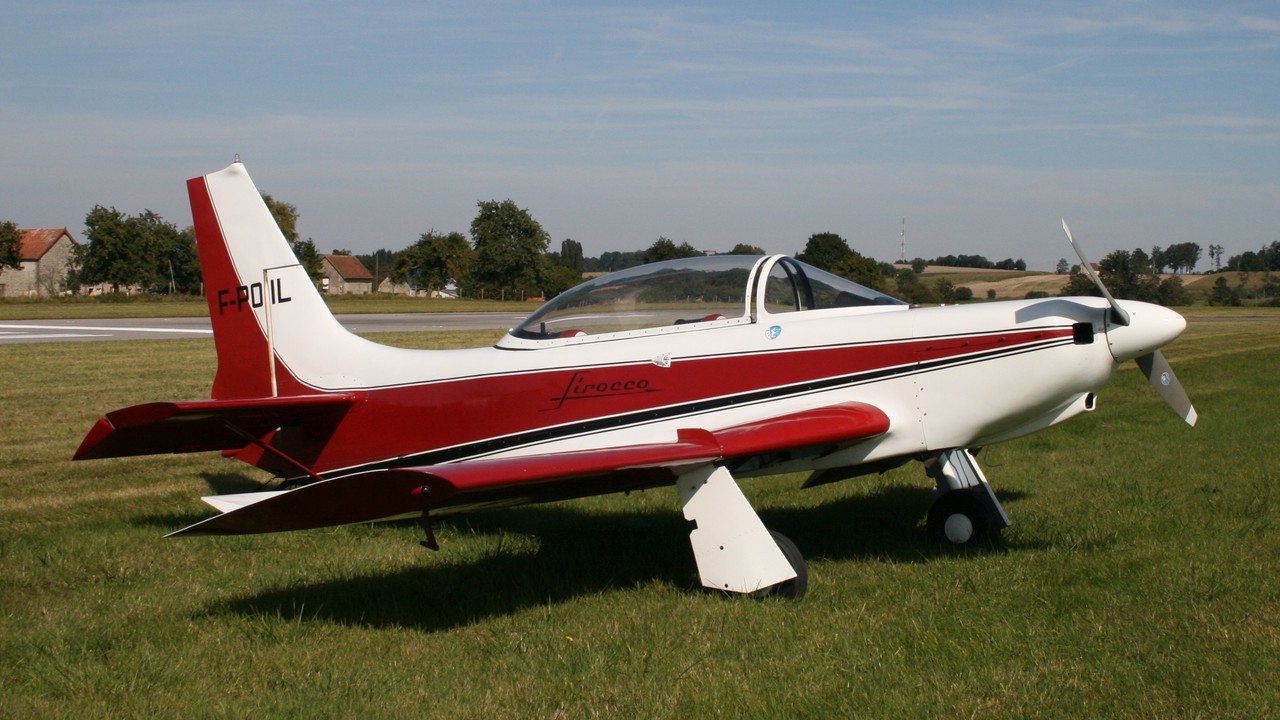
The MJ-5 Sirocco carved out a unique niche in general aviation as one of the most successful wooden homebuilt designs of the 1960s. Unlike factory-produced aircraft, the Sirocco achieved its success through individual builders in multiple countries, with construction occurring in France, New Zealand, Australia, Canada, and other nations from 1962 onward. More than 80 examples were completed worldwide, representing remarkable penetration for a plans-built design in an era when homebuilding was far less common than today.
The aircraft earned full French Certificate of Airworthiness approval, enabling its use by aero clubs for training, touring, and aerobatic instruction. This certification was particularly significant as it validated the design's structural integrity and flight characteristics for commercial training operations, not just private sport flying.
The Designer and Development
Marcel Jurca, a Romanian-born aviation designer who became naturalized French in 1965, created the MJ-5 as an evolution of his earlier single-seat designs, the MJ-2 and MJ-20 Tempête. Jurca brought unique credentials to aircraft design, having served as a Henschel Hs 129 pilot during World War II, providing him firsthand experience with high-performance aircraft handling characteristics.
The Sirocco's development began with the prototype's maiden flight on July 25, 1962, powered by a 78 kW (105 hp) Potez 4E20 engine. Jurca's design objectives centered on creating a two-seat sport monoplane suitable for club training, touring, and aerobatics while maintaining construction techniques accessible to amateur builders. The aircraft incorporated fighter-like performance characteristics in a wooden homebuilt package, featuring a deep fuselage to accommodate the tandem cockpit arrangement.
Engine Flexibility and Technical Innovation
One of the Sirocco's most significant innovations was its remarkable engine flexibility, accommodating powerplants ranging from 67 to 164 kW (90-220 hp). Common installations included the Lycoming O-235-C2B (86 kW/115 hp), various O-320 variants producing 119-134 kW (160-180 hp), and the O-360 (149 kW/200 hp). Continental options included the C90-8 (67 kW/90 hp) and O-200-A (74.5 kW/100 hp), while Franklin engines up to 164 kW (220 hp) were also approved.
Jurca developed a systematic variant designation system based on engine and landing gear combinations. The suffix system used letters for engines (A for Continental C90, B for O-200, L for Lycoming O-360, M for Franklin) and numbers for landing gear configuration (1 for fixed gear, 2 for retractable). The retractable landing gear system, when installed, required 24 hand turns to operate, representing a compromise between weight and complexity suitable for the homebuilt market.
Construction and Design Philosophy
The MJ-5 employed traditional wooden construction methods reminiscent of French Jodel designs, featuring a spruce fuselage framework with plywood skinning and fabric-covered wings without dihedral. This construction approach made the aircraft accessible to builders with woodworking skills while maintaining structural integrity for aerobatic operations. The wing area of 10 square meters (107.6 sq ft) and 4.90:1 aspect ratio provided excellent handling characteristics across the aircraft's wide weight range.
Fuel capacity consisted of 38 liters divided between fuselage and wing tanks, providing approximately 4 hours and 20 minutes endurance. The aircraft's empty weight of 430 kg (948 lb) and maximum takeoff weight of 680 kg (1,499 lb) created a useful load suitable for training and touring operations.
Performance and Operational Characteristics
The Sirocco delivered impressive performance figures that justified Jurca's fighter-like design philosophy. Maximum speed reached 235 km/h (146 mph), with cruise speeds of 215 km/h (134 mph). The aircraft demonstrated excellent short-field capabilities with takeoff runs of 250 meters (820 ft) and landing distances of 200 meters (656 ft). Service ceiling reached 5,000 meters (16,400 ft), with initial climb performance of reaching 1,000 meters in four minutes.
Stall speed of 80 km/h (50 mph) provided comfortable handling margins, while the aerobatic certification enabled full training sequences including loops, rolls, and other maneuvers required for advanced pilot training.
Global Operations and Notable Examples
Canadian builder GT Kean completed C-FUVZ (construction number 134) in 1967, which subsequently accumulated 2,285 hours flying from Canada through the United States, Mexico, Guatemala, El Salvador, Nicaragua, Panama, and Costa Rica by 2005, demonstrating the aircraft's reliability and touring capability.
New Zealand saw multiple examples, including ZK-FNQ (construction number AACA/601) completed between 1977-1991 by Wylie Evans, and ZK-PTR (construction number AACA/148/1) which first flew in 1975. Australia's VH-URB (construction number 001) represented one of the earliest examples built in that country.
Legacy and Current Status
The MJ-5 Sirocco established Marcel Jurca's reputation in the homebuilt community and led to additional designs including the unbuilt all-metal MJ-50 Windy and the MJ-55 Biso aerobatic variant. While exact current airworthy numbers are unknown, examples like ZK-FNQ remained active as late as 2010, testament to the design's structural durability and continued appeal to sport aviation enthusiasts. The aircraft's legacy lies in demonstrating that amateur builders could construct high-performance aerobatic aircraft with careful design and appropriate materials, influencing subsequent generations of homebuilt designs.